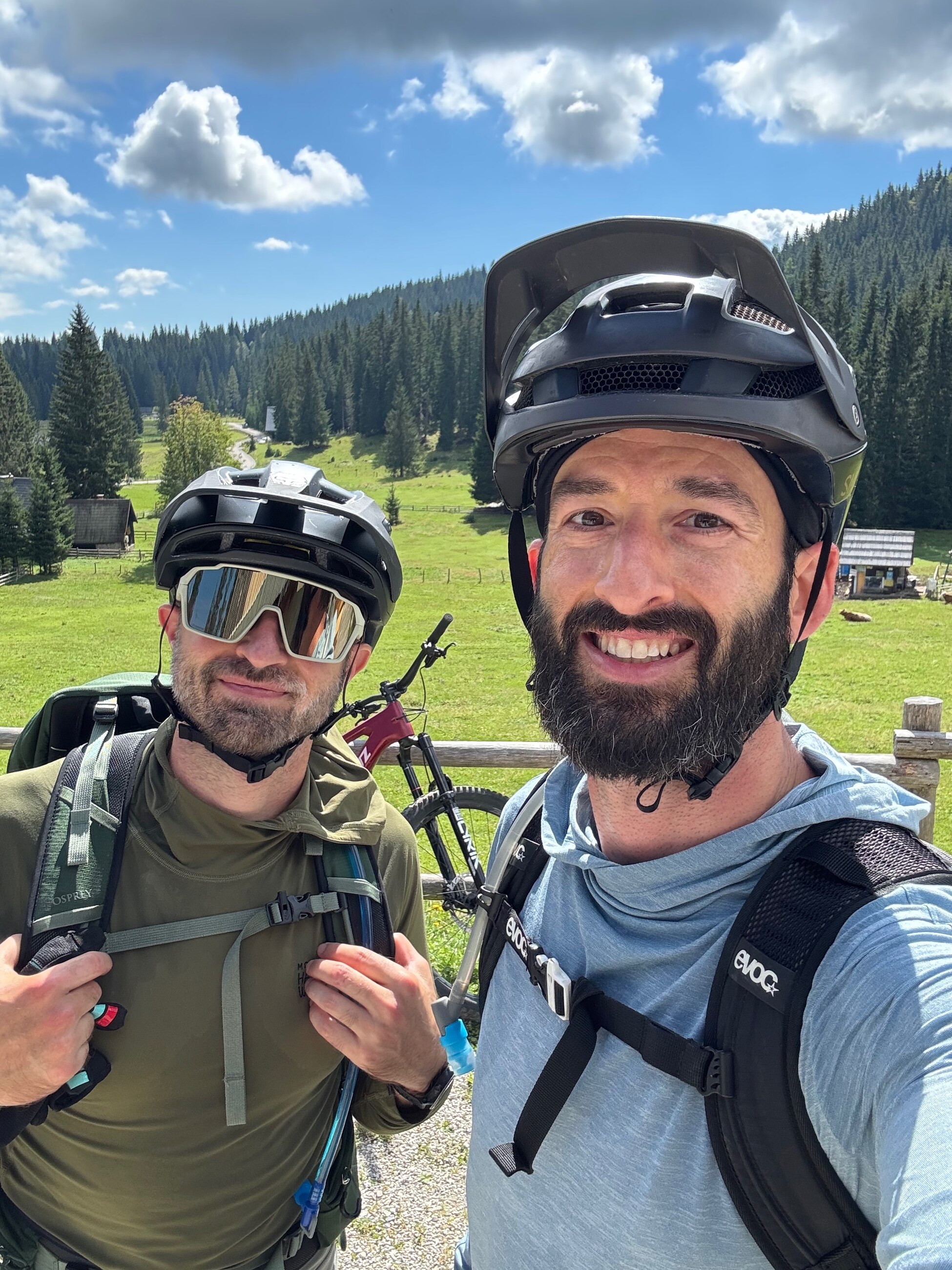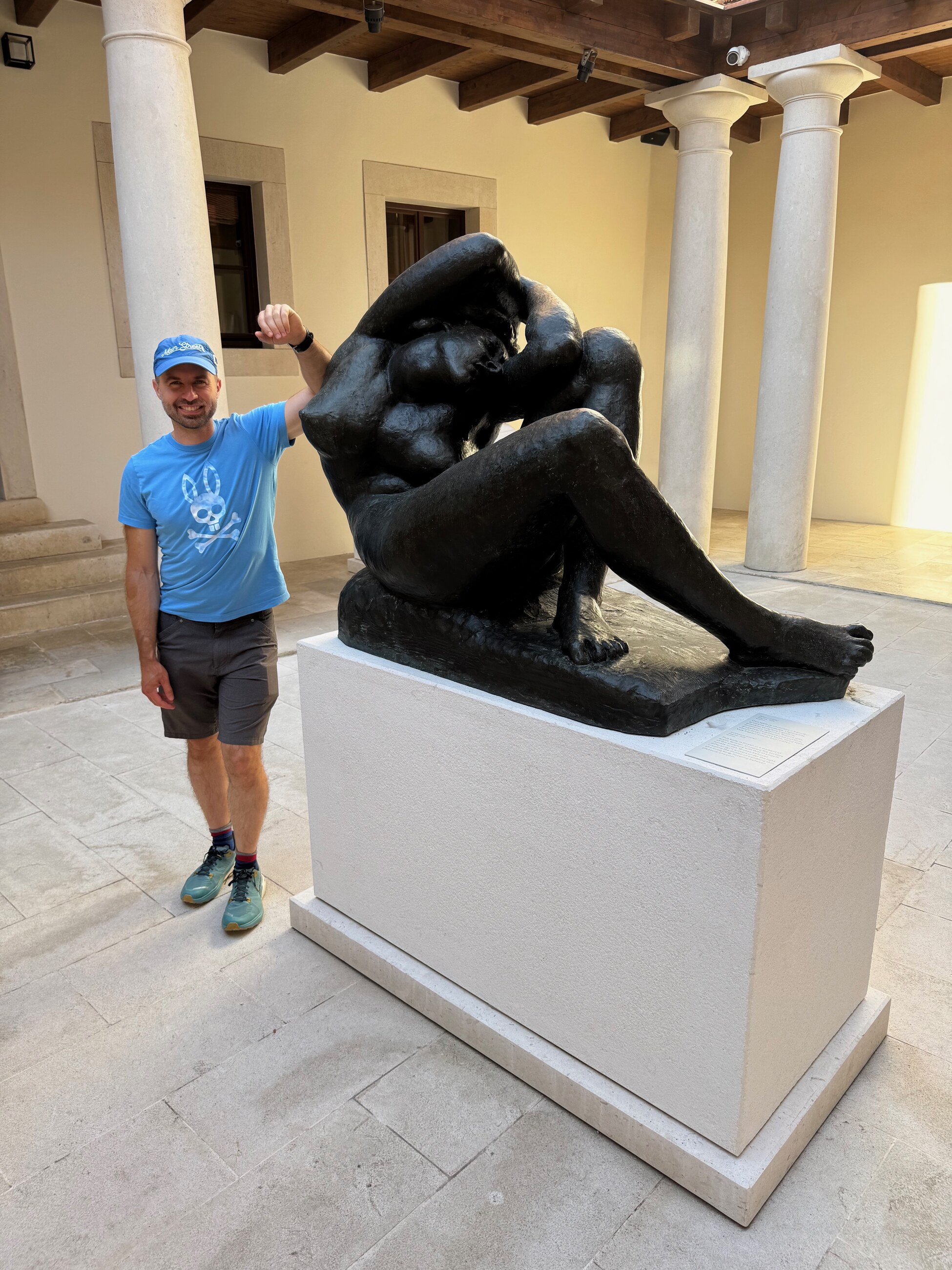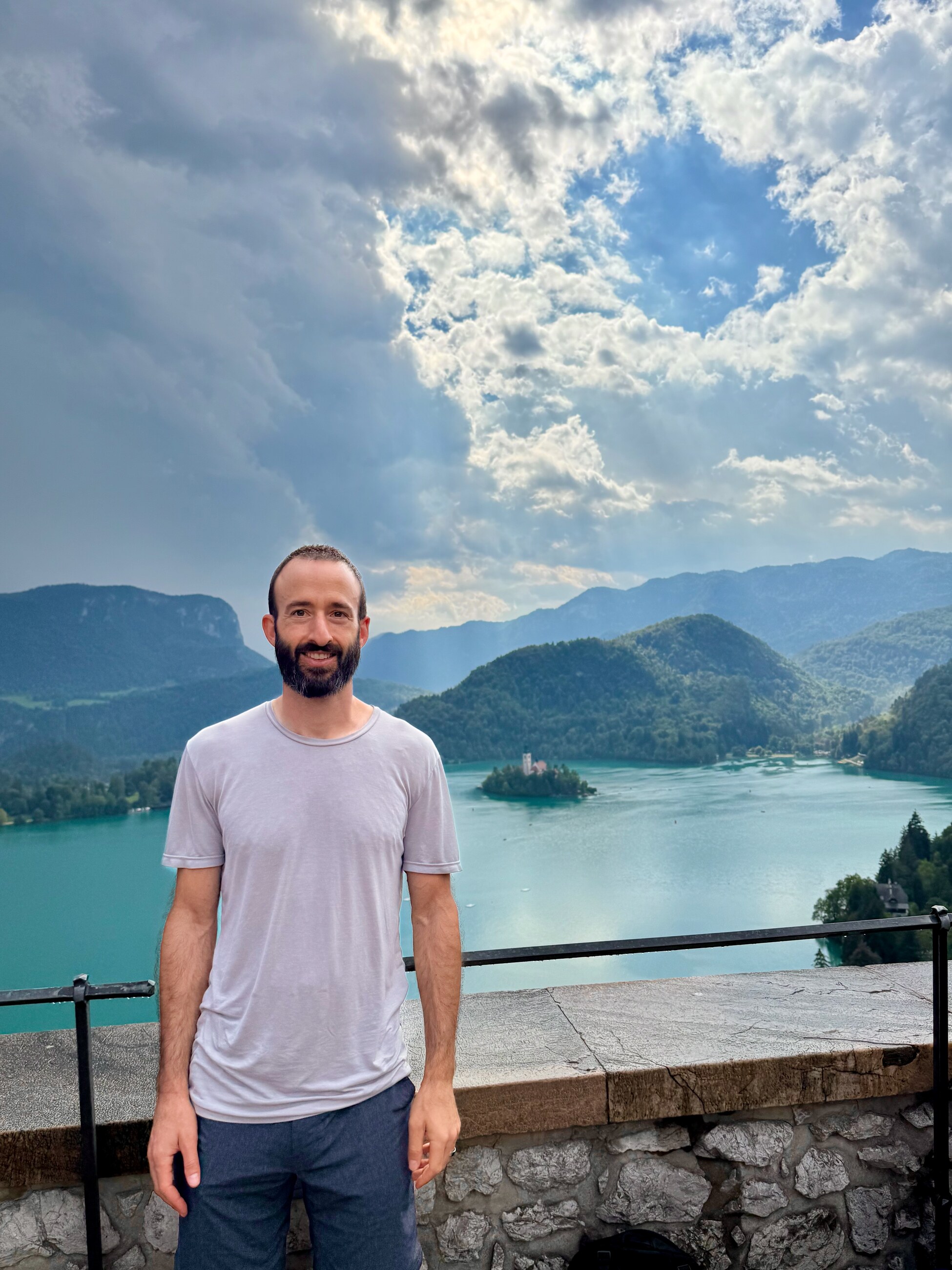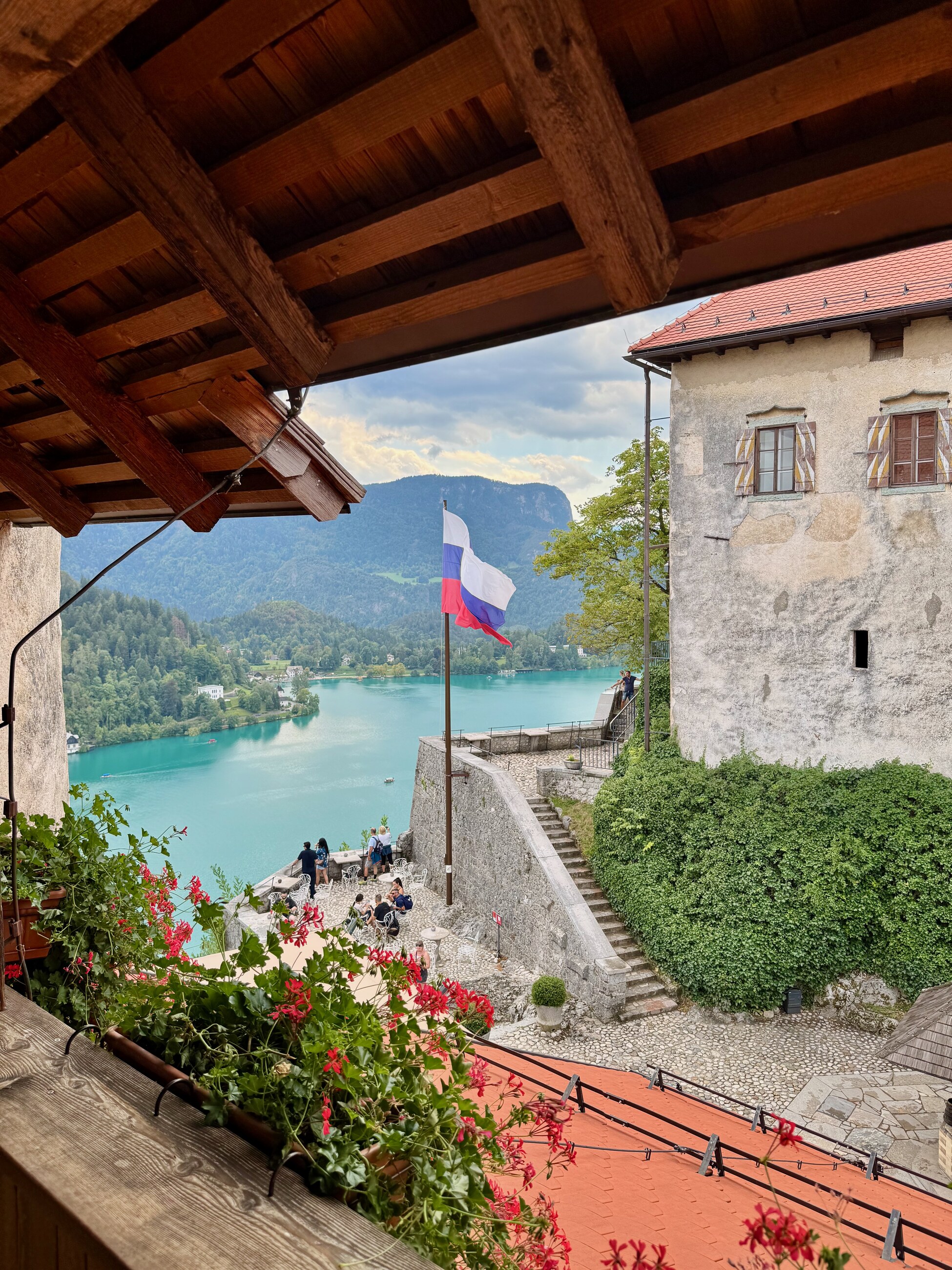
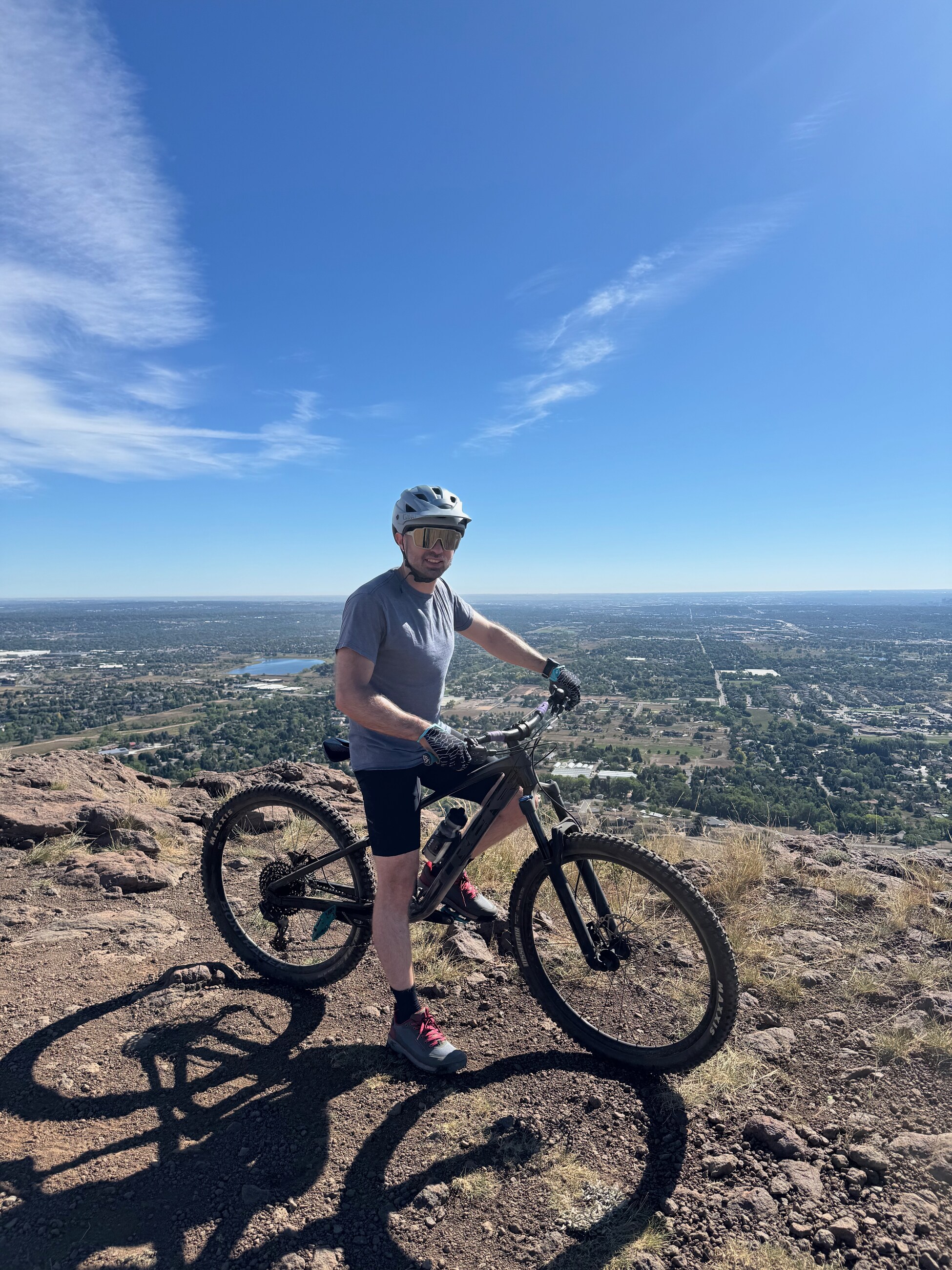
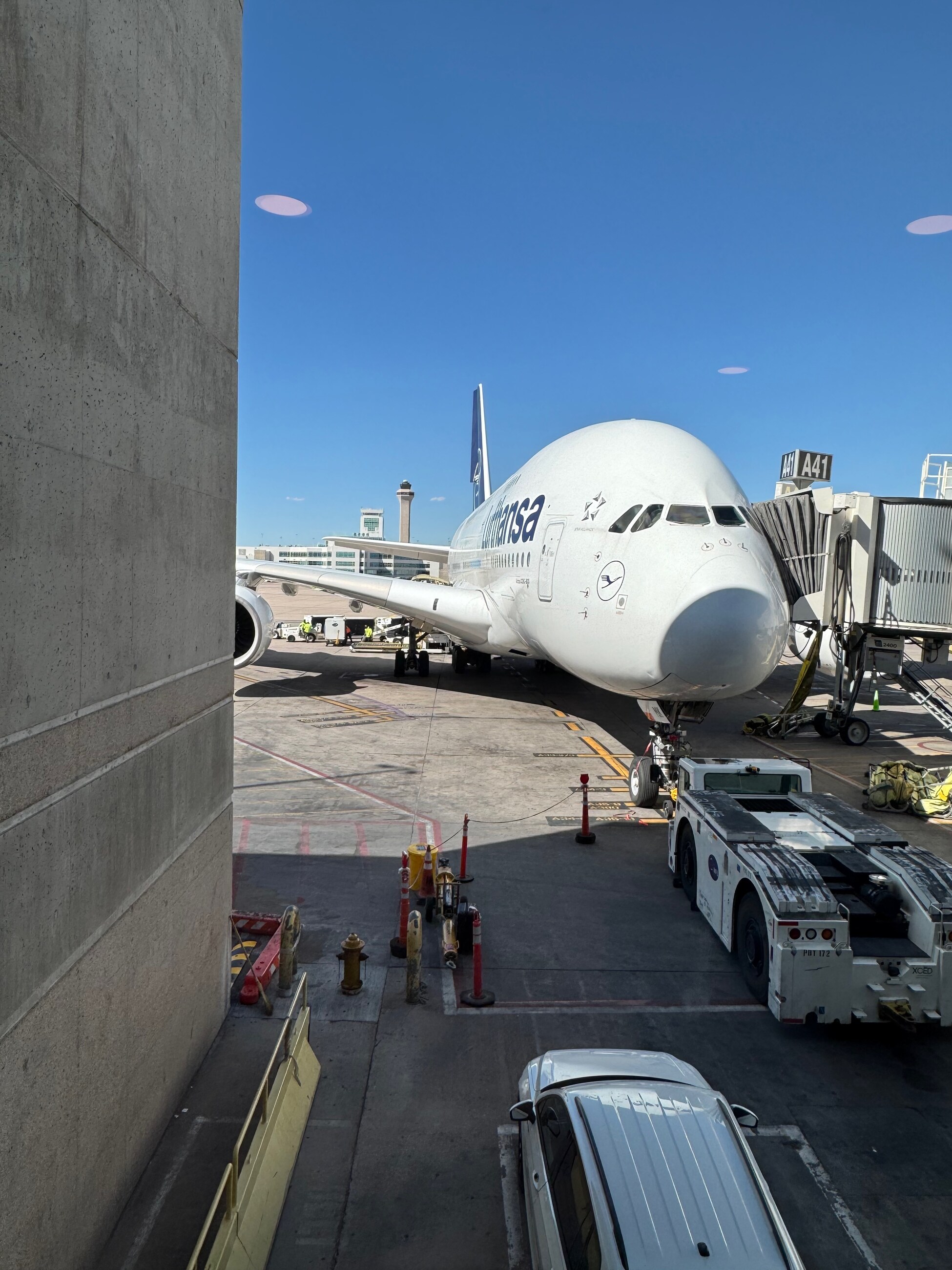
Ivan came to Denver the night before the trip, and we started things off with a mountain bike ride on North Table Mountain before heading to the airport. After an uncomfortable overnight flight and quick layover in Munich, we flew over the Alps into Zagreb and picked up our rental car.
Zagreb
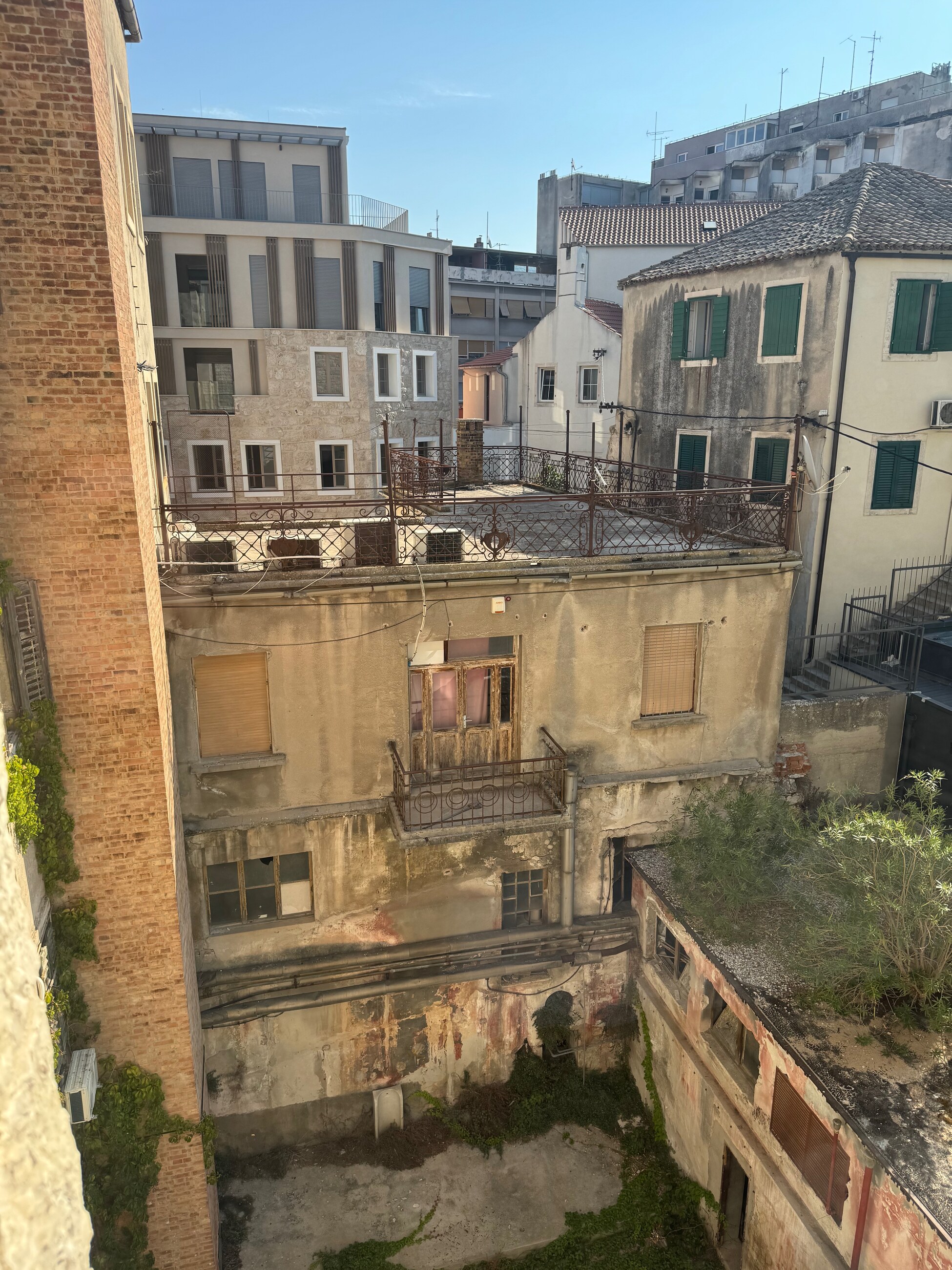
We had one afternoon and evening in Zagreb and probably walked five miles around the old city. There was a vegan festival called ZeGe Vege, lots of restoration still underway from the 2020 earthquake, and an incredible wedding procession of probably 200 people walking through the streets in full wedding attire with a band playing traditional music.
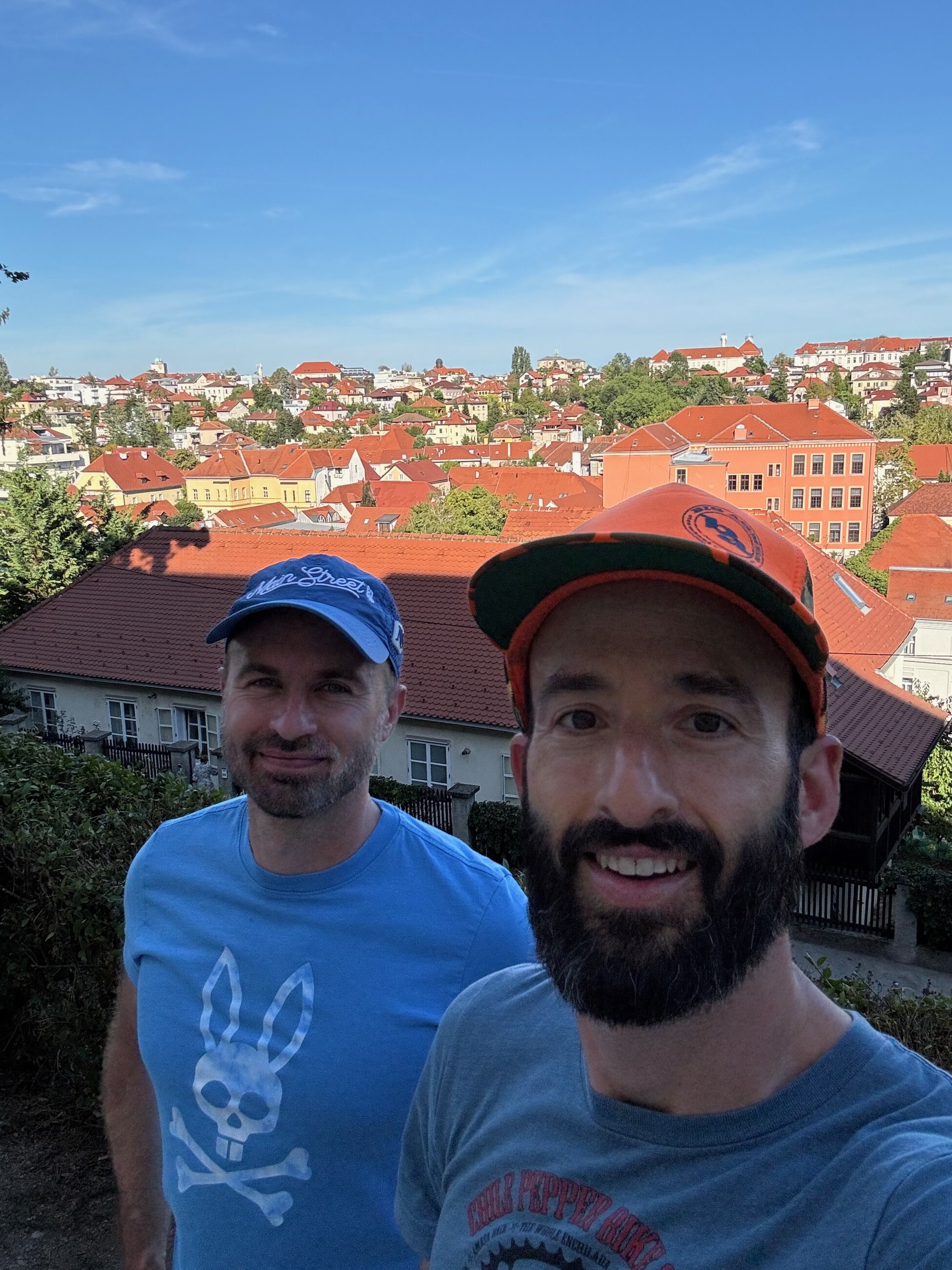
Zagreb was nice, although not particularly notable compared with some of what came later. The next morning we had a good breakfast and drove 2.5 hours north into Slovenia.
Lake Bled
Slovenia immediately impressed us. Everything was incredibly green, and even the highways had an unusual amount of attention to detail, with landscaped overpasses, tunnels, and wood trim over the metal railings.
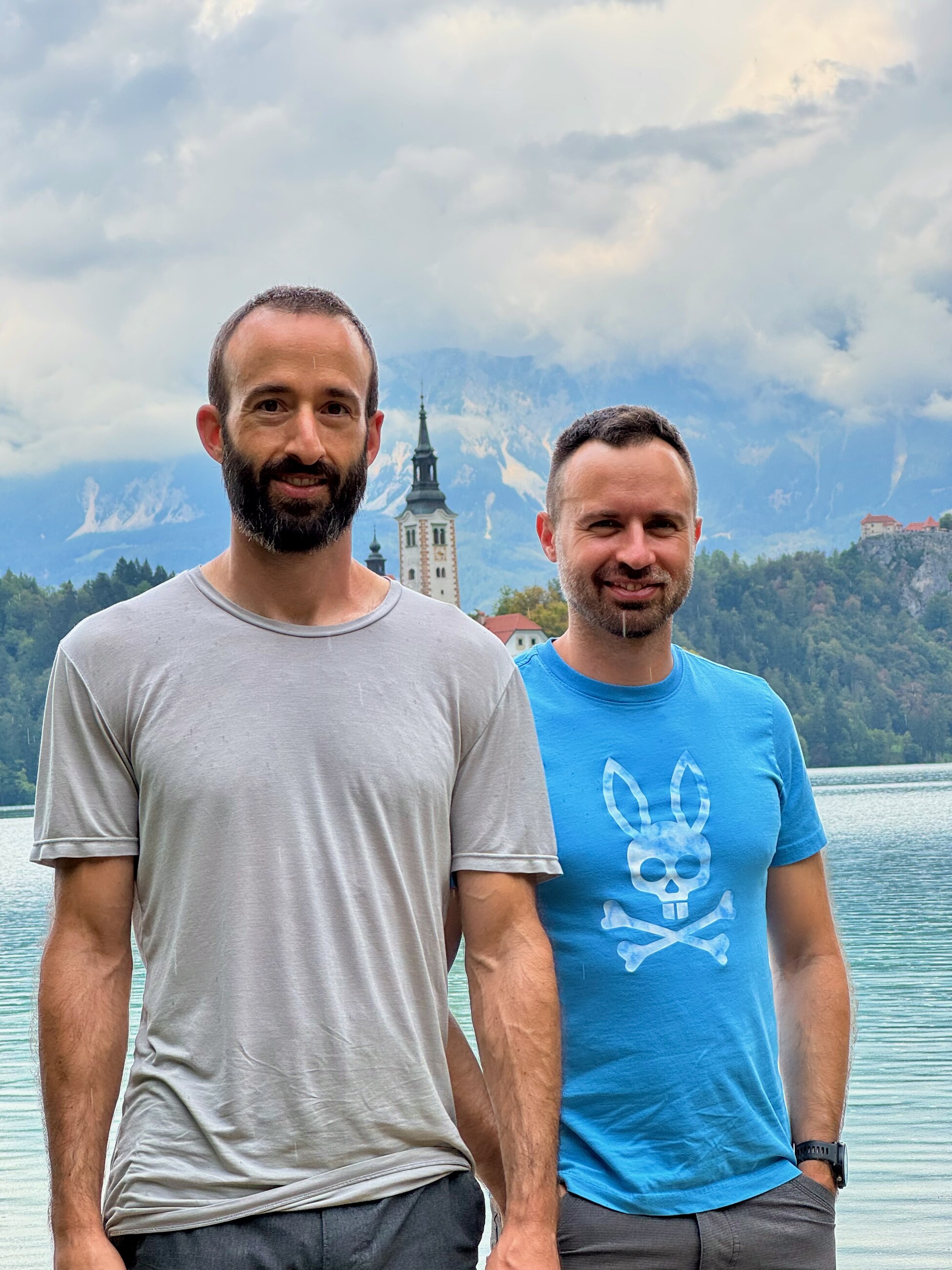
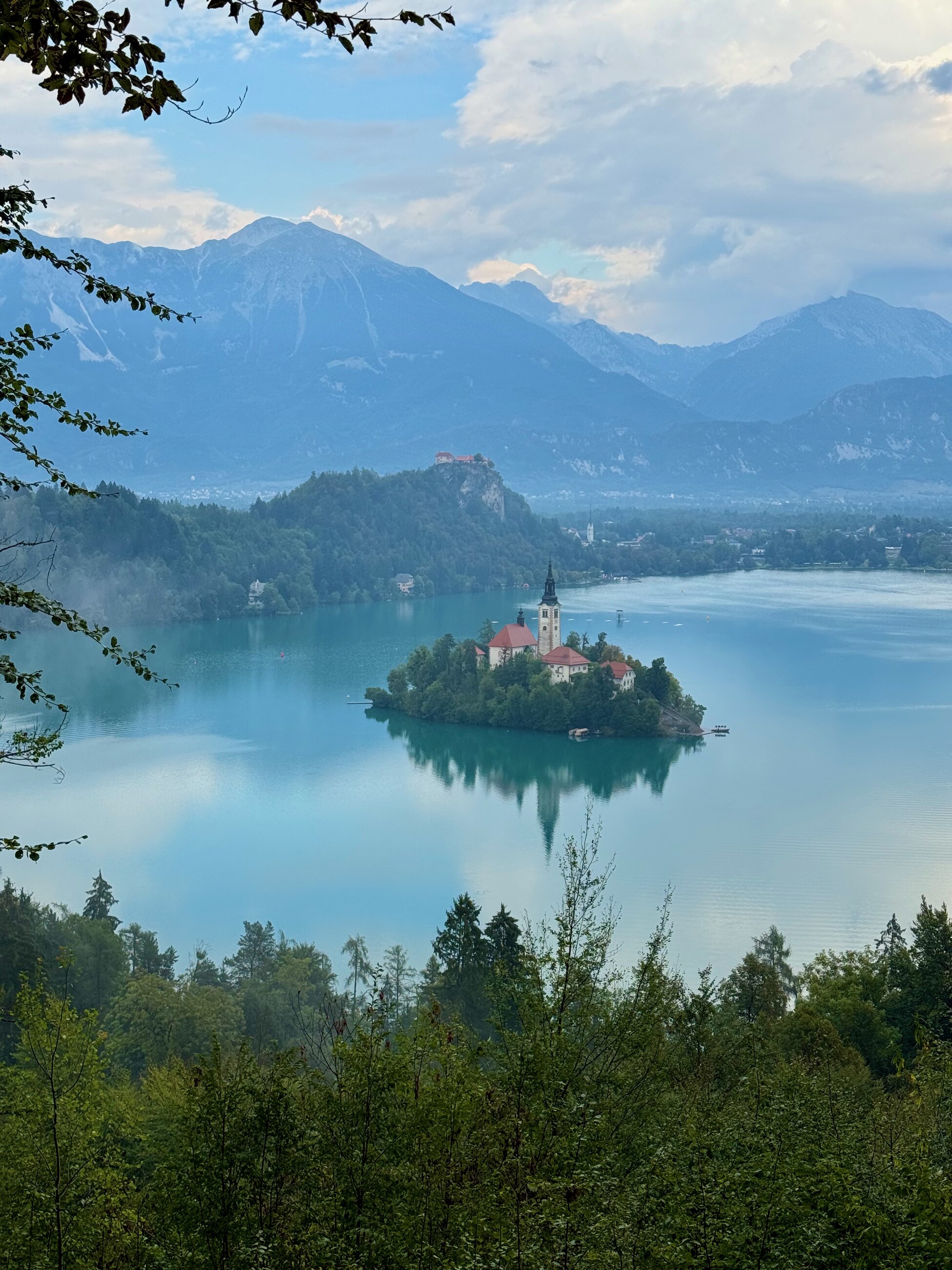
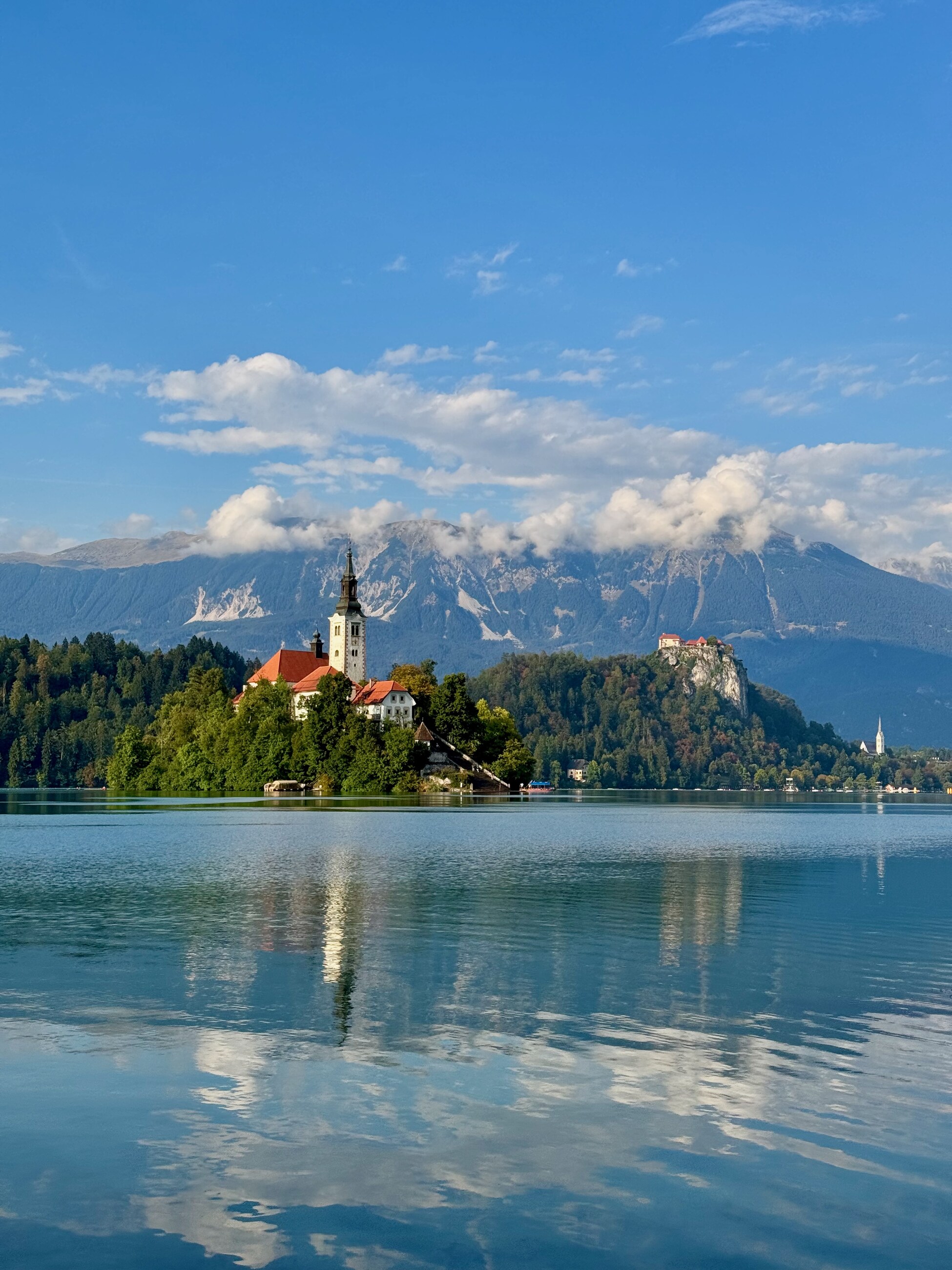
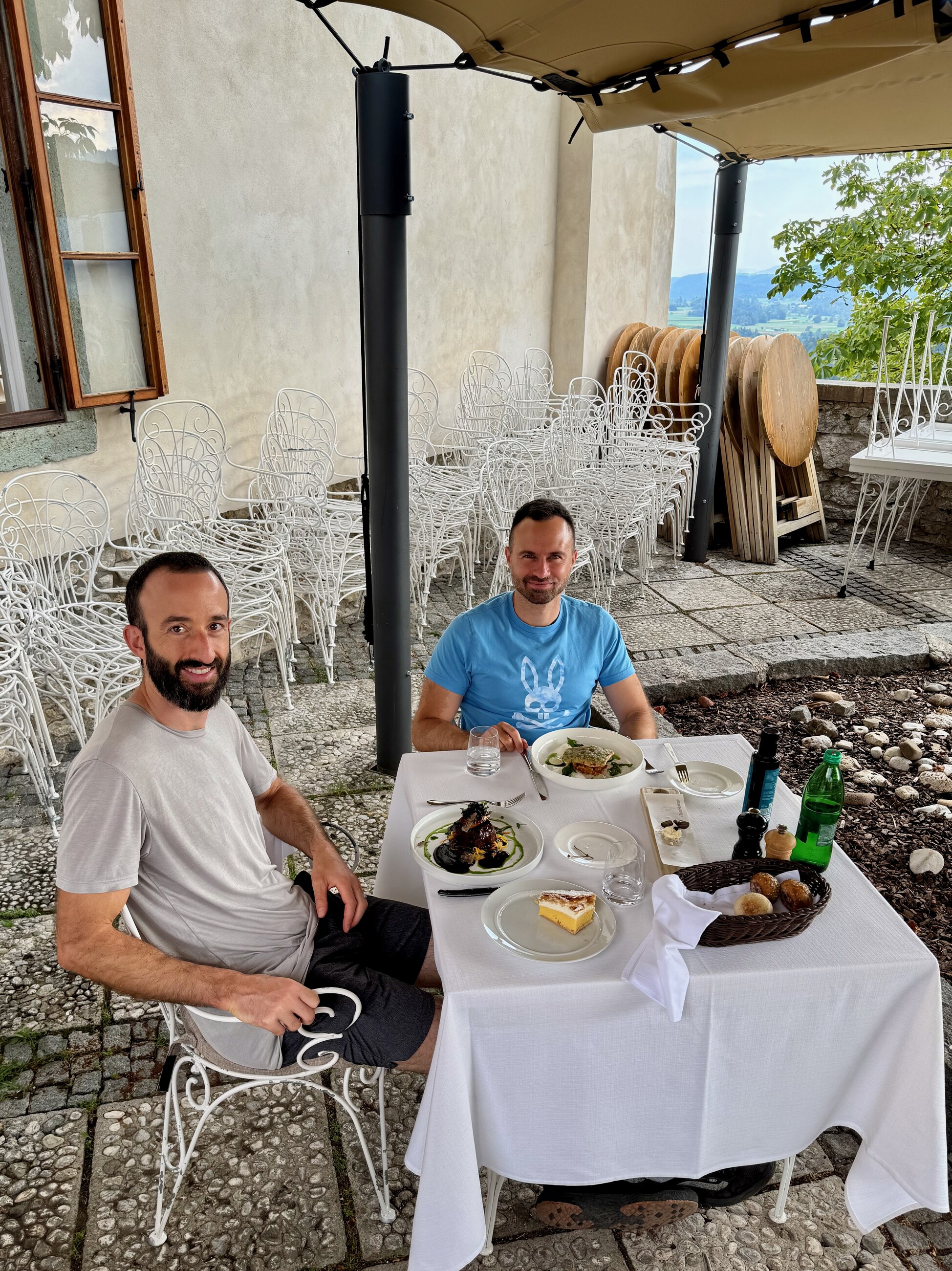
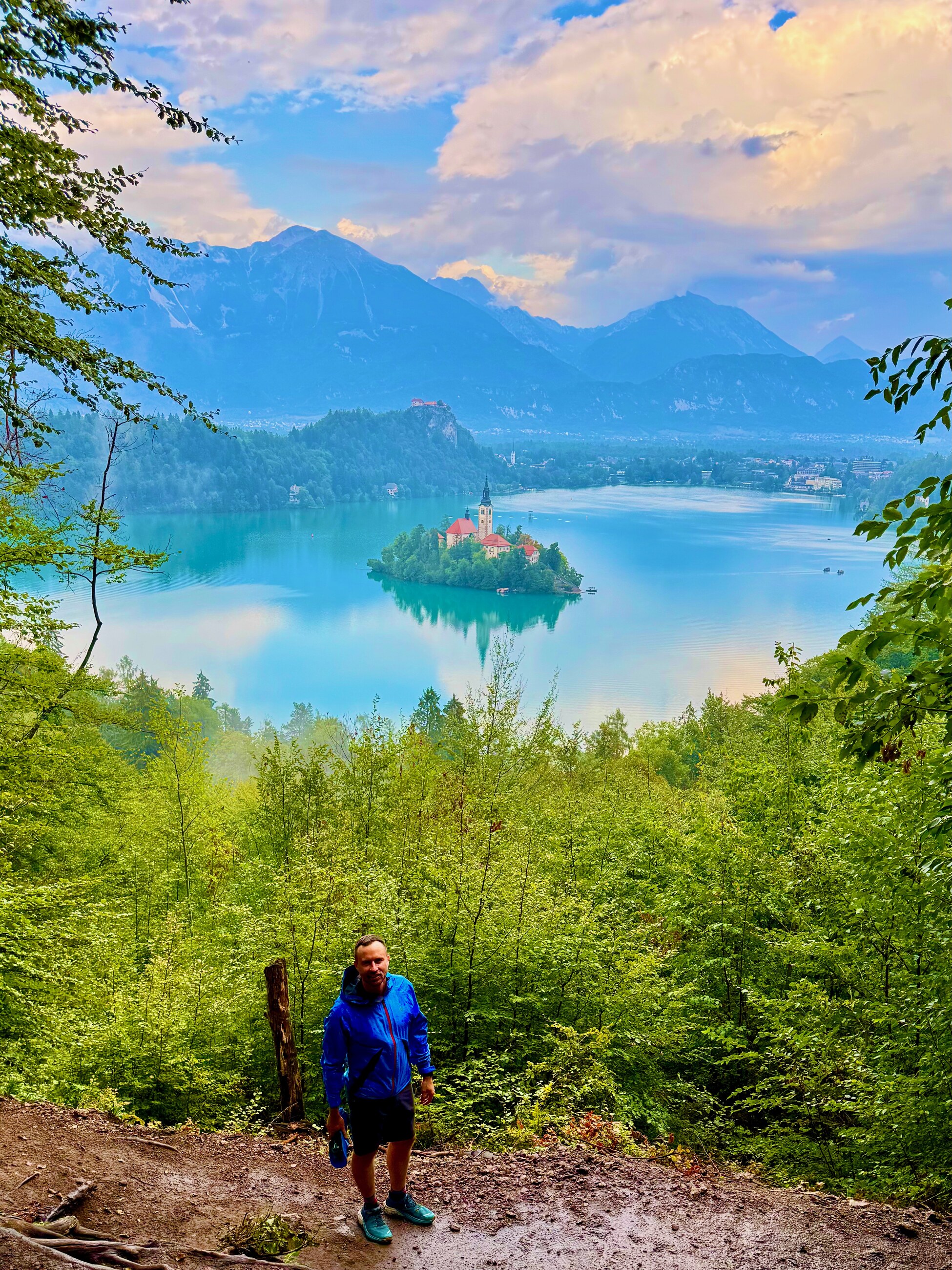
At Lake Bled we had an excellent four-course lunch at Bled Castle overlooking the lake and island while a major rainstorm rolled through. A Japanese tour guide at the next table donated her Bled cream cake to us, which is very popular in the area and quite delicious.
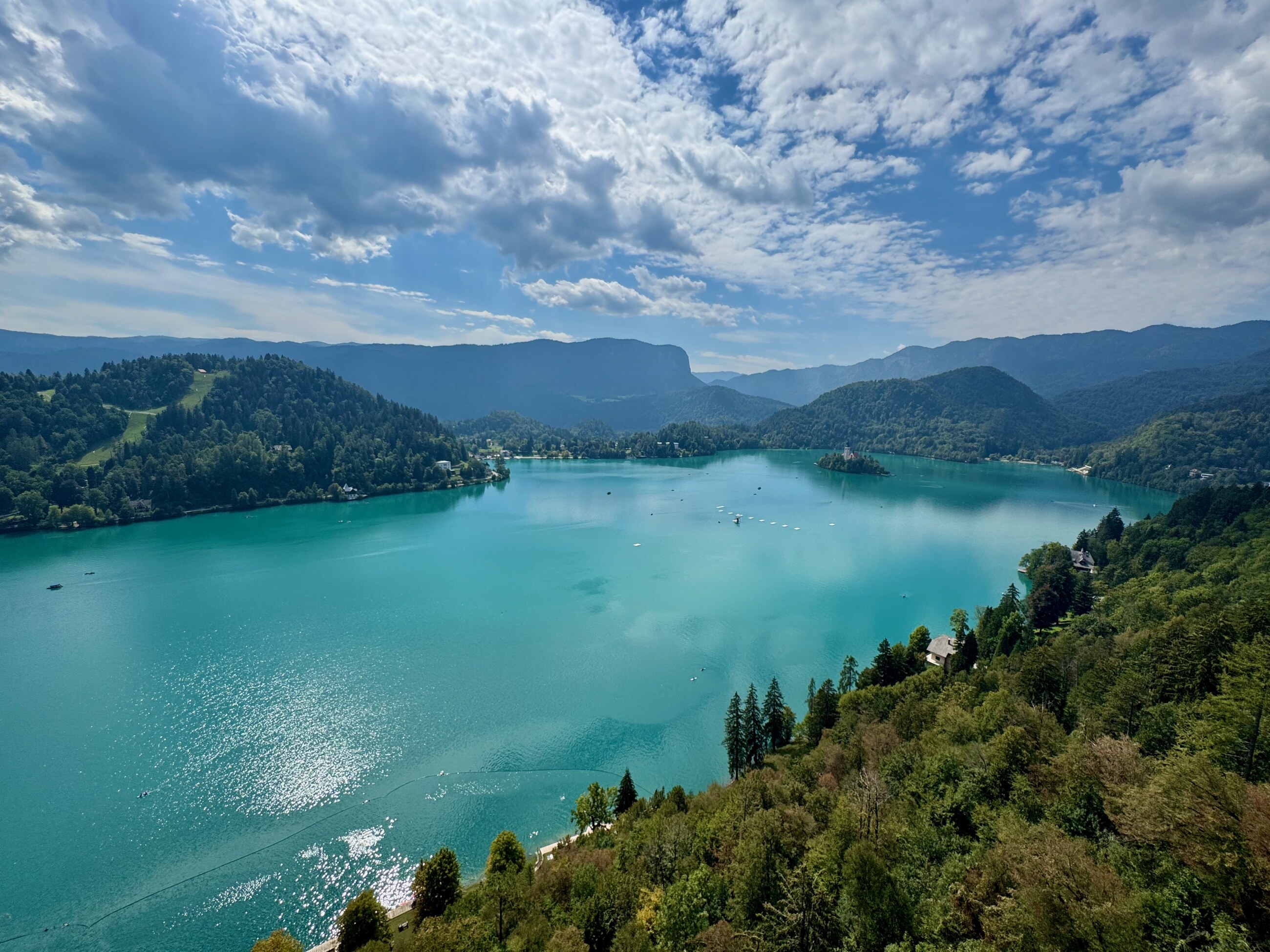
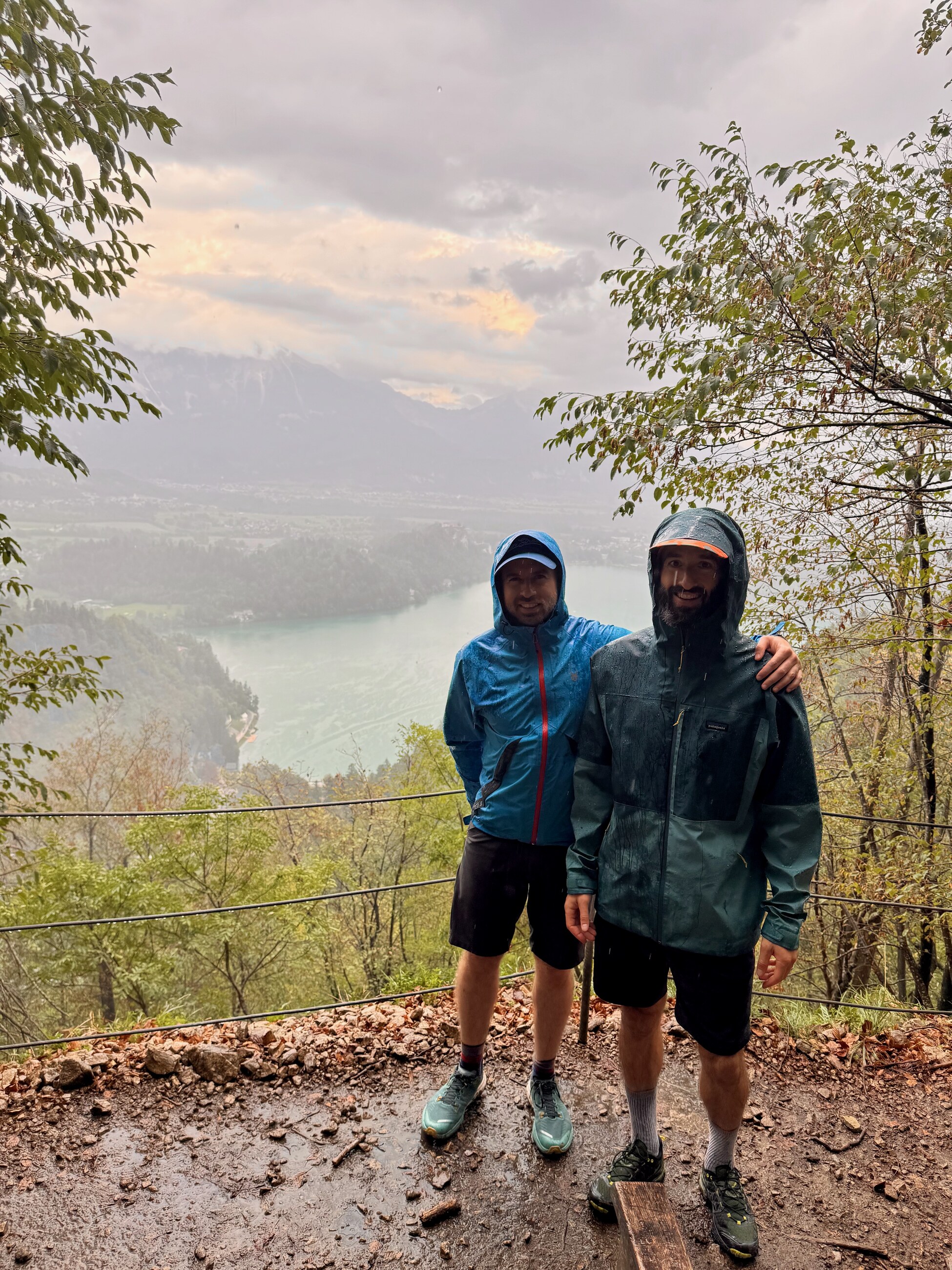
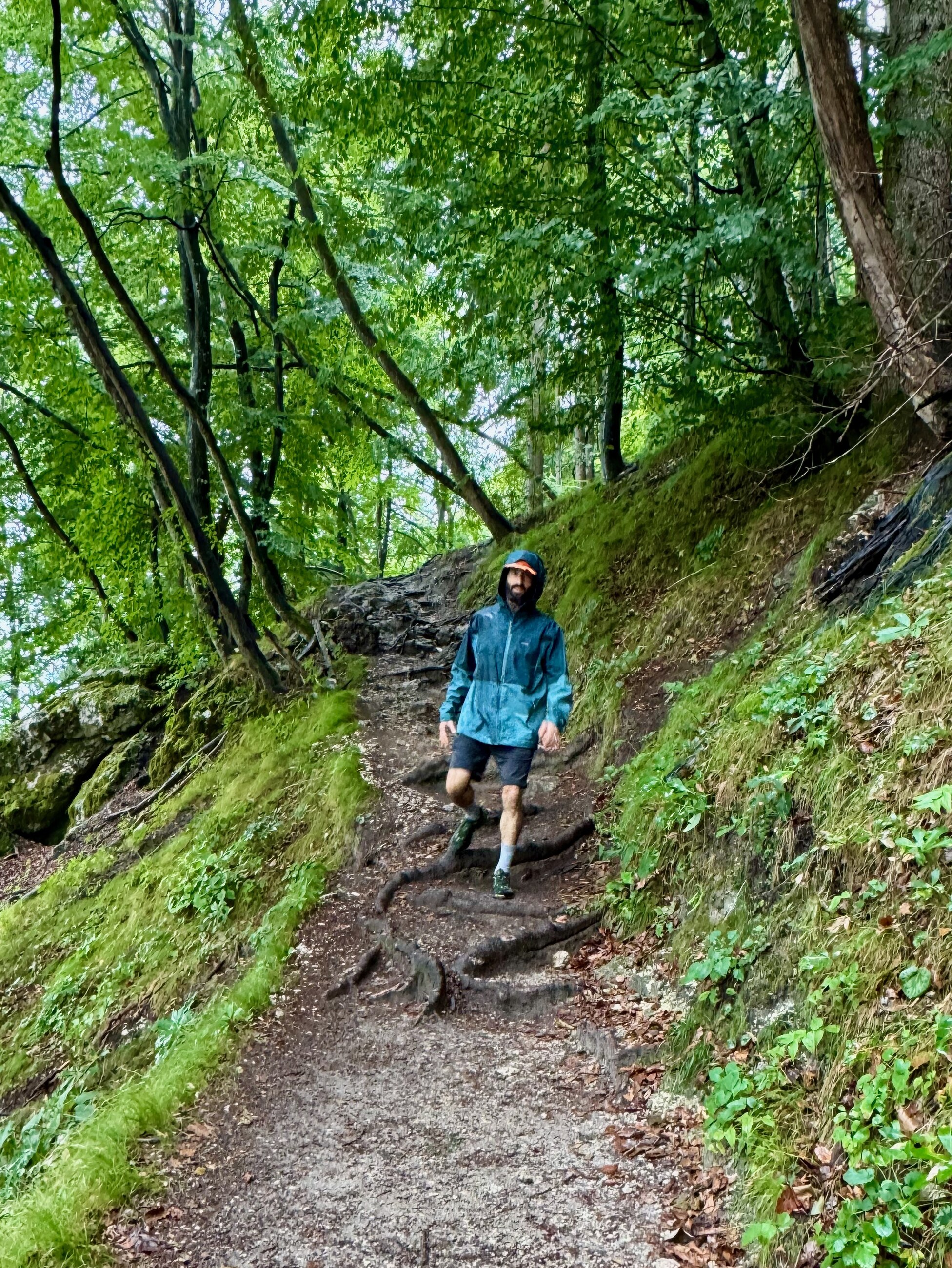
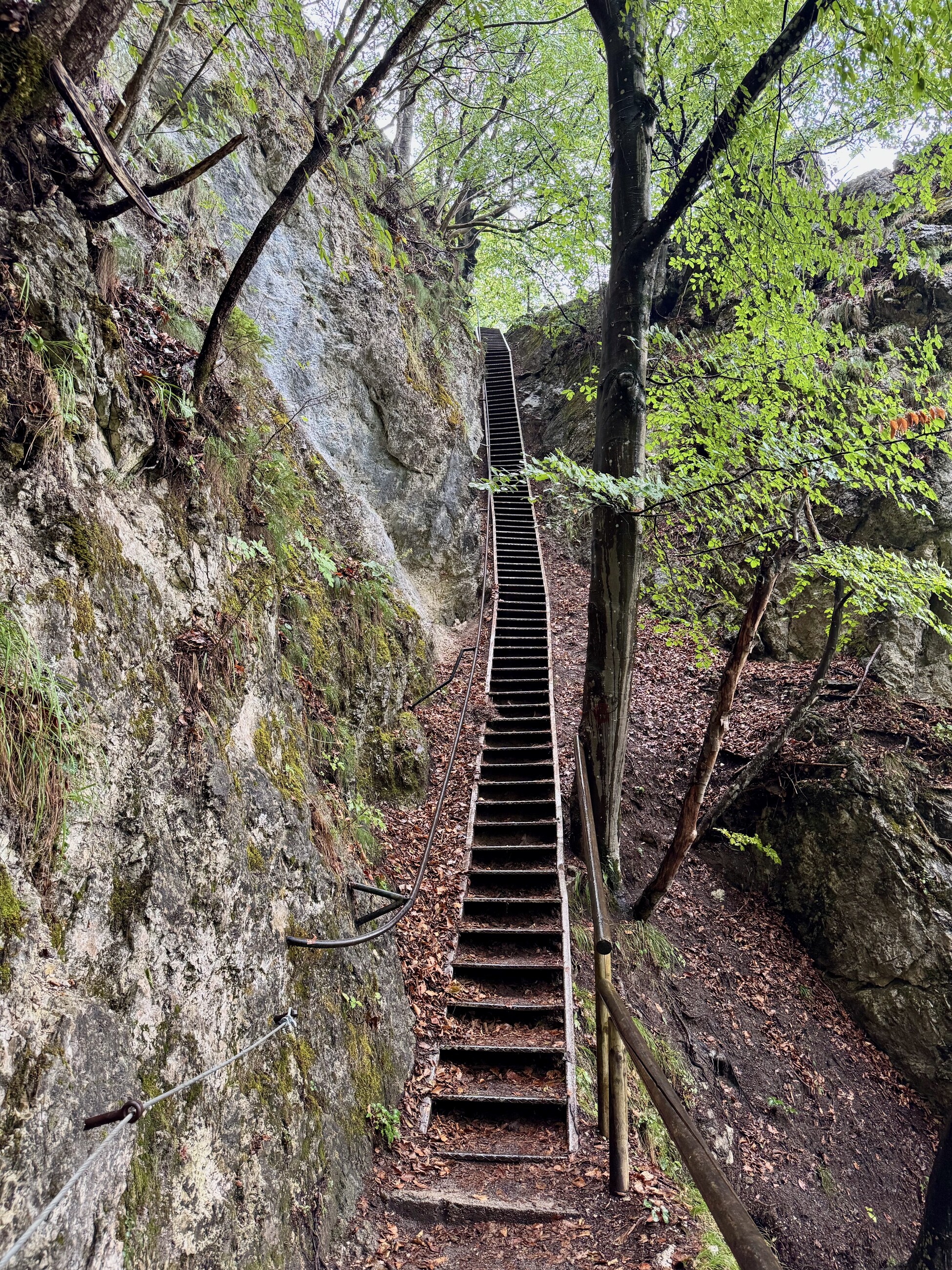
Afterward we did a short but steep hike above the lake, about three miles and 1,000 vertical feet. It poured again, making the muddy trail and very steep metal staircase on the descent slightly more exciting than intended.
A pre-ride grocery run also taught David the hard way that Slovenian bananas need to be weighed and stickered before checkout.
That evening we walked into town for traditional Slovenian food. There was a local festival with traditional clothing, a horn section and street food. Our dinner consisted of sausages, potatoes and a traditional cheese and rolled dough dish common in Slovenia called štruklji.
Mountain Biking in Triglav National Park
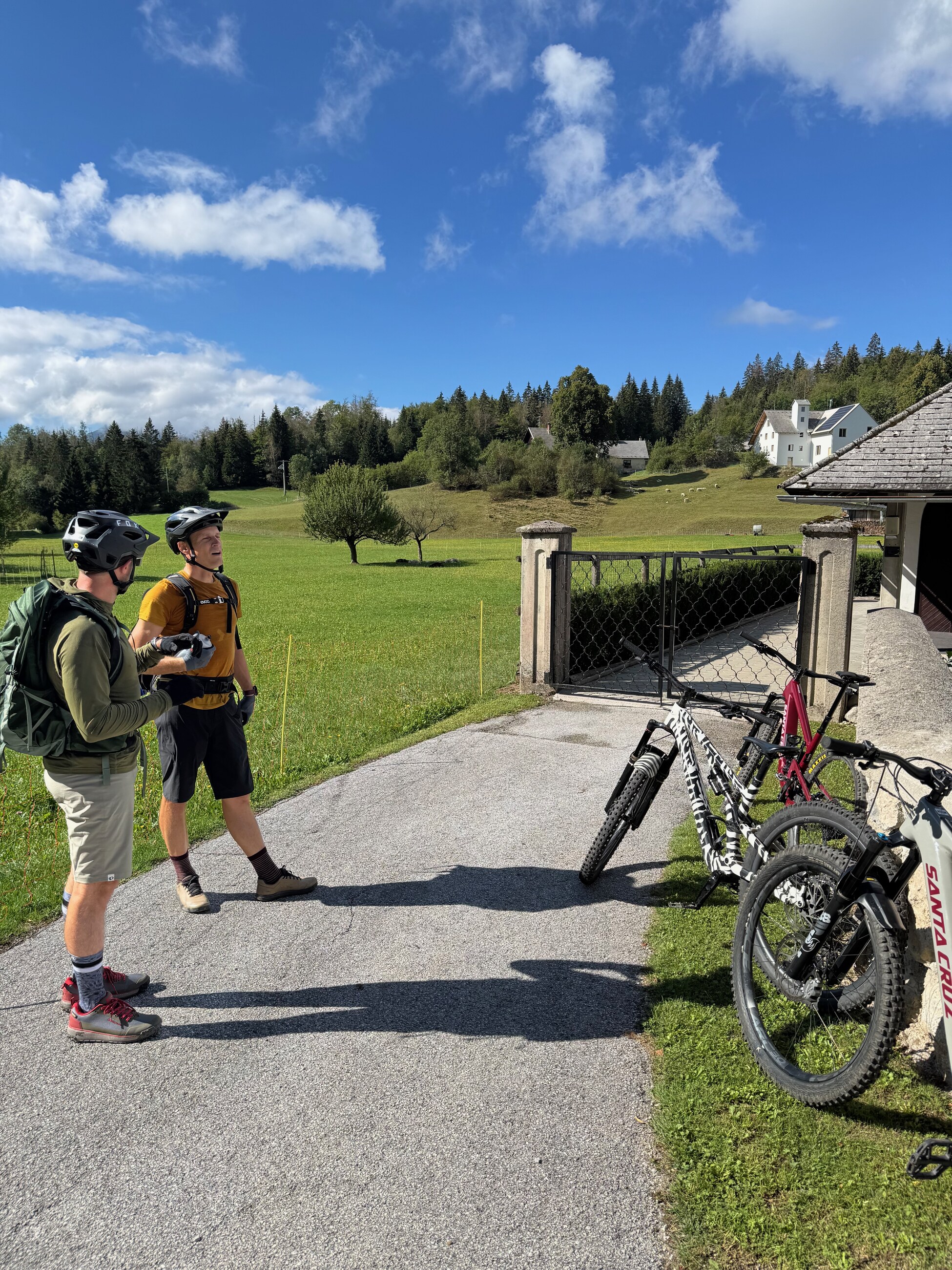
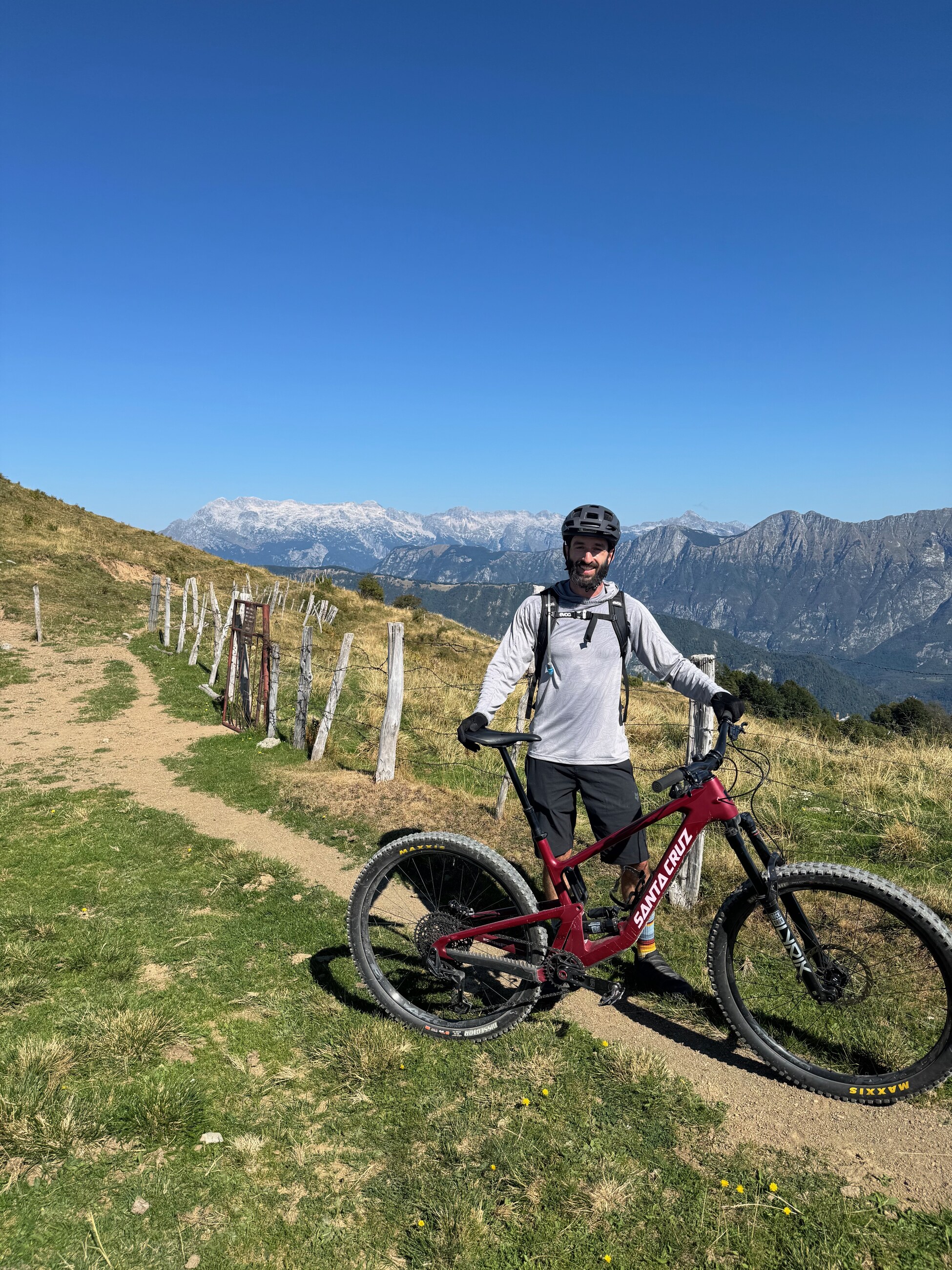
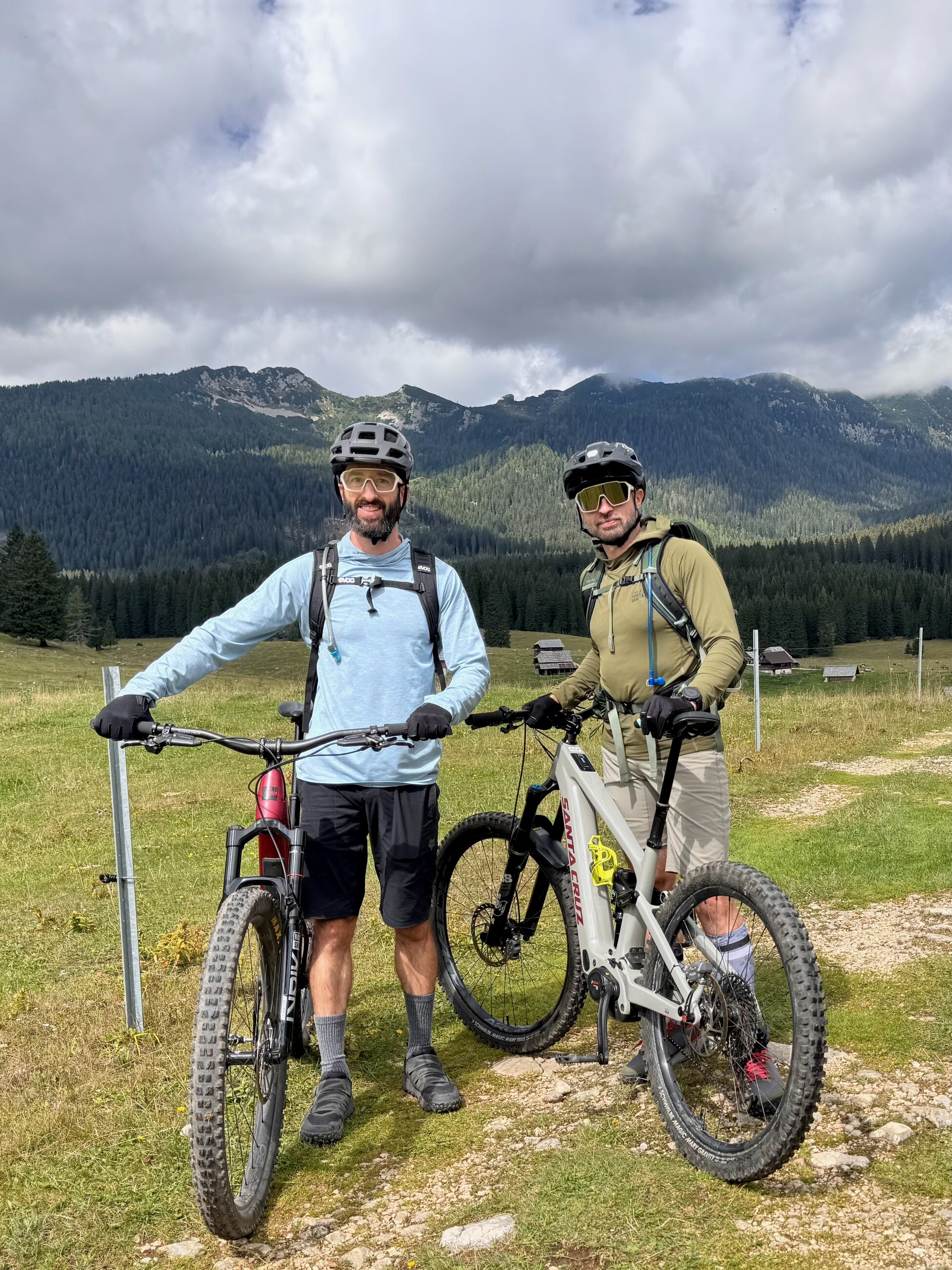
The next morning we met our guide, Tomaž, who turned out to be one of the highlights of the trip. He had helped us plan much of the Slovenia portion and had excellent Santa Cruz bikes waiting for us. David rode an AXS Hightower while Ivan chose an e-bike.
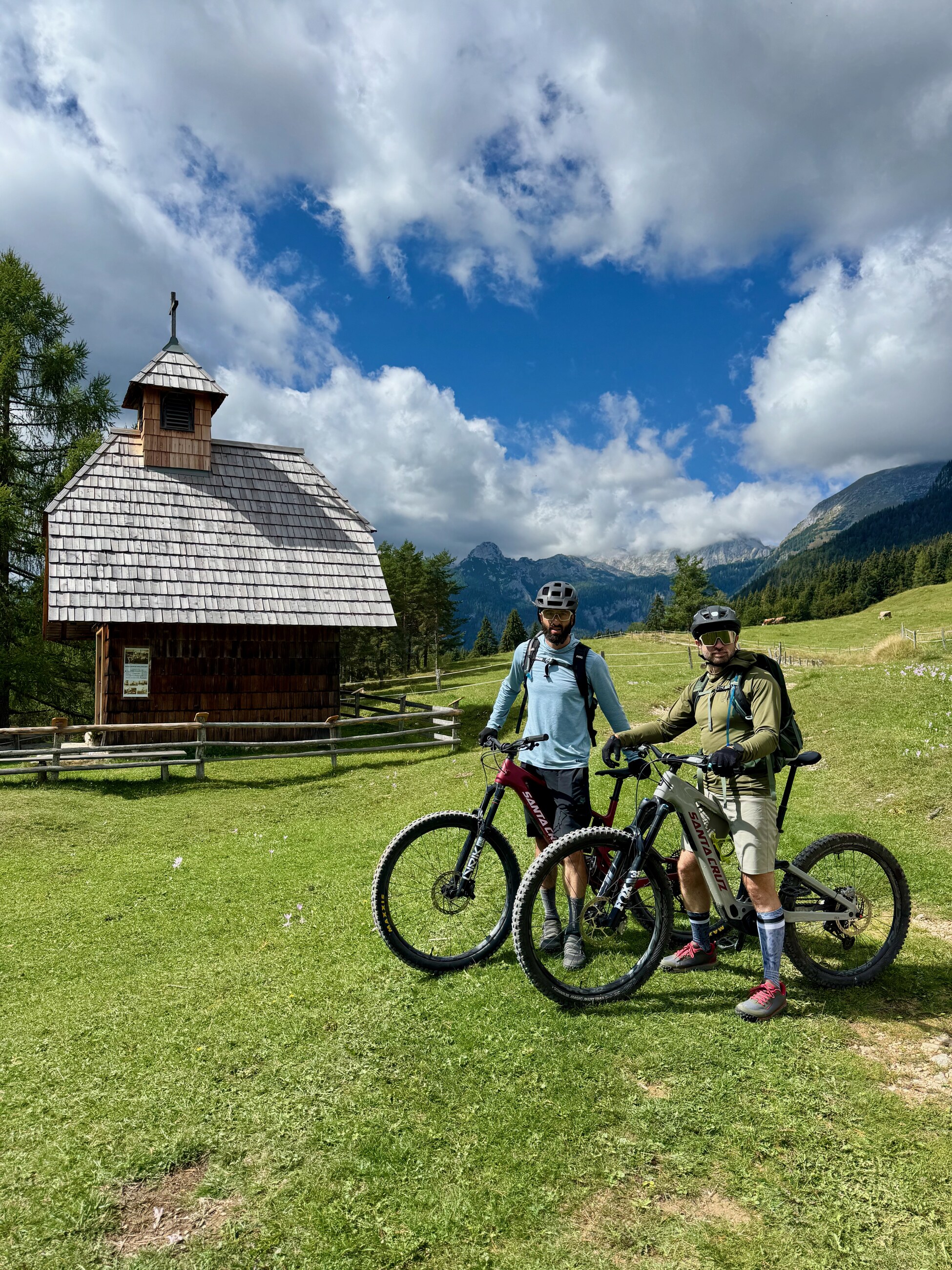
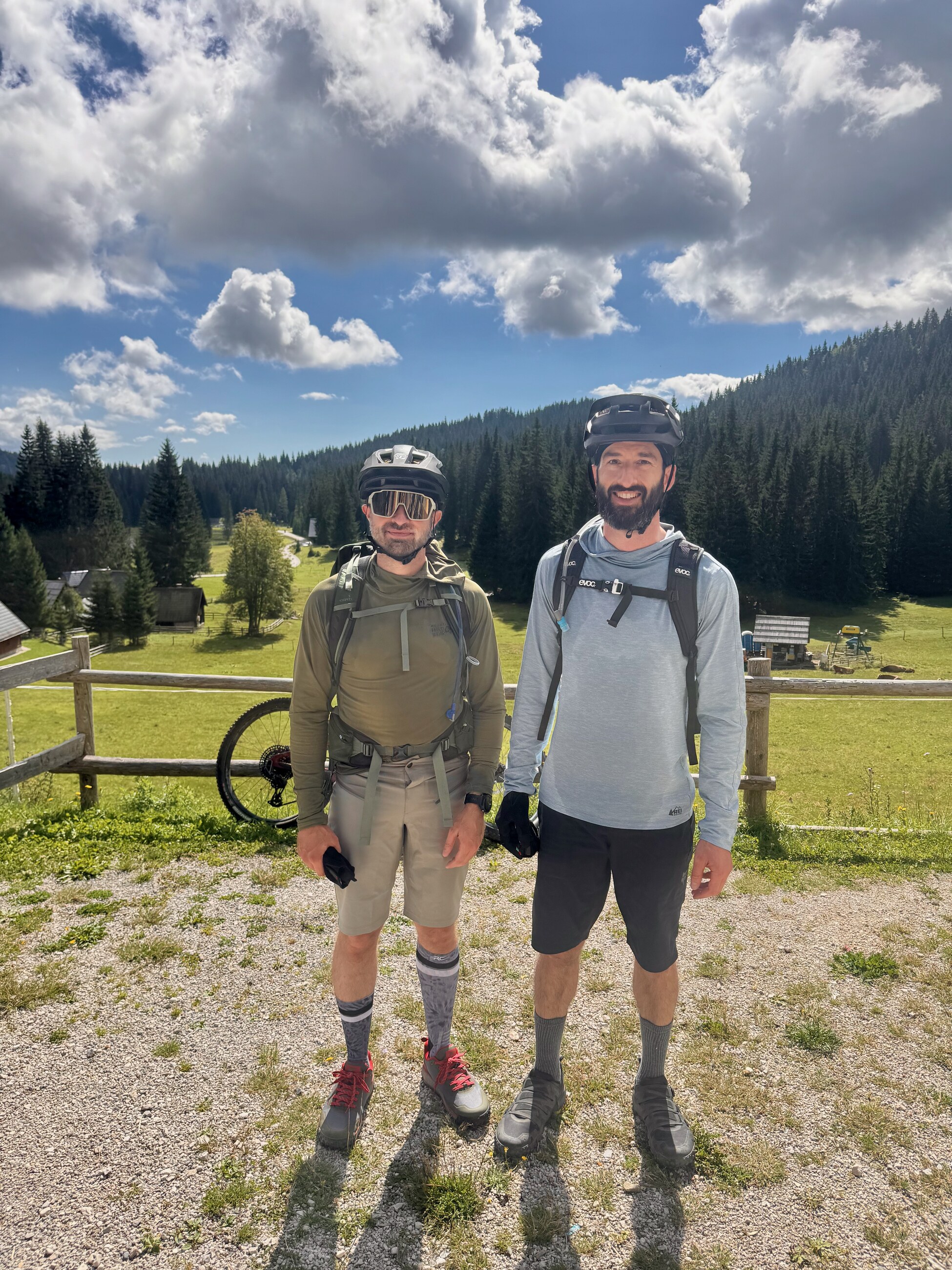
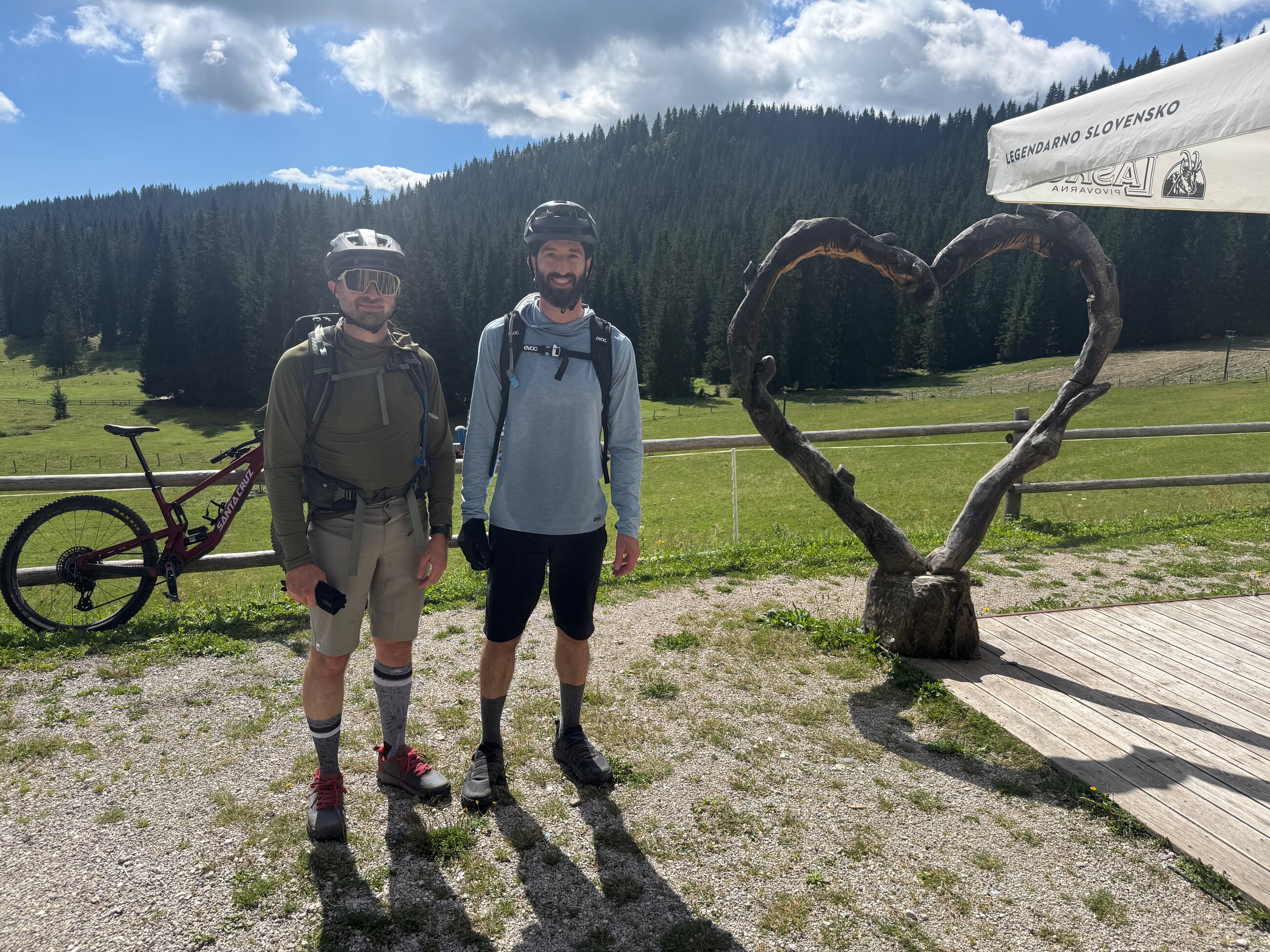
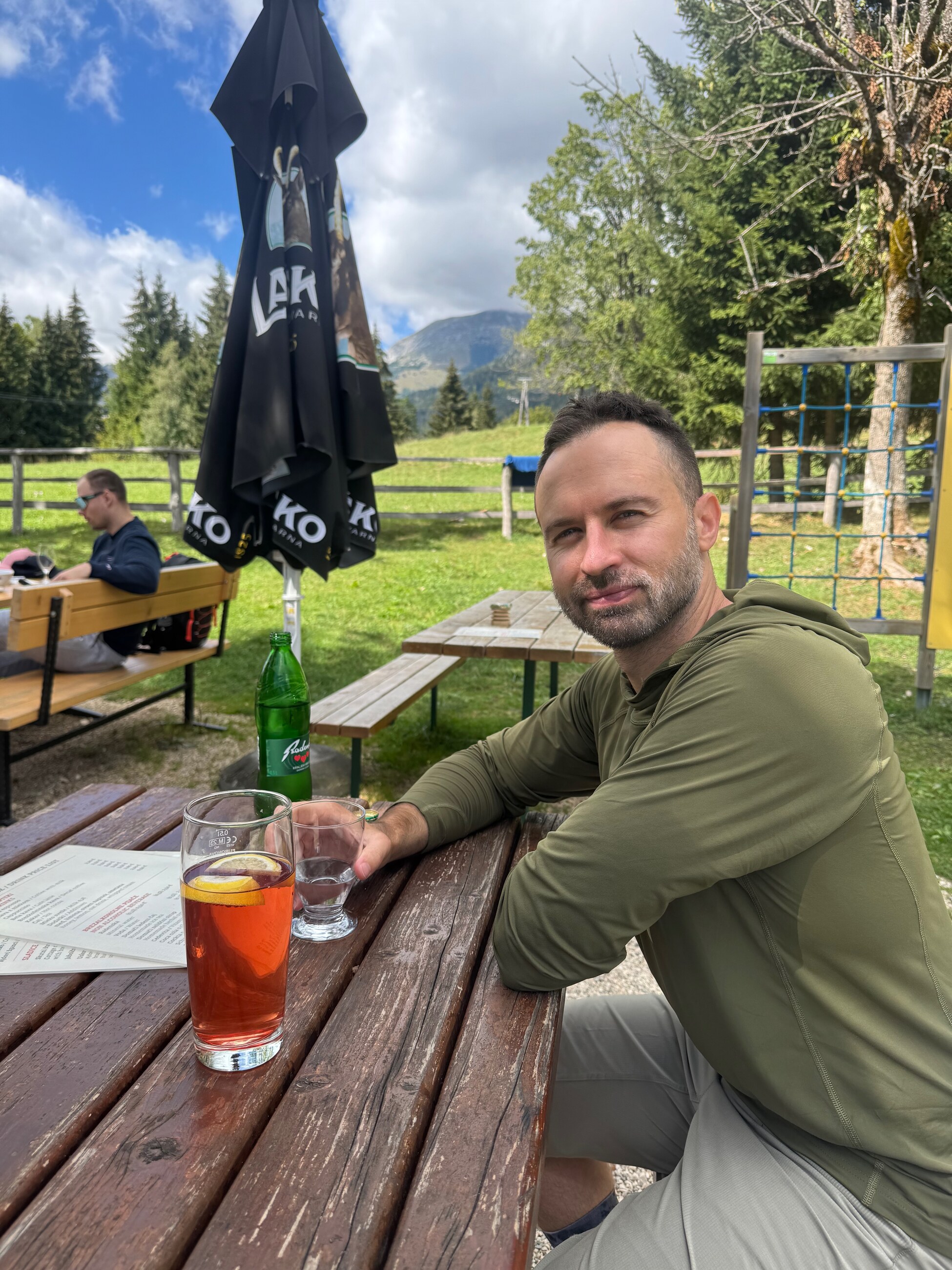
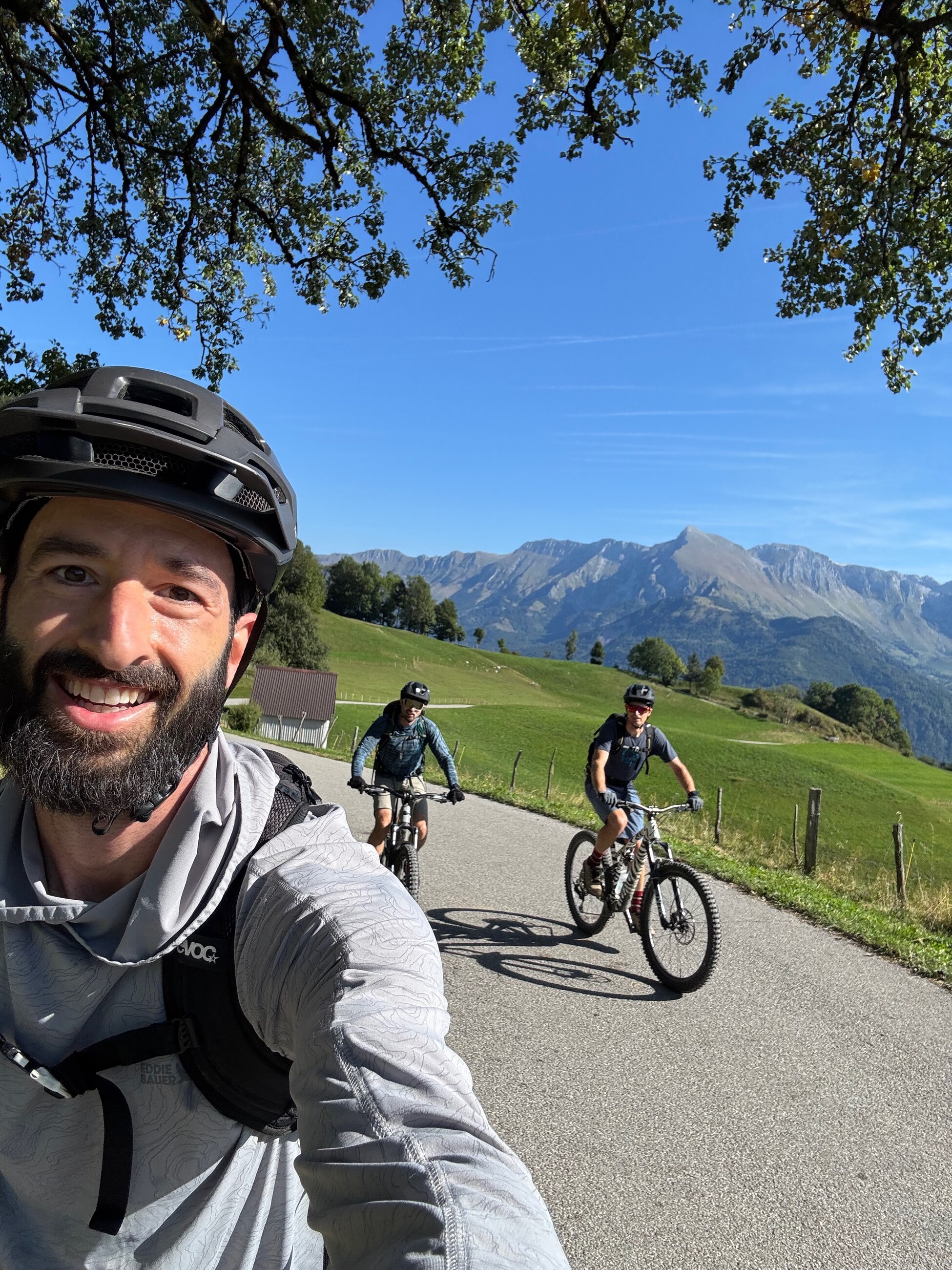
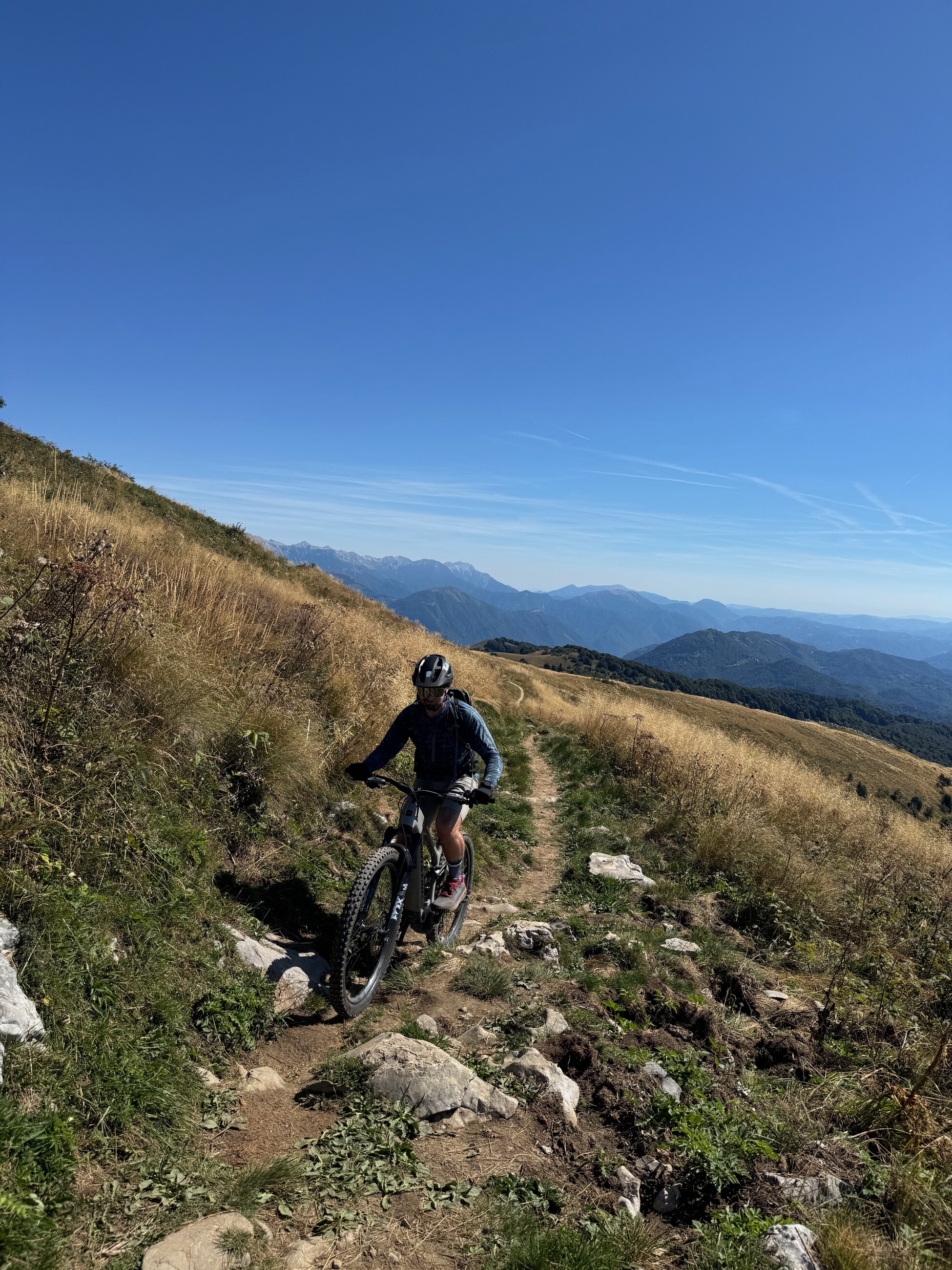
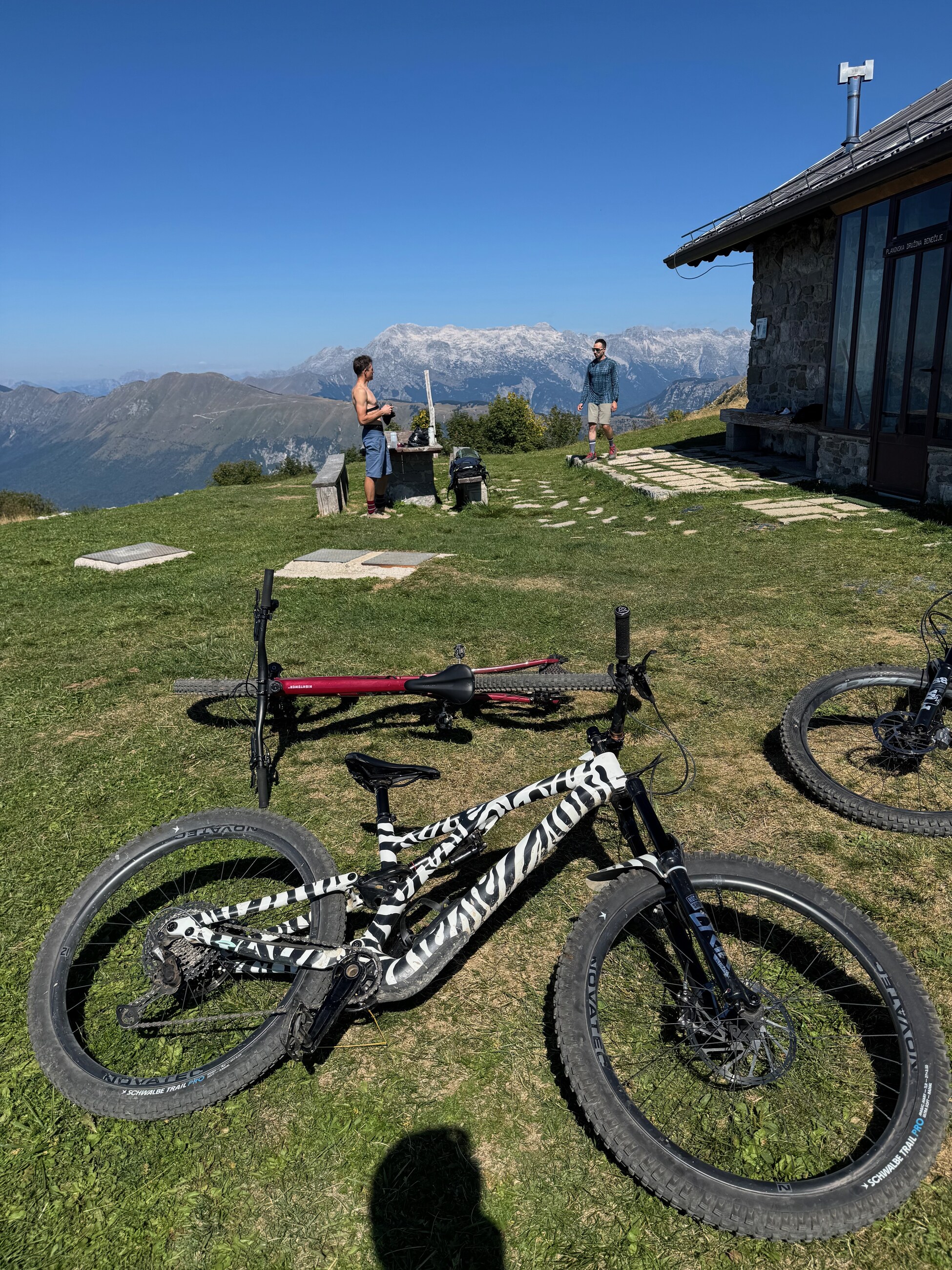
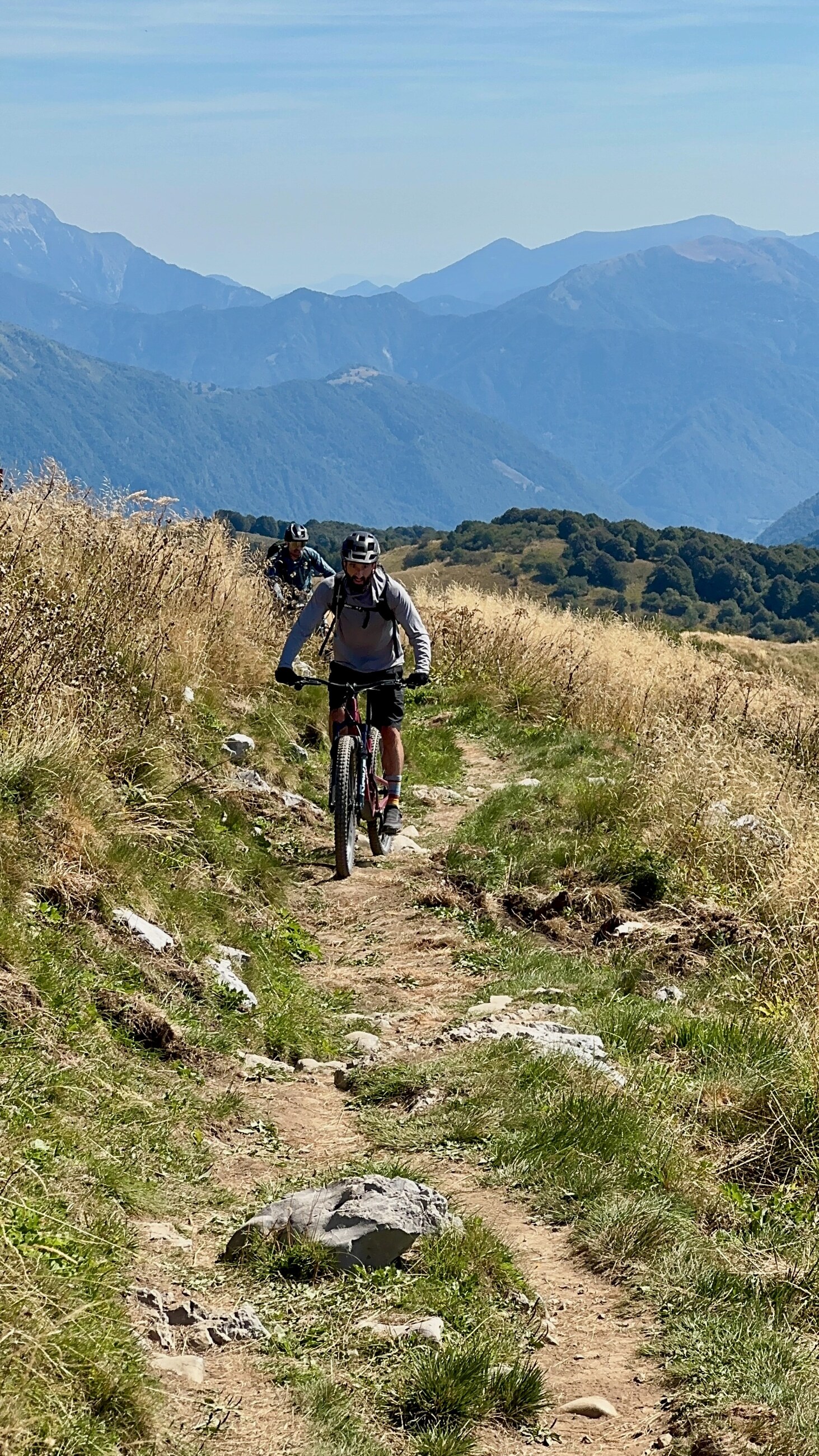
Our first ride climbed for roughly three hours into Triglav National Park through extremely green forests, pastures and small mountain farming communities. Local farmers pasture their cows together in the mountains, sharing a shepherd while producing cheese in the small alpine villages. It was mushroom season, and families were out collecting porcini. We stopped for coffee and blueberry strudel, which Ivan quickly ate most of, while David's request for an iced coffee produced an espresso with a single ice cube. We later had lunch in a mountain pasture village and spent most of the day surrounded by views of the Julian Alps.
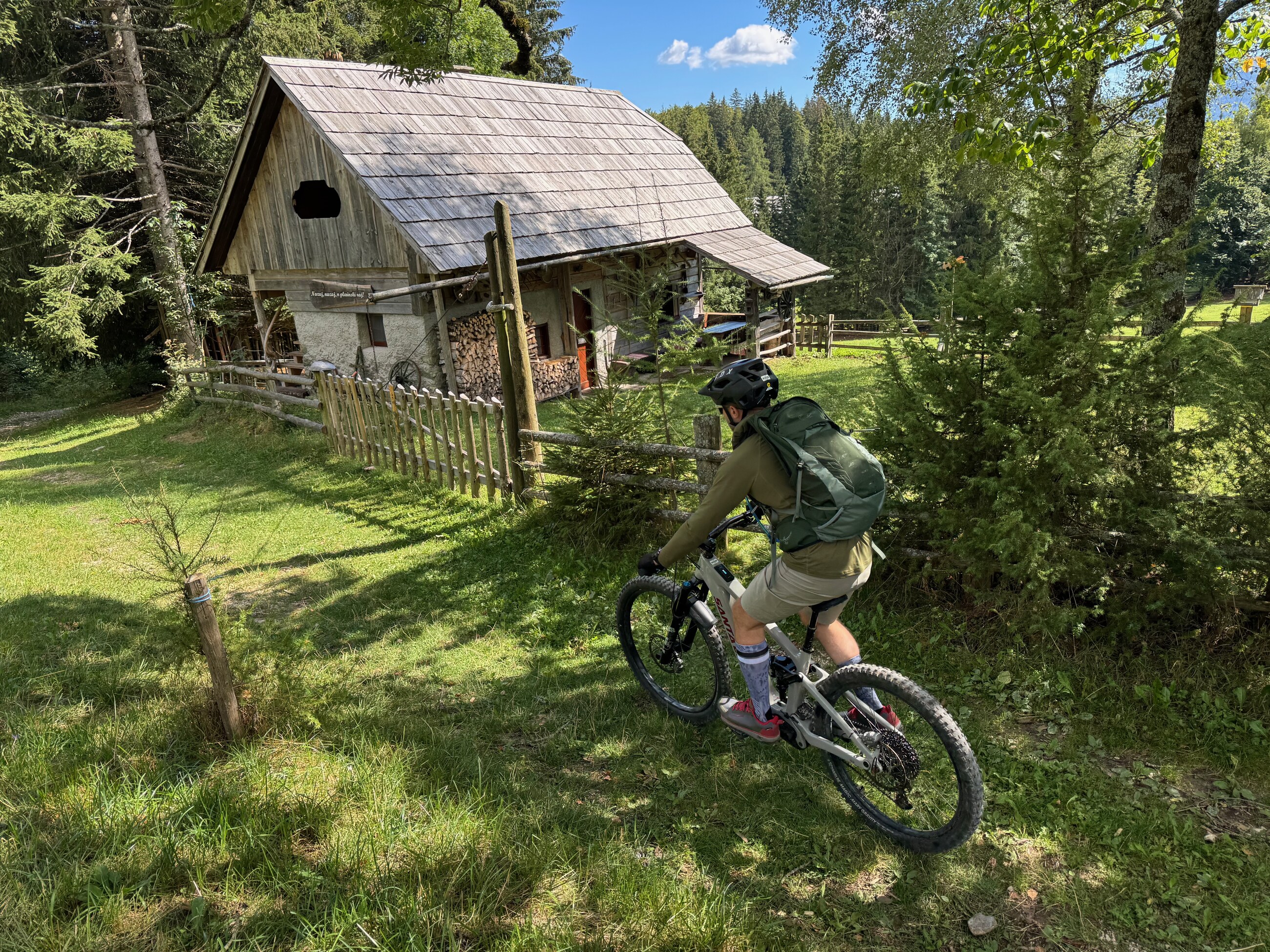
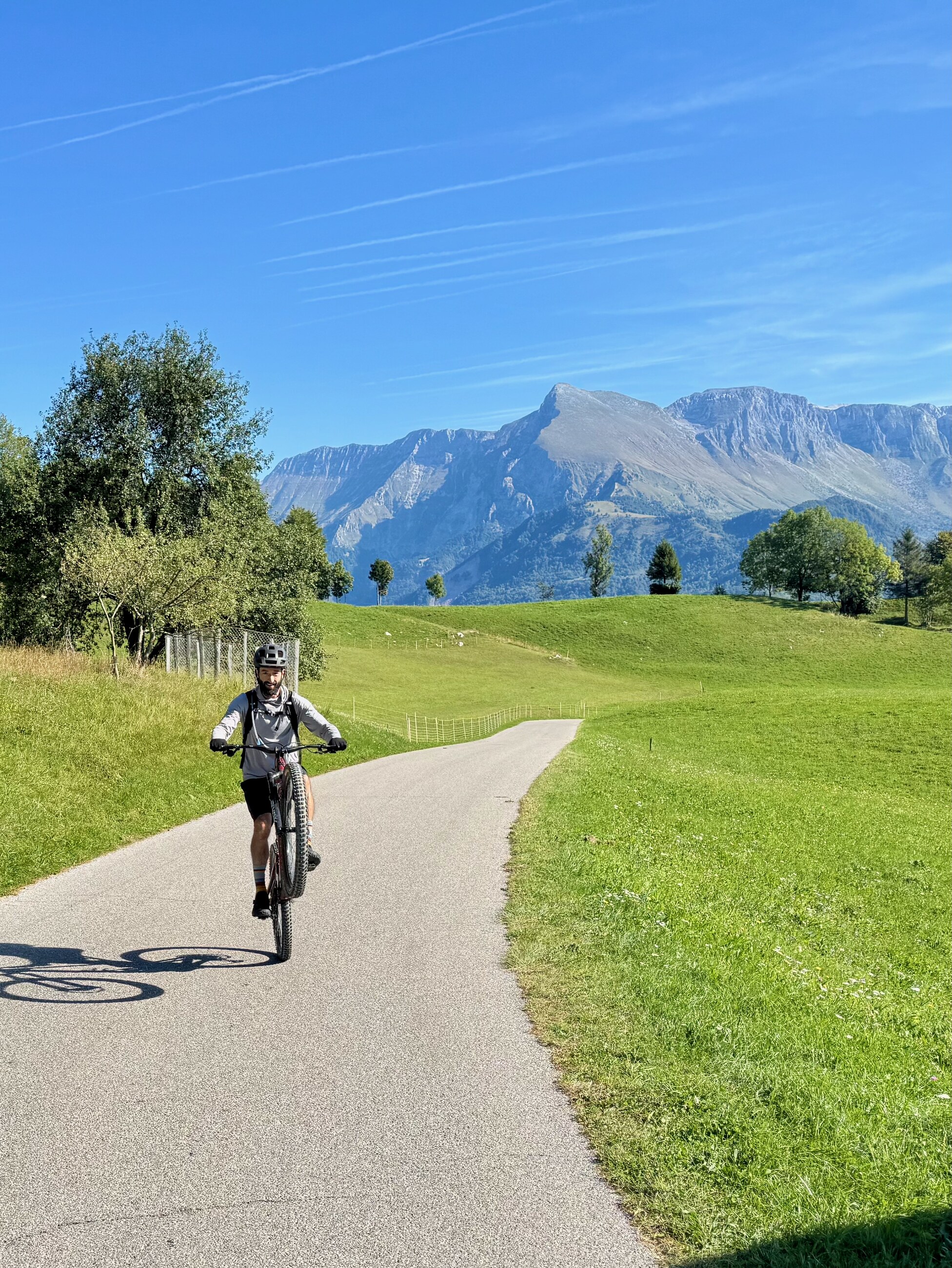
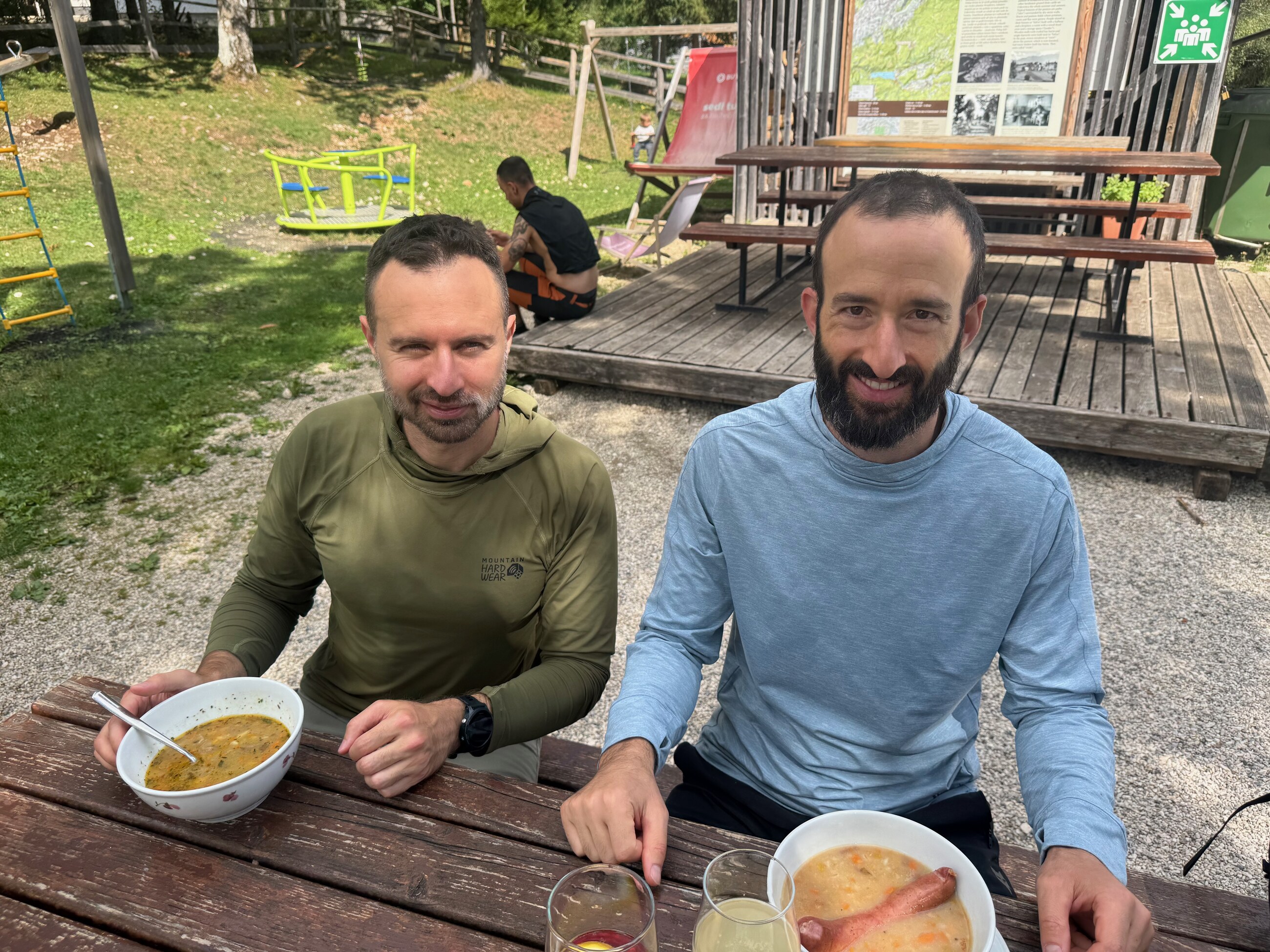
David convinced Tomaž to get us off the gravel road and onto a primitive singletrack descent. It was steep, rooty, off-camber and more of a hiking trail.
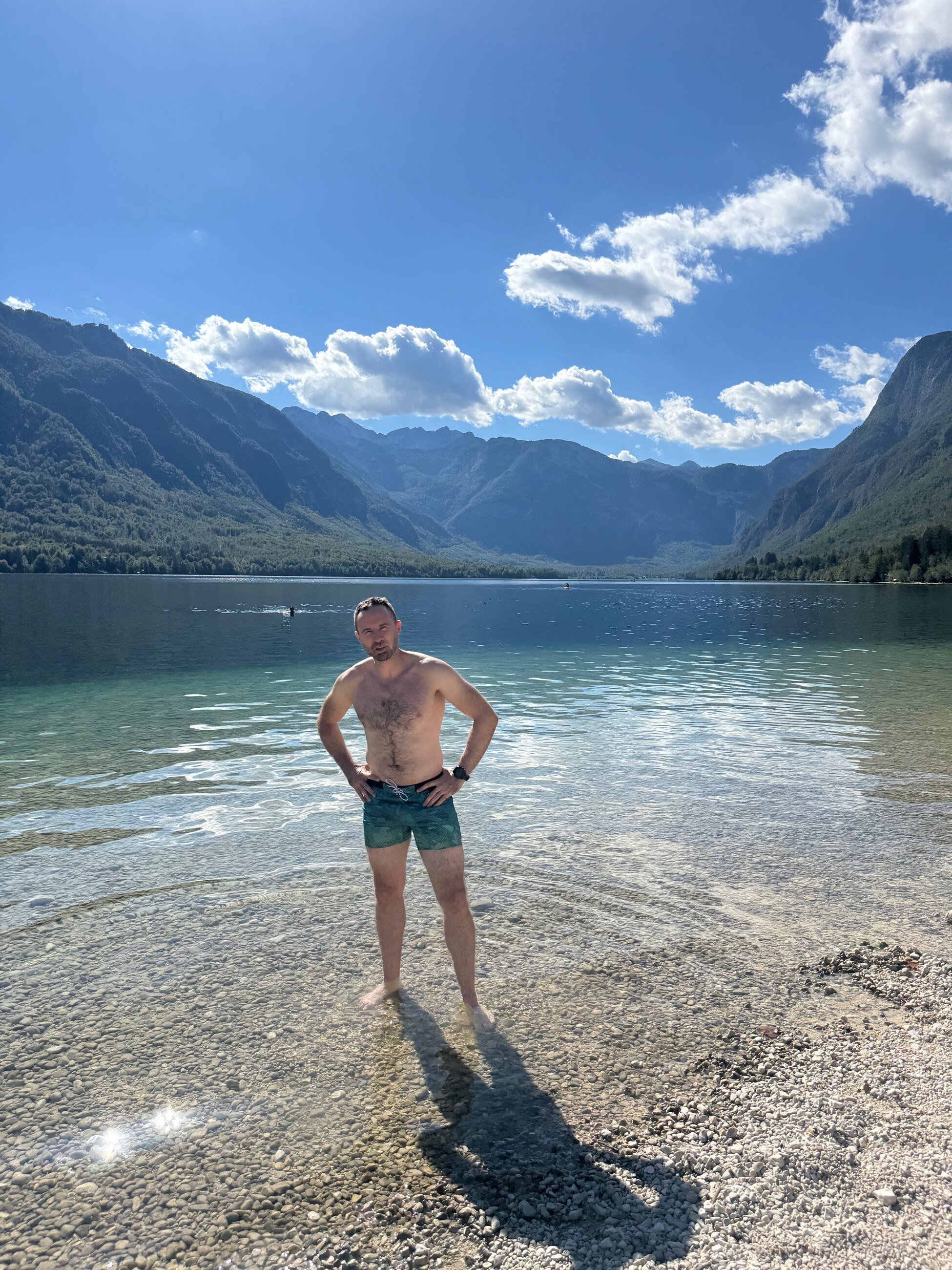
We eventually descended all the way to Lake Bohinj and went for a swim with the locals. The water was surprisingly warm. The pebbles were less friendly to Ivan's sensitive feet.
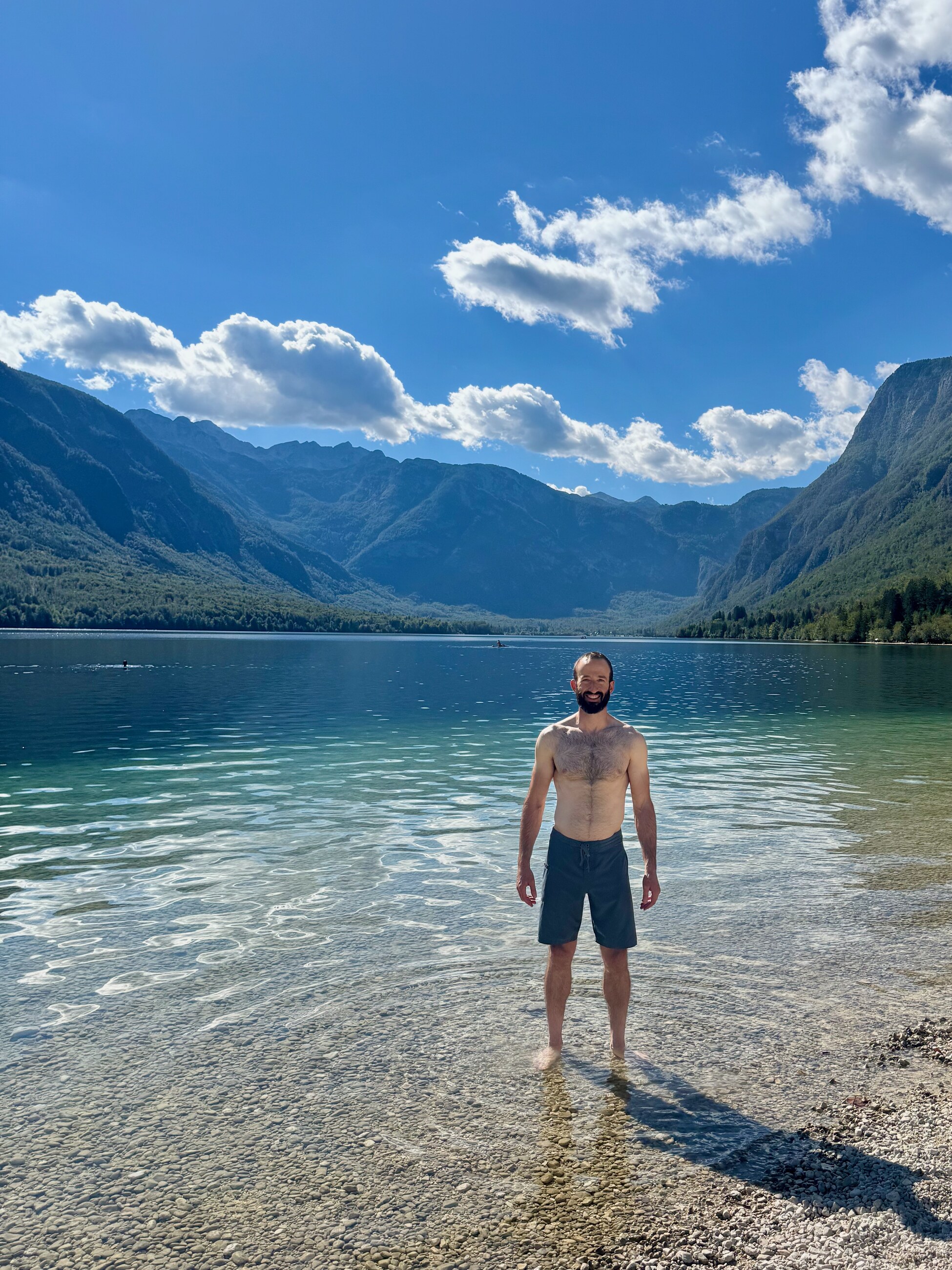
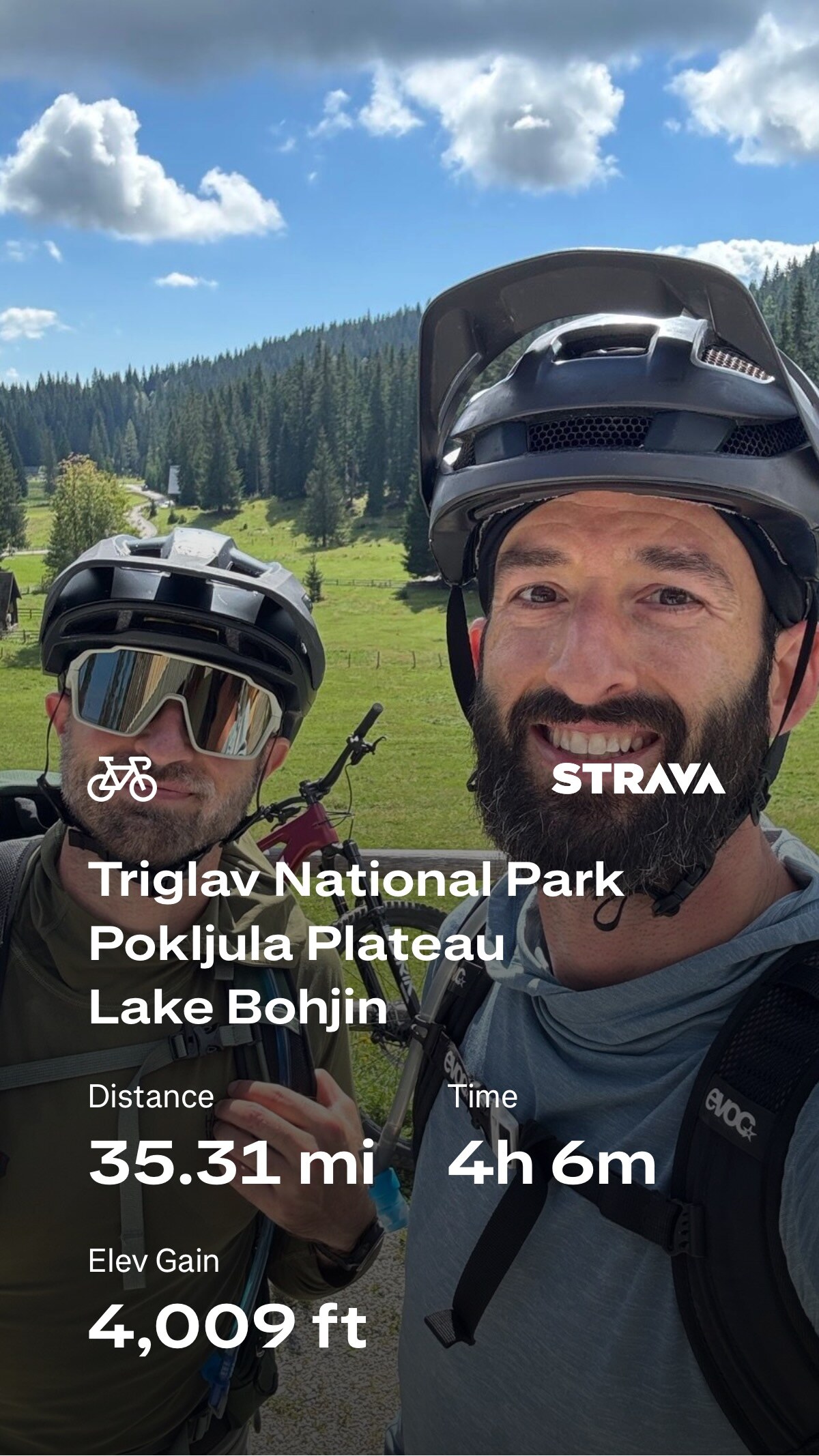
The ride finished at about 35 miles and 4,000 vertical feet. From the finish, we drove our rental car onto a train, rode through the Julian Alps in a dark six-kilometer tunnel, and emerged near Kobarid.
Kobarid and Italy by Bike
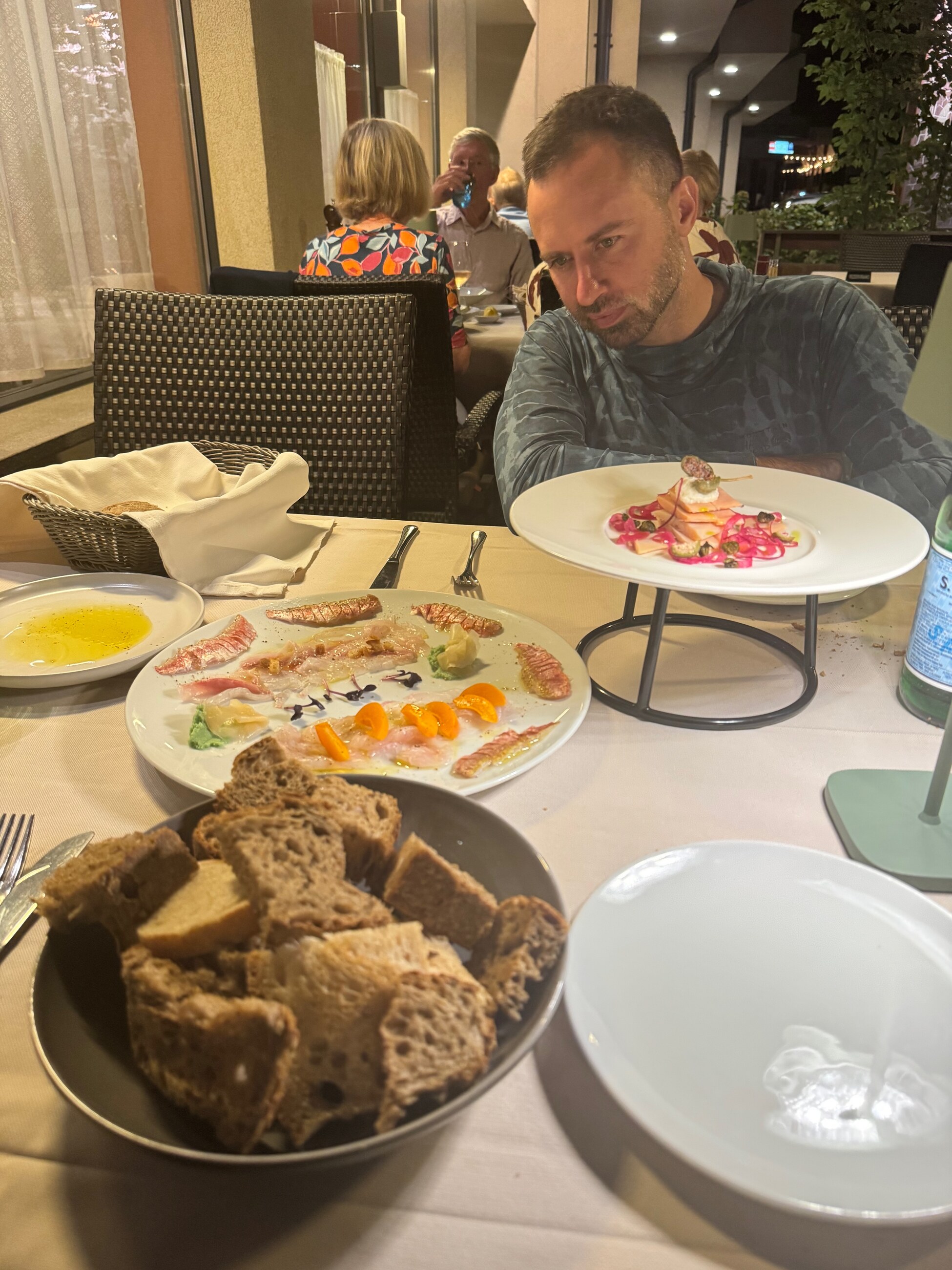
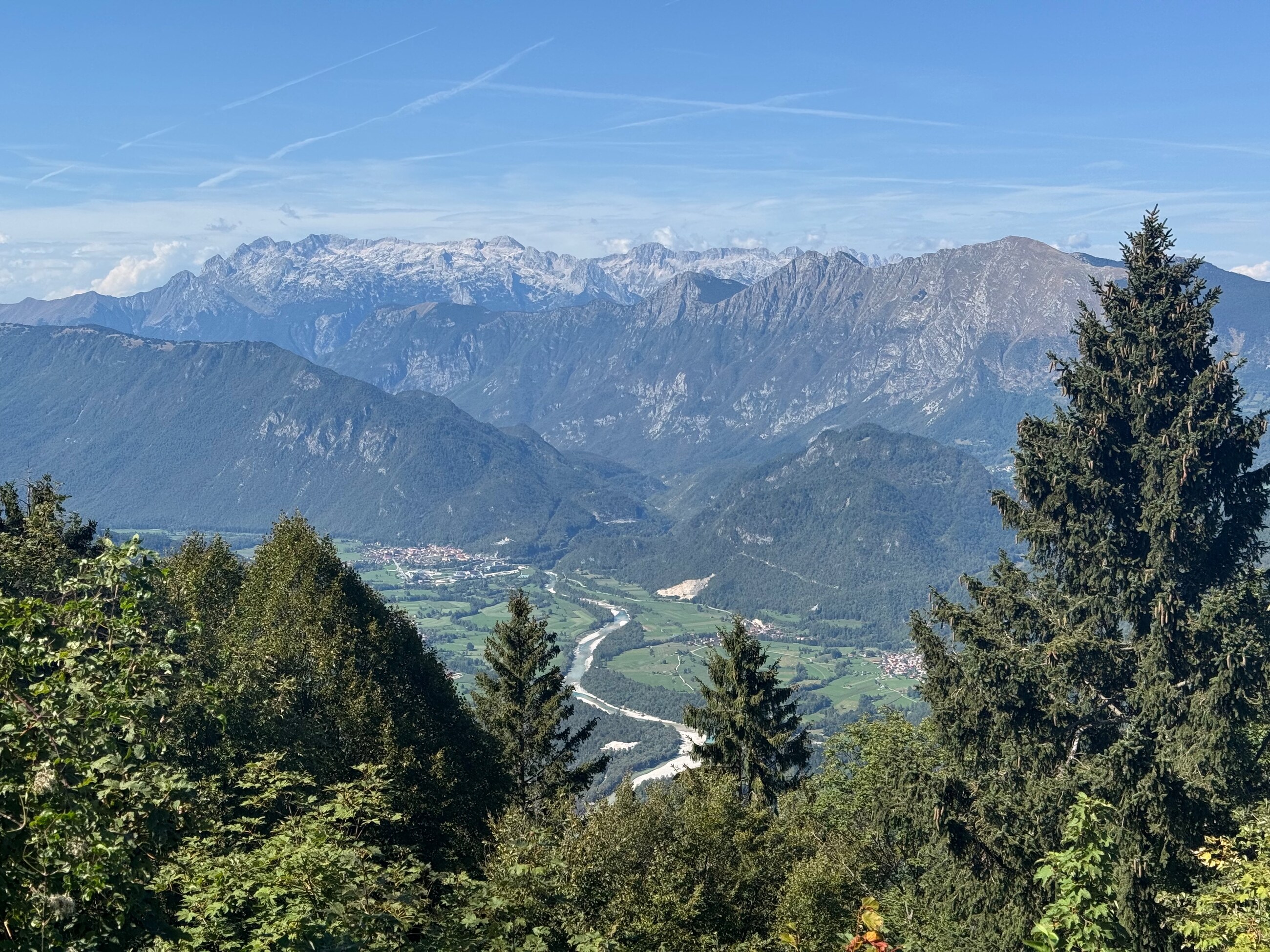
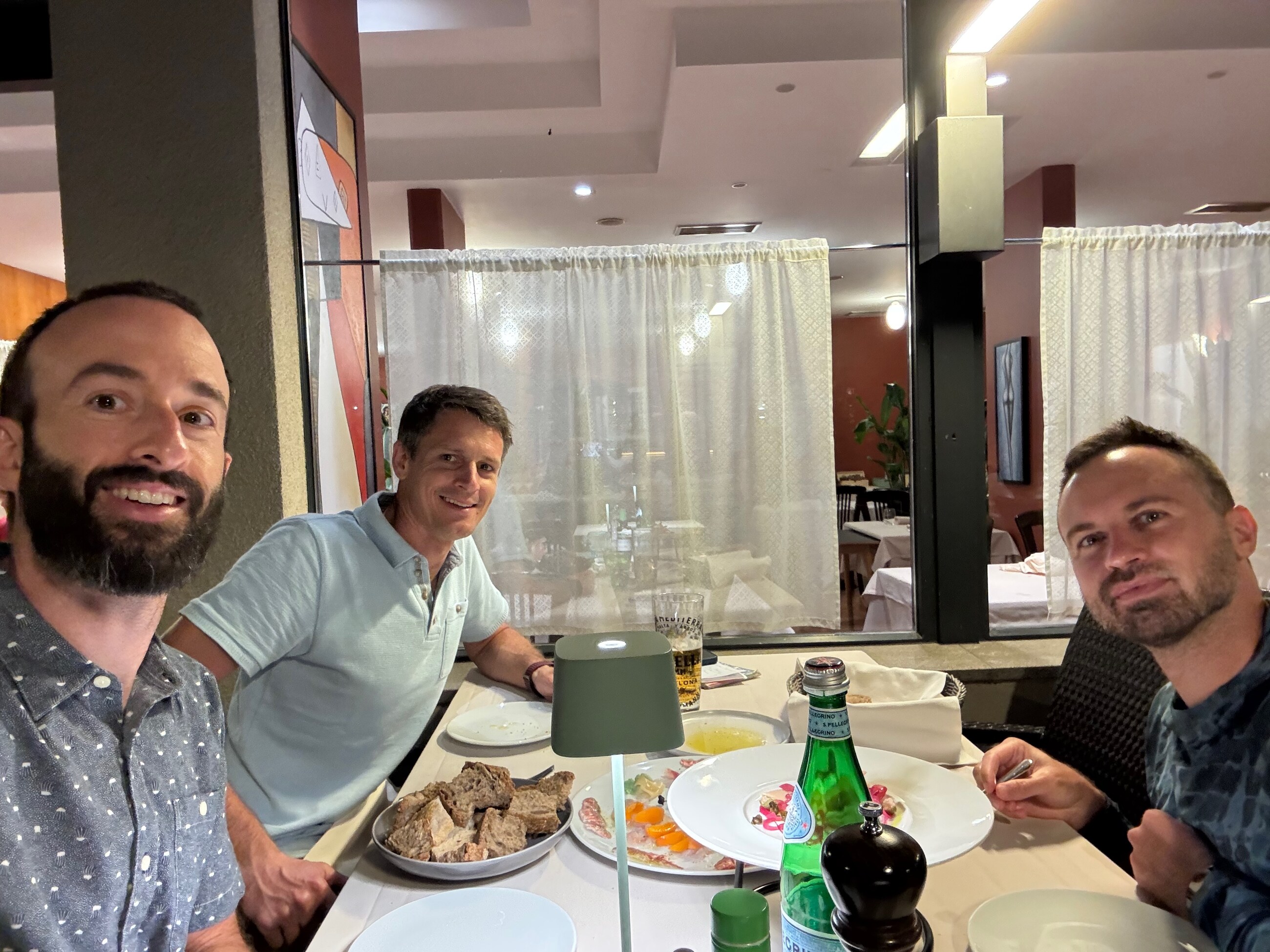
We spent two nights in Kobarid, a small town in the spectacular Soča Valley surrounded by mountains. After our first ride we had a huge seafood dinner with Tomaž, including sea bream, squid, prawns, langoustines and seafood pasta.
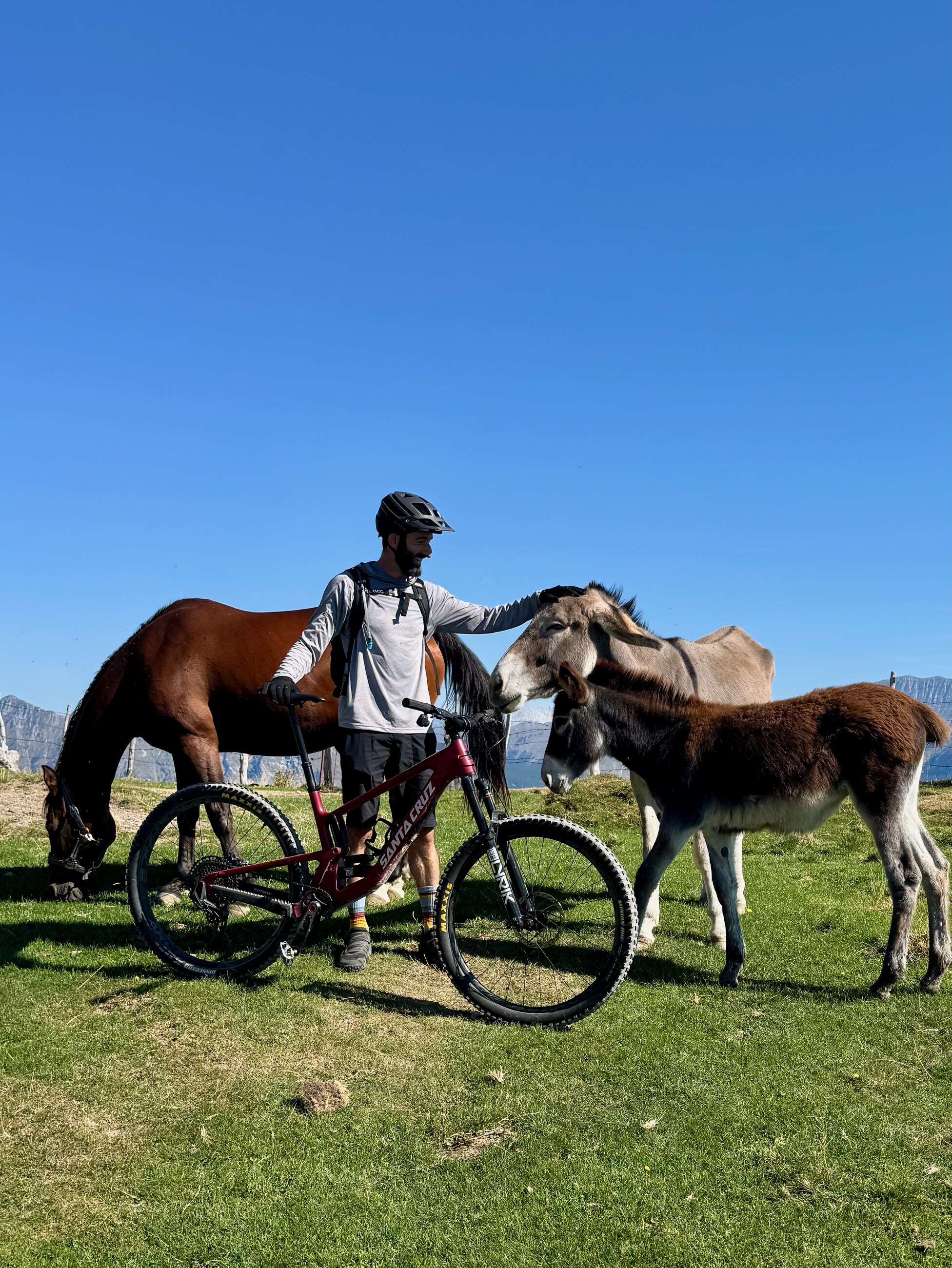
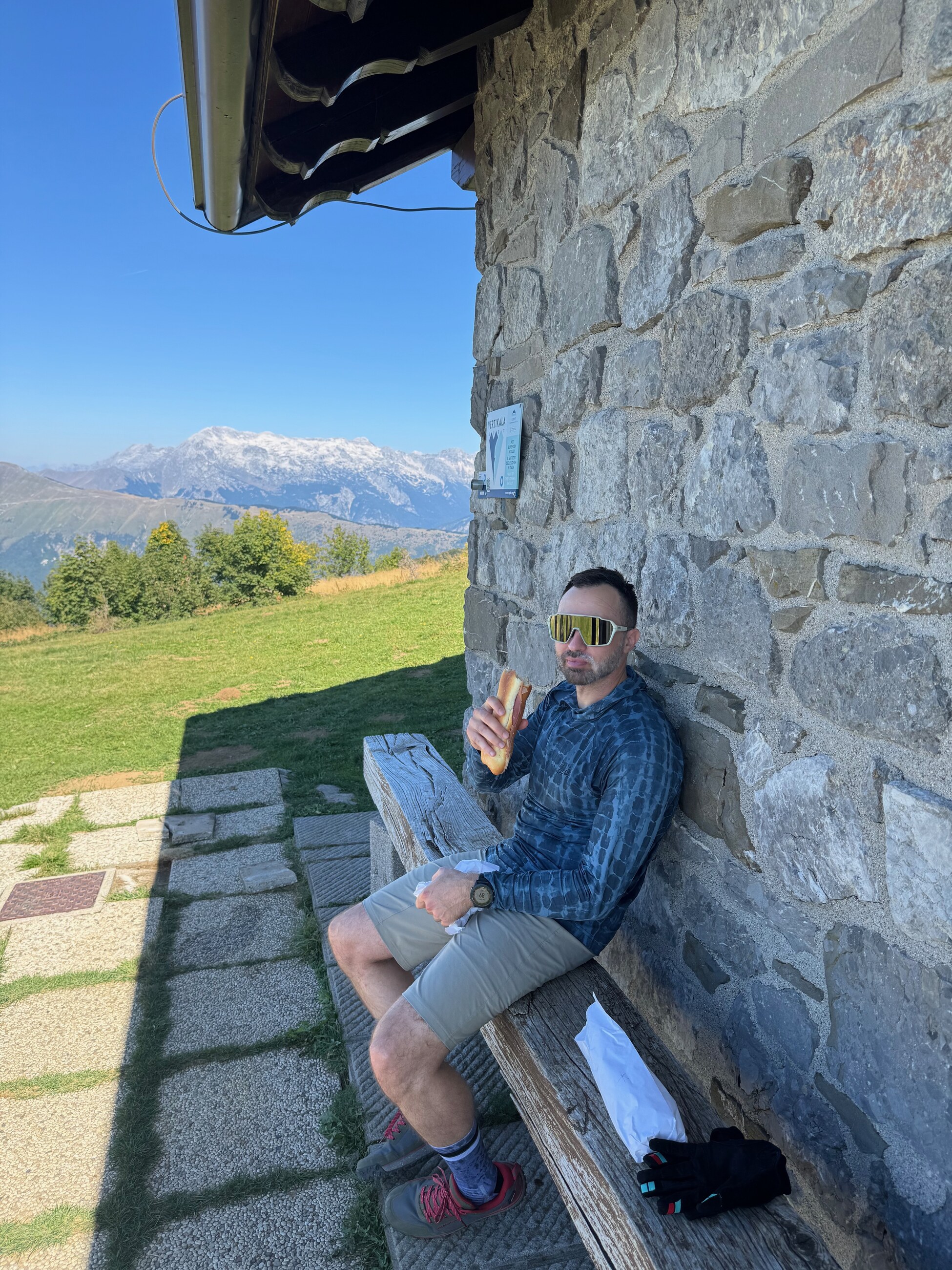
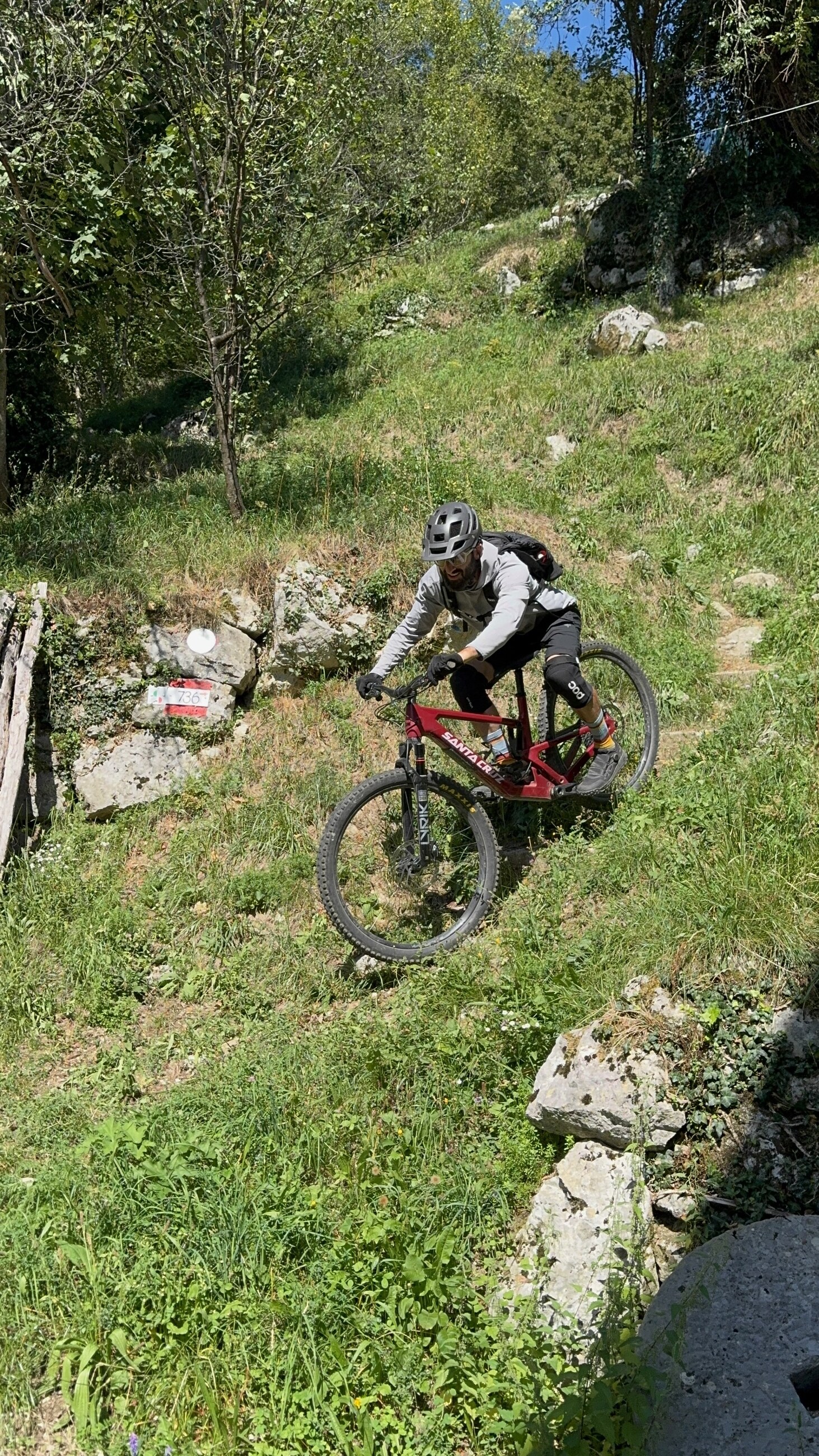
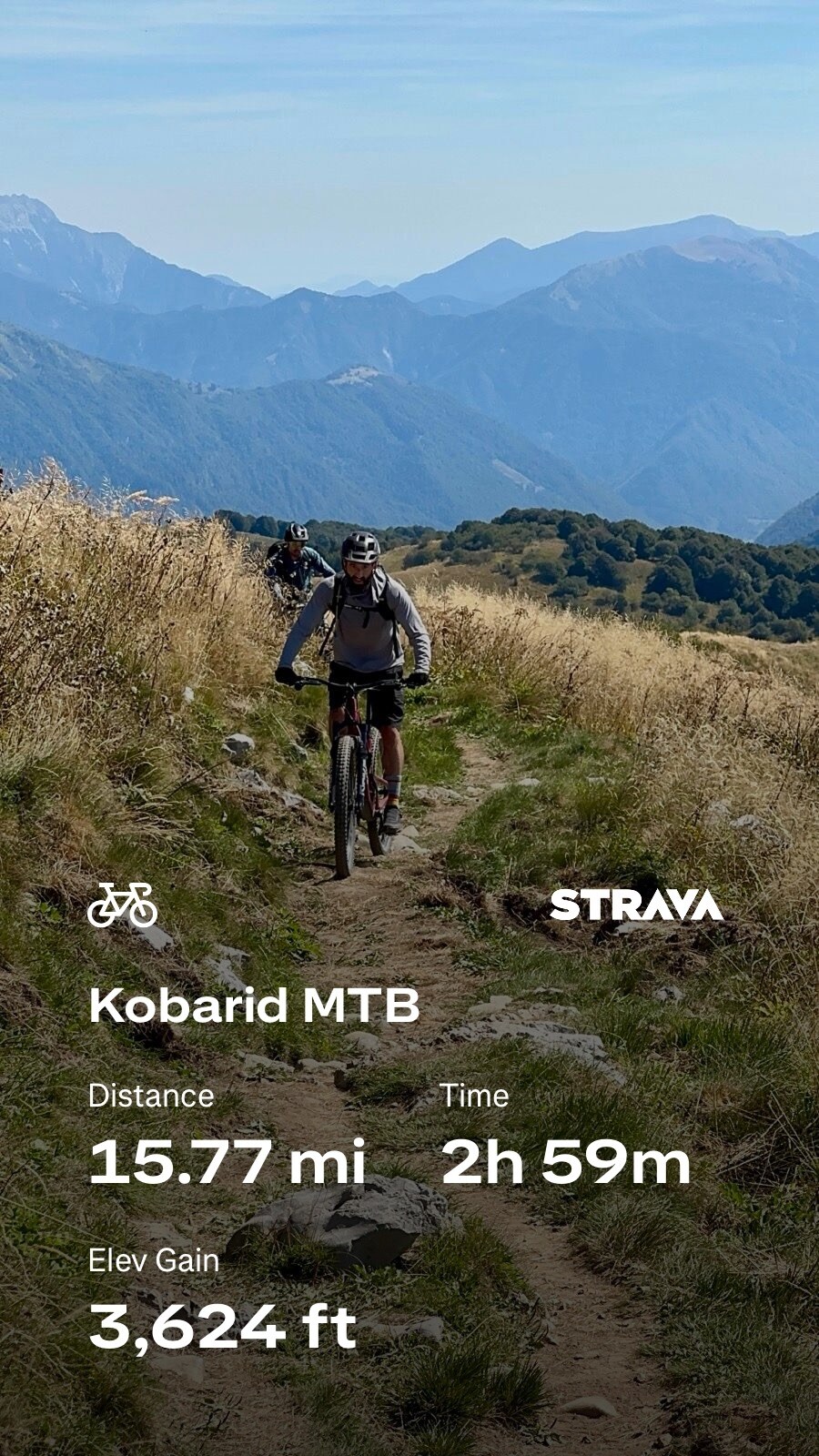
The next morning we headed out for another ride. We climbed through farms and pastures, crossed into Italy by trail, passed grazing horses and donkeys, and ate our baguette sandwiches at a remote mountain hut where we were completely alone.
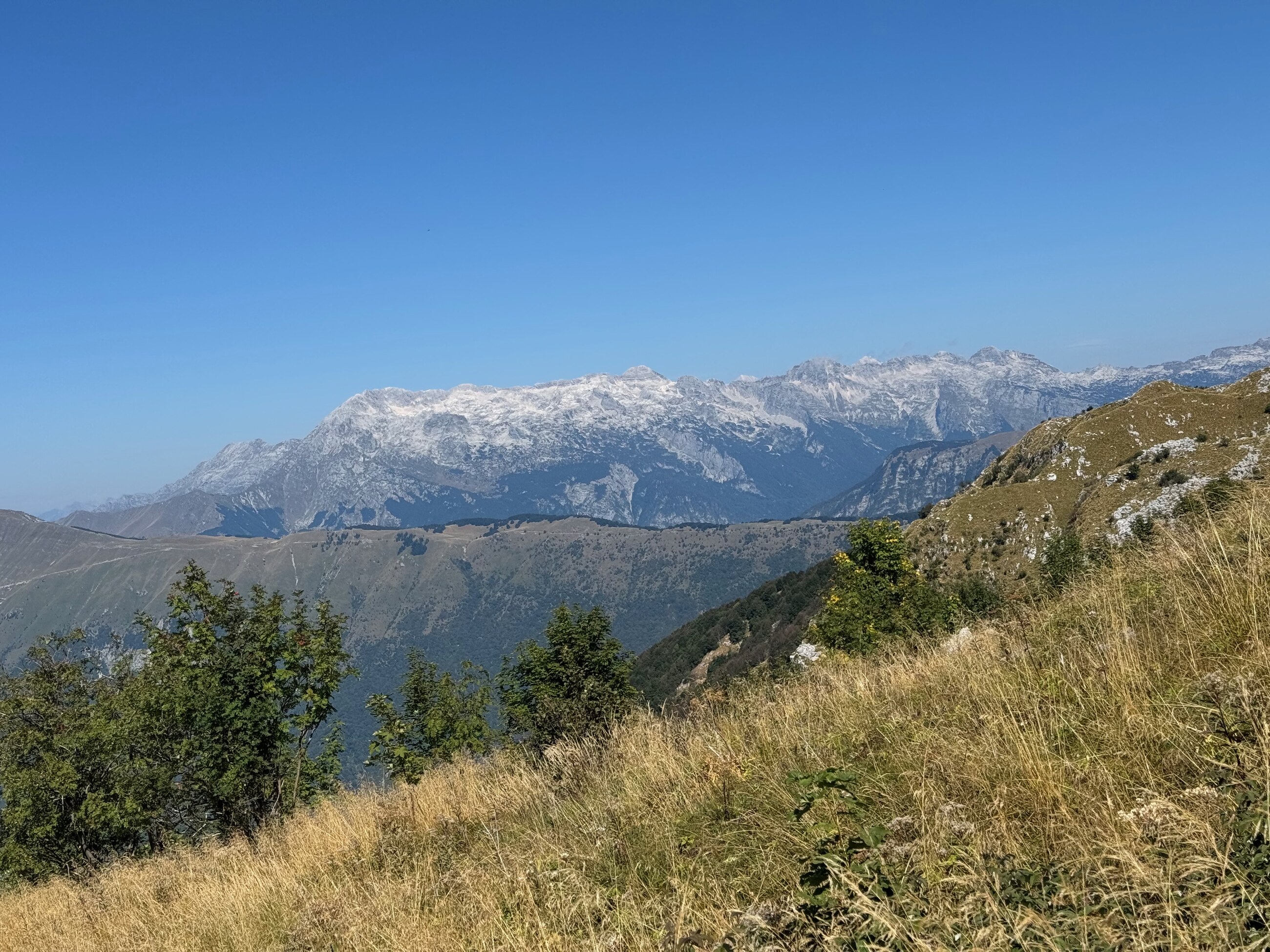
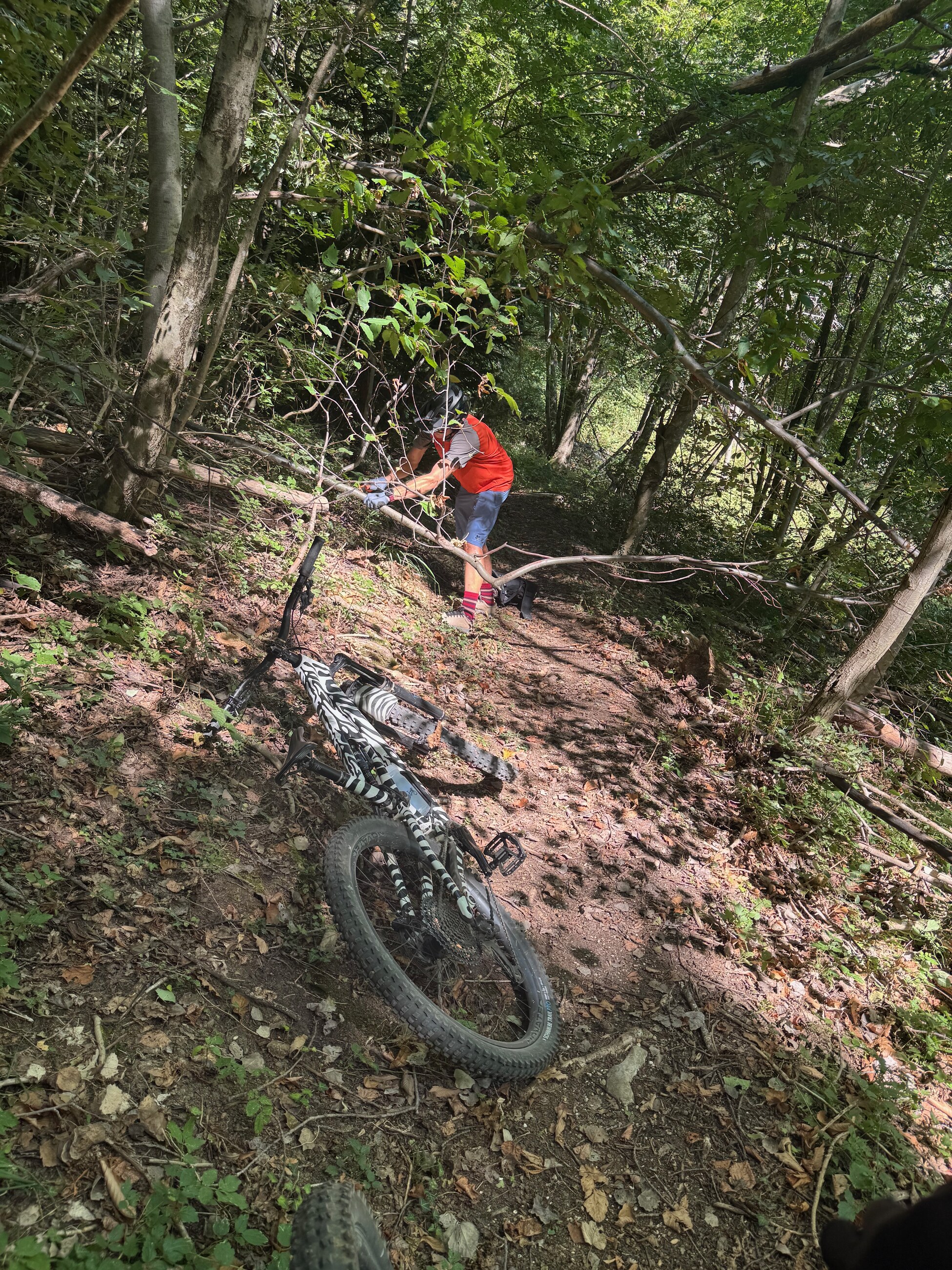
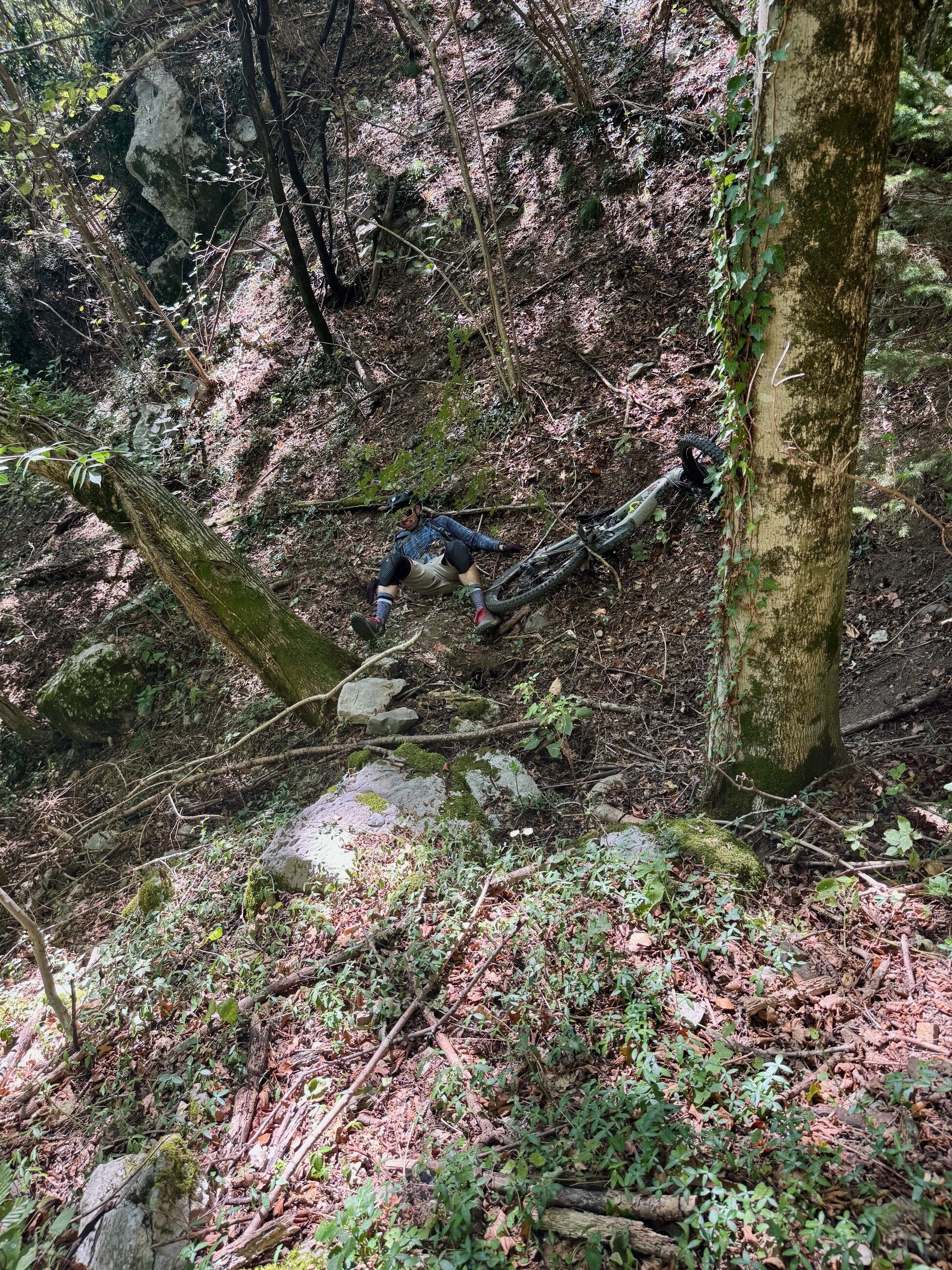
The first descent was a primitive forest trail with steep slopes, branches, thorns and obstacles everywhere. Tomaž periodically stopped, pulled a saw out of his backpack and performed some impromptu trail maintenance. Ivan eventually took a dramatic slide down an embankment that resulted in essentially no injuries but concluded his technical riding for the day.
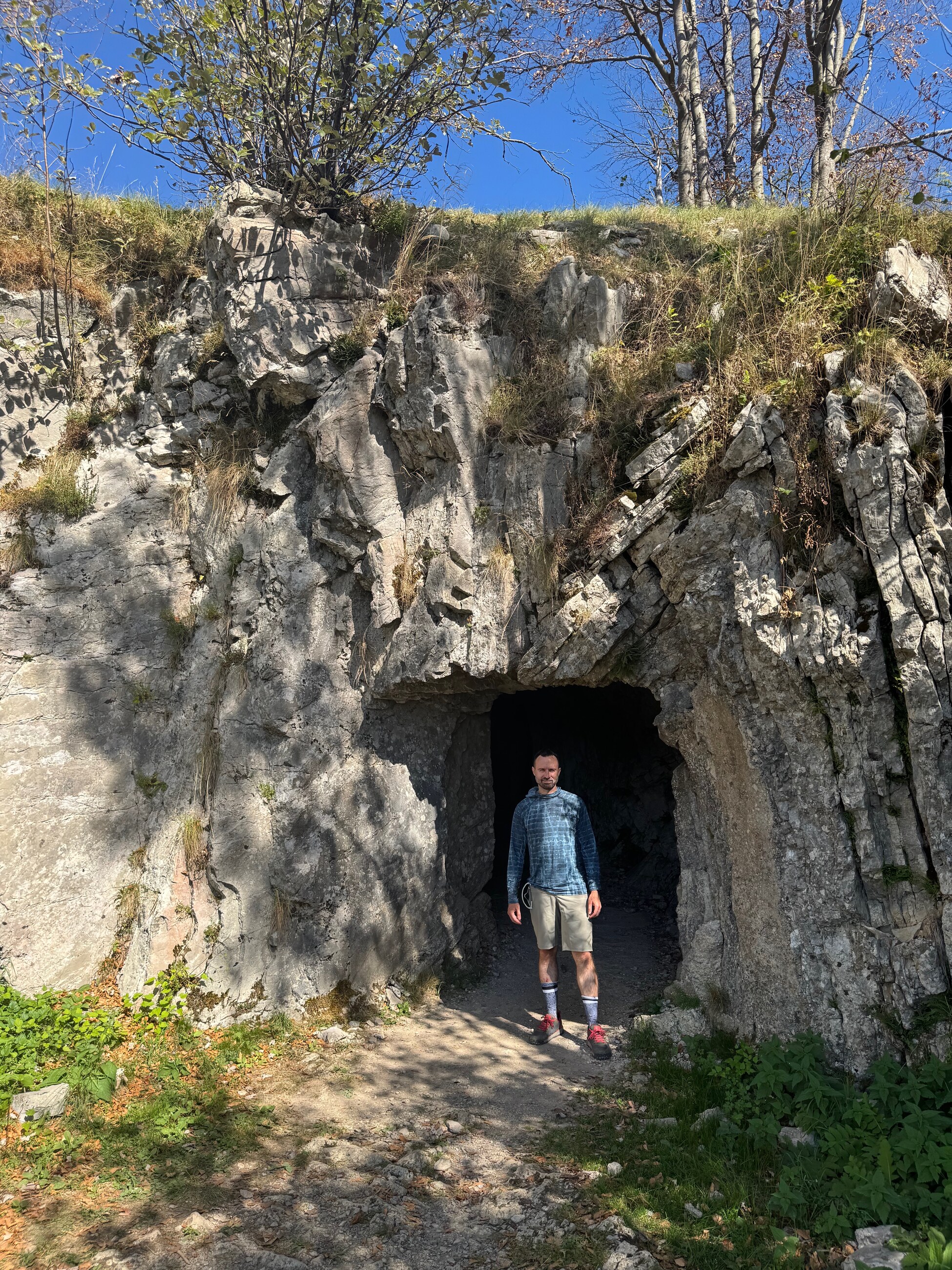
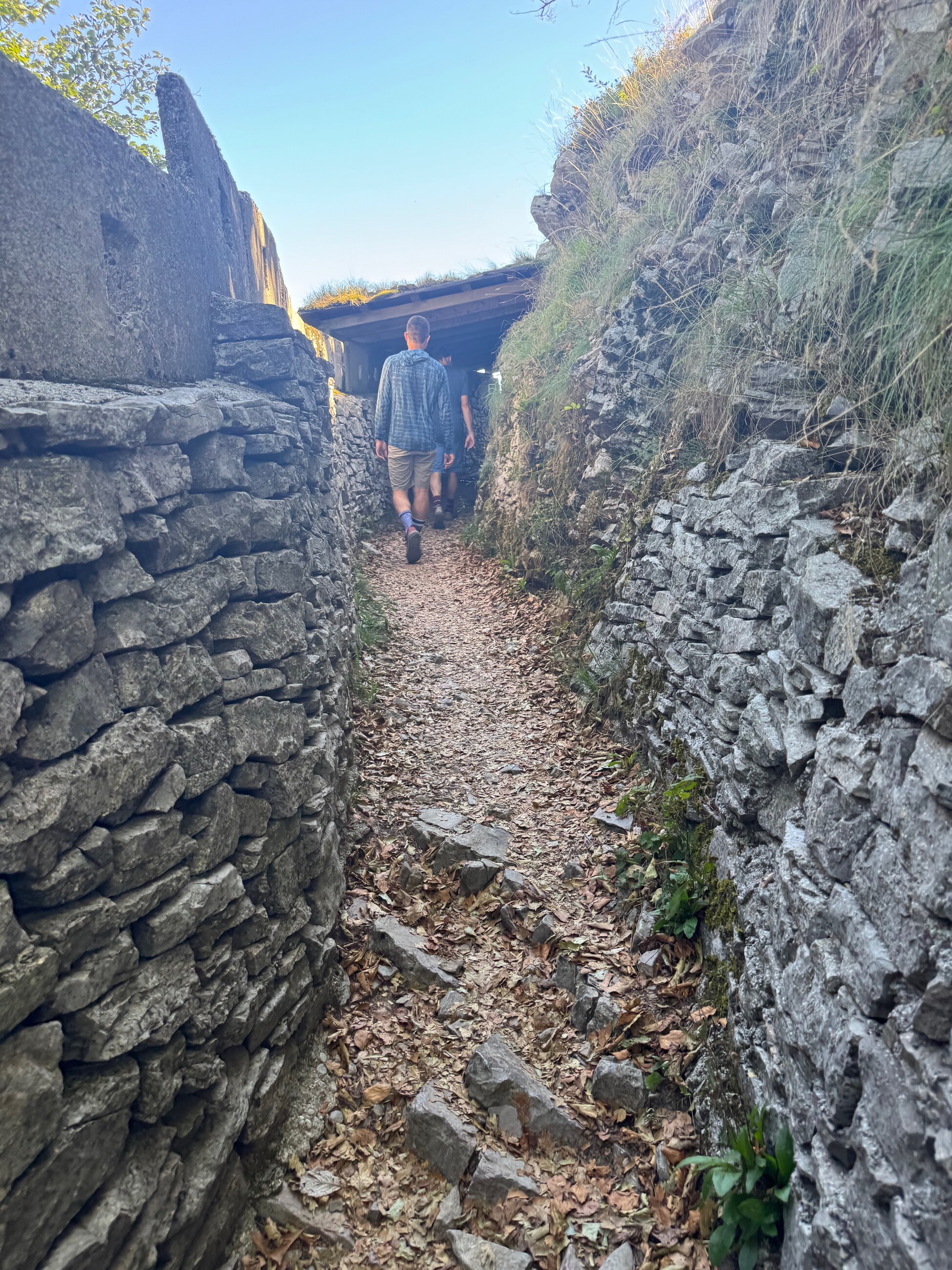
David and Tomaž continued to another downhill while Ivan volunteered to shuttle the van. Before the final descent, we stopped at a mountaintop World War I site with old trenches and huge views over the Kobarid Valley.
Before leaving, Ivan asked Tomaž whether the pedal on the left was the clutch, then immediately stalled his beautiful new van after forgetting to release the parking brake.
David and Tomaž had a long, technical and very fun final descent while Ivan accidentally took a 30-kilometer detour on a tiny mountain road that he described as one of the best drives he has ever done.
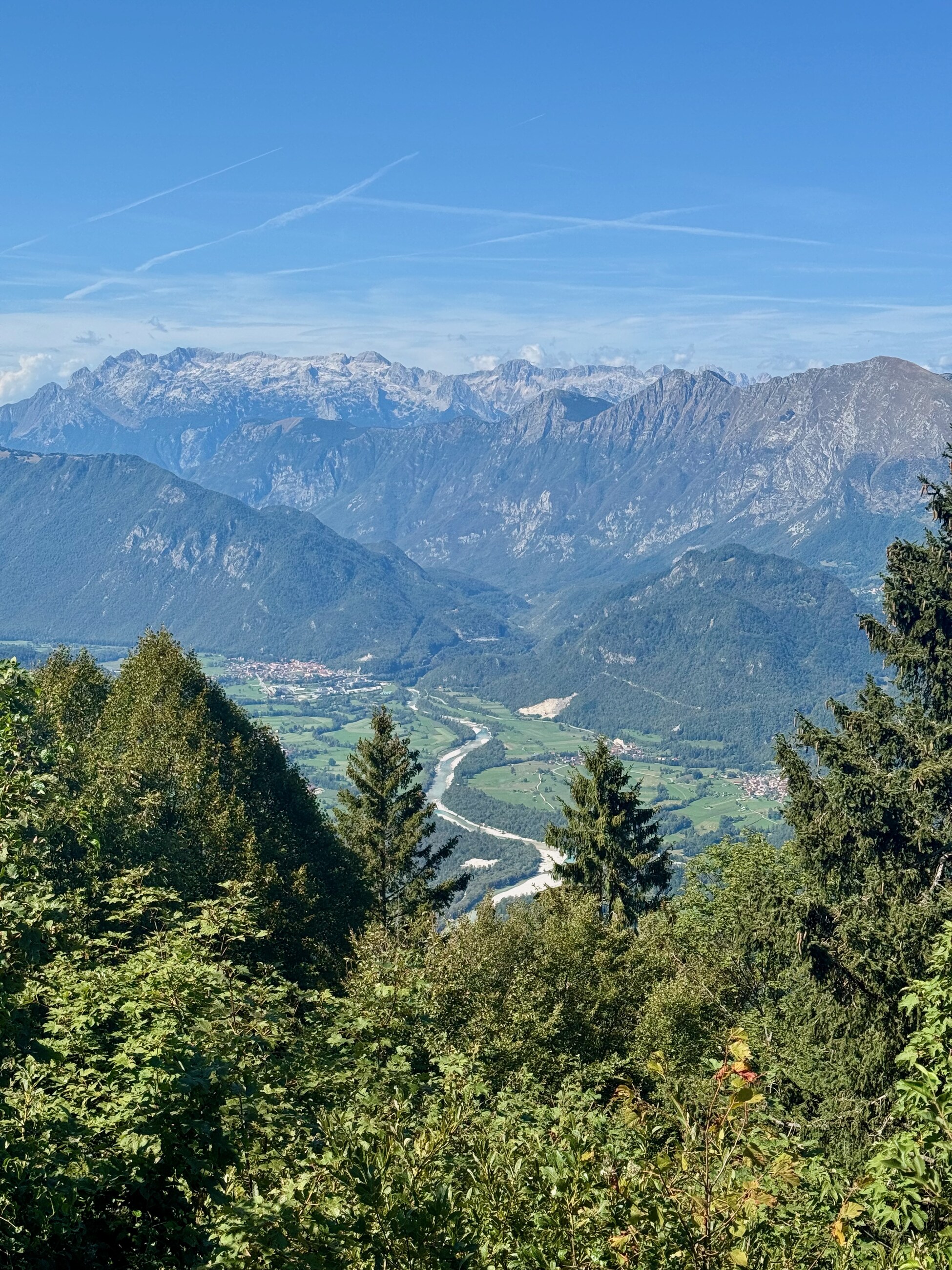
Our second ride totaled about 16 miles and 3,600 feet of climbing. We said goodbye to Tomaž after two excellent days and hope to convince him to come mountain biking with us in Colorado someday.
Plitvice Lakes
The next morning we drove through Slovenia and Italy back into Croatia and arrived at Plitvice Lakes just before noon.
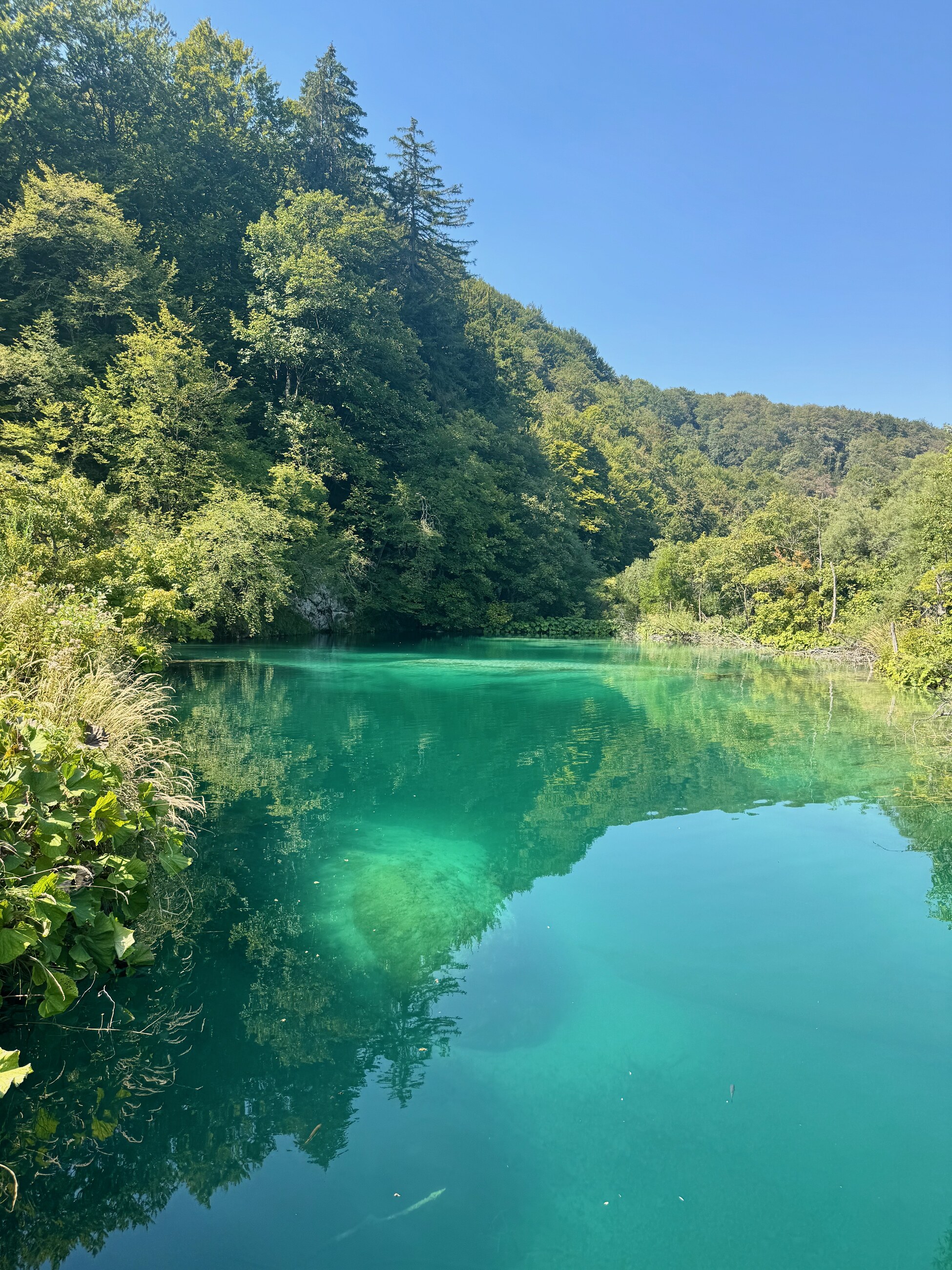
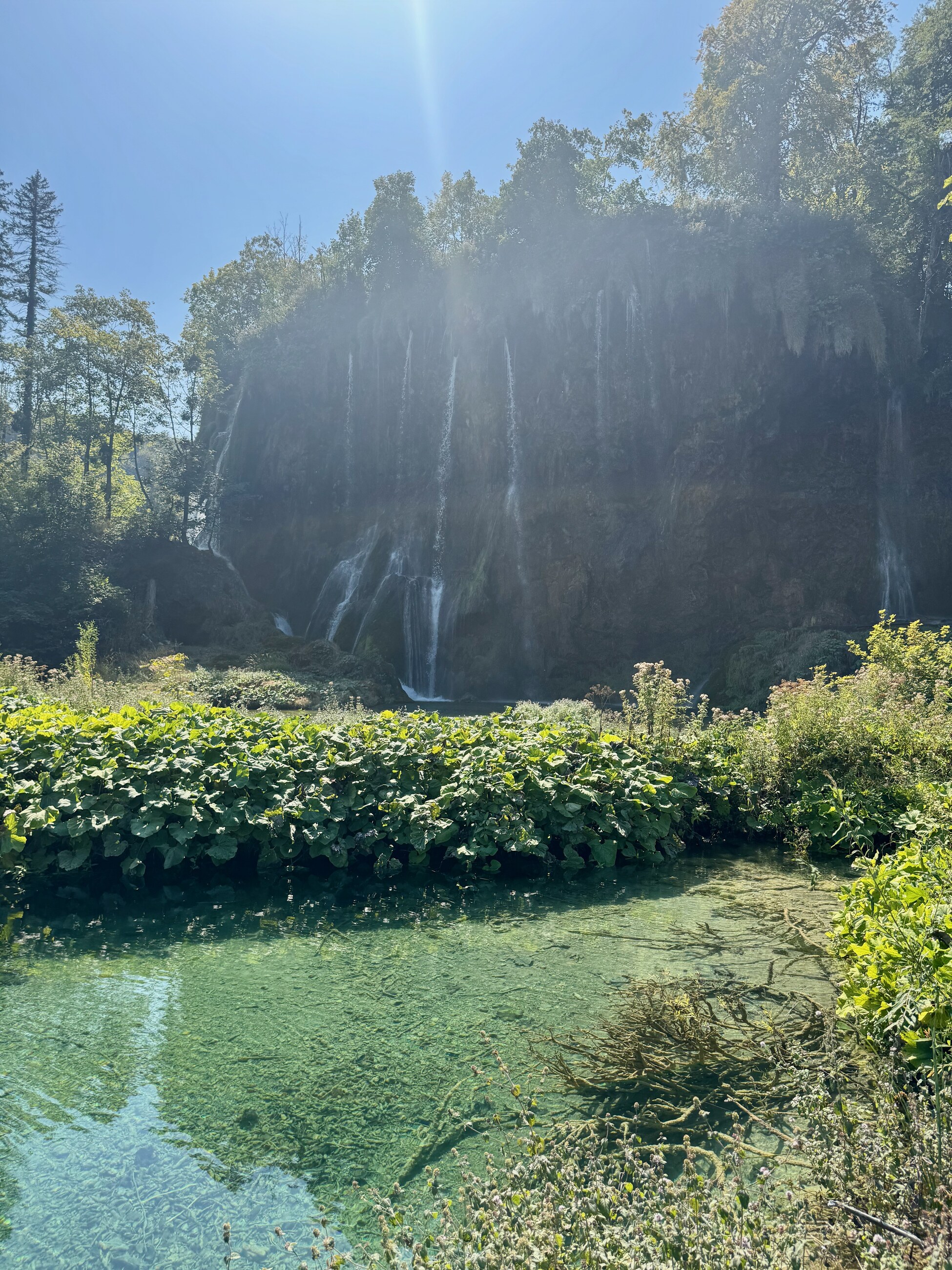
Plitvice is undeniably beautiful. Blue-green limestone lakes cascade into one another through waterfalls and thick greenery, with wooden walkways winding alongside and across the water. We walked about seven miles.
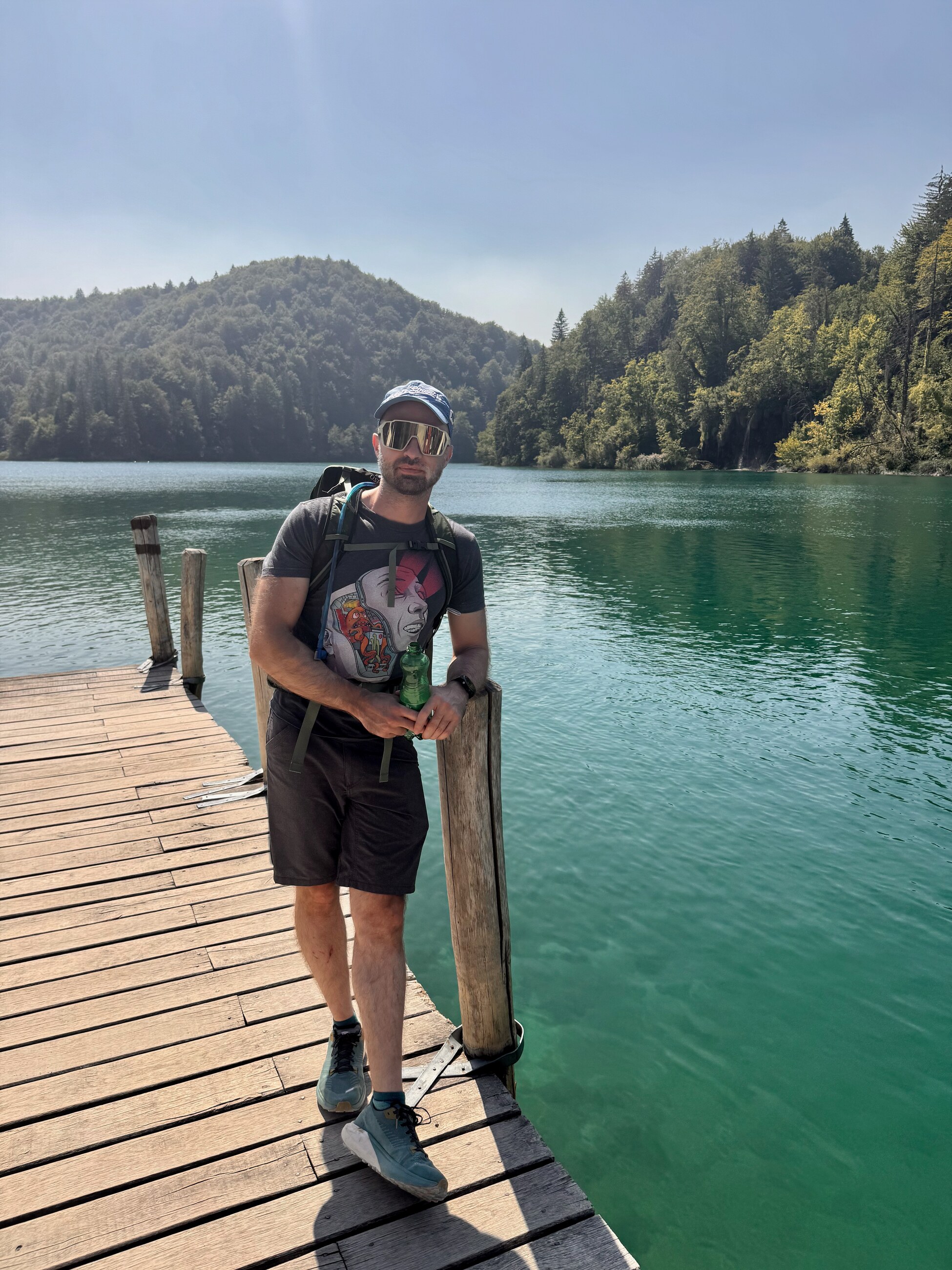
It was also extremely crowded. Lots of tourists, smoking, dogs and general chaos made it feel considerably less pristine than we had imagined. Still, it was worth seeing once.
Šibenik
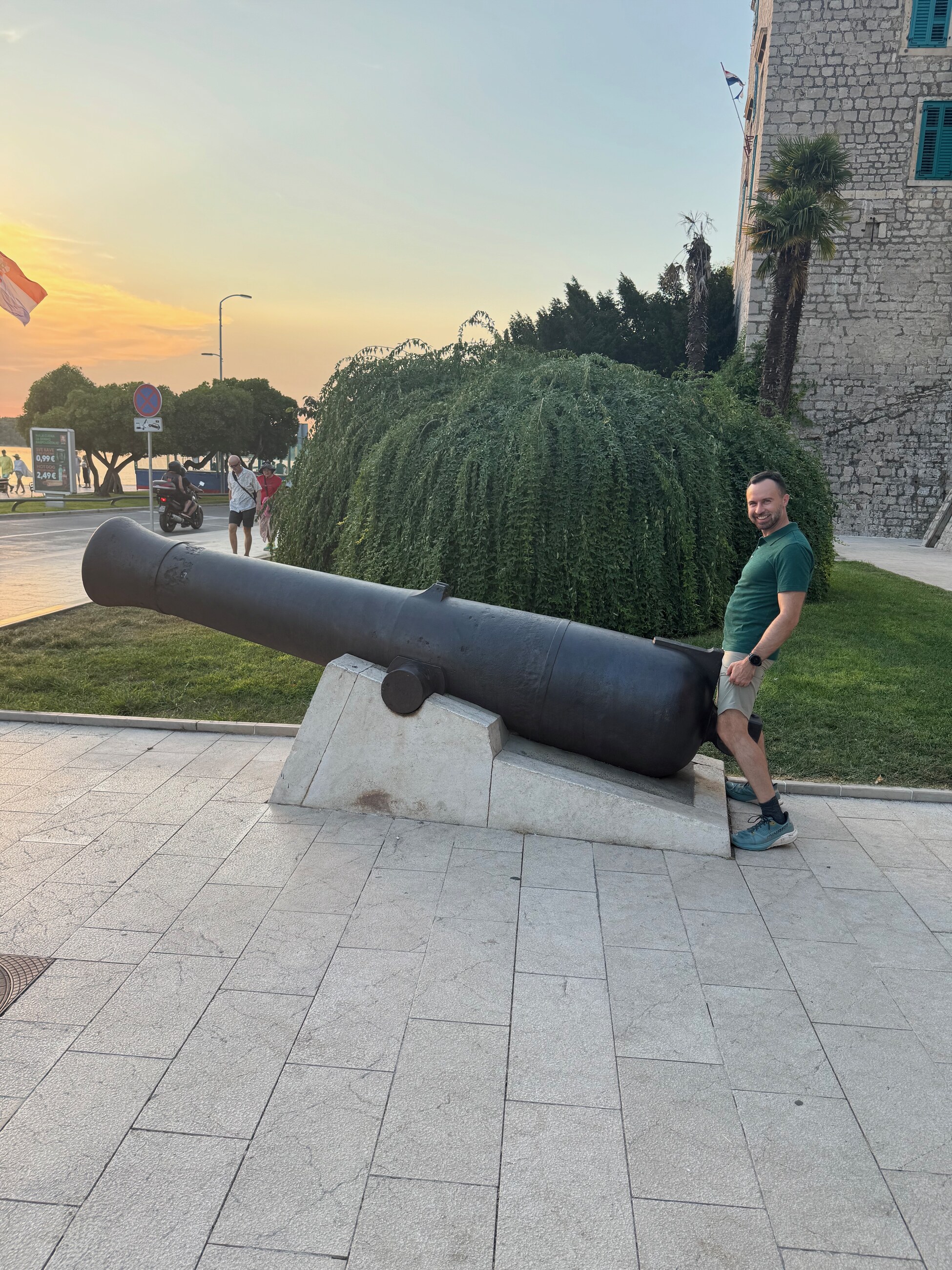
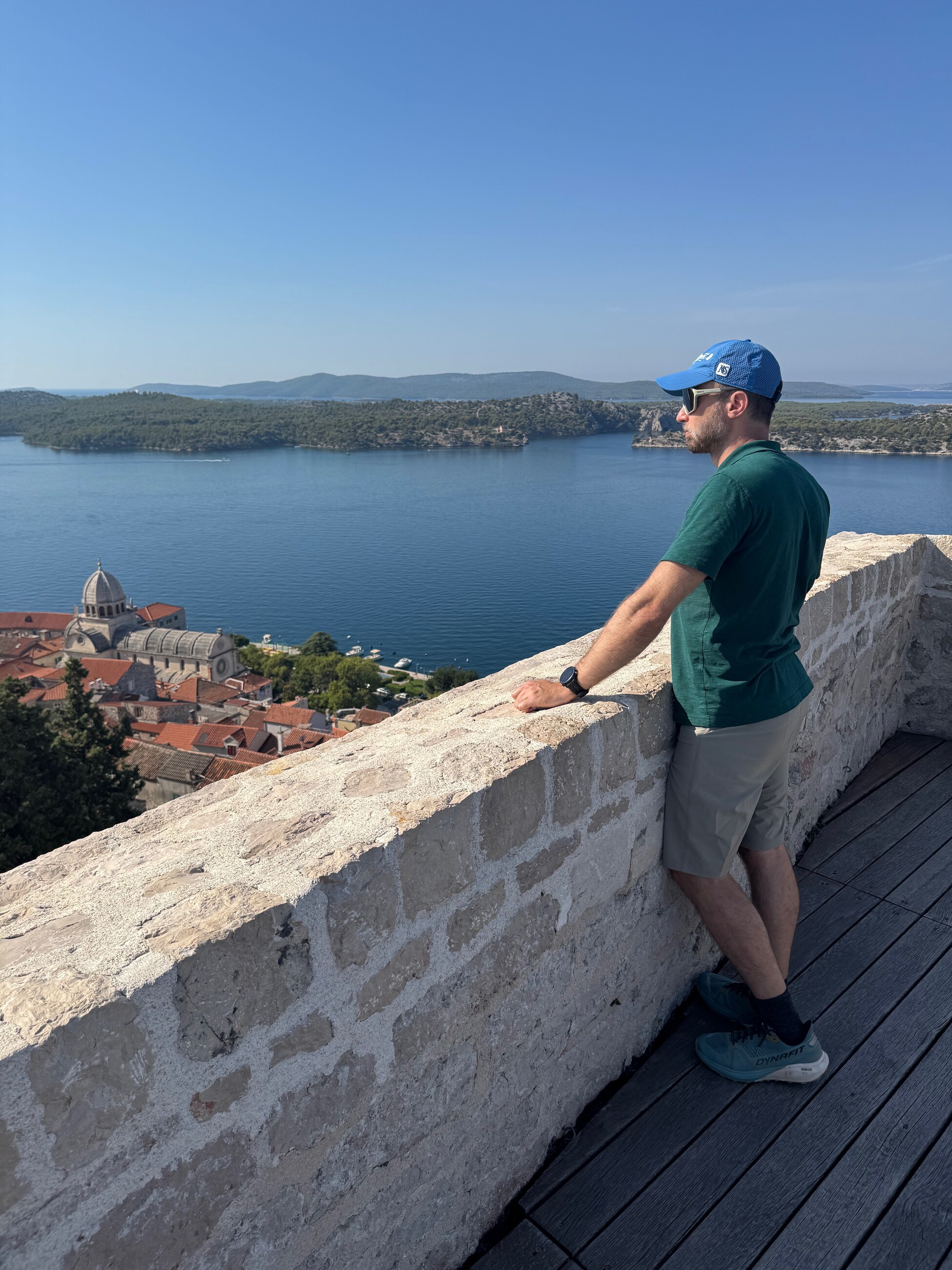
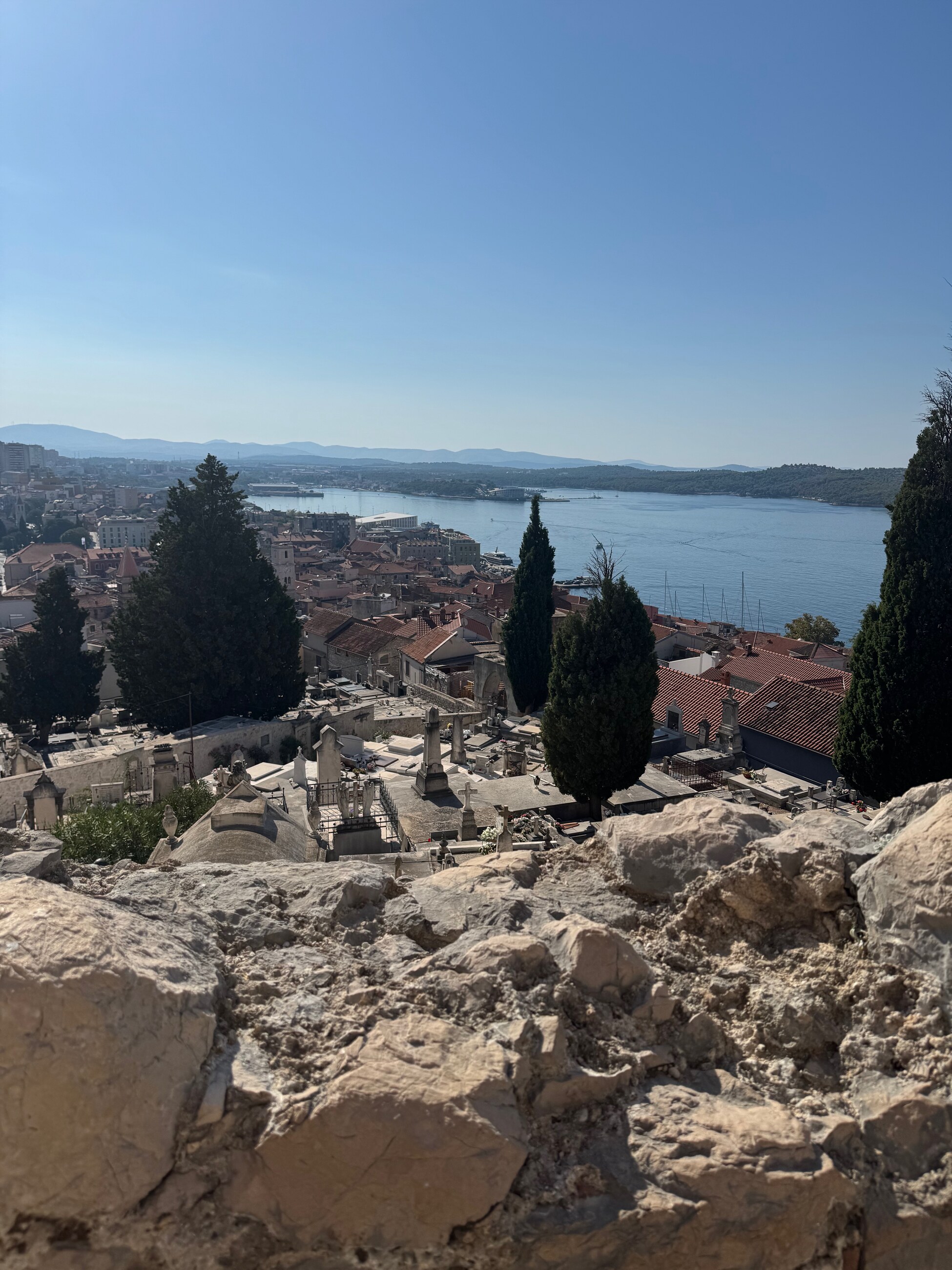
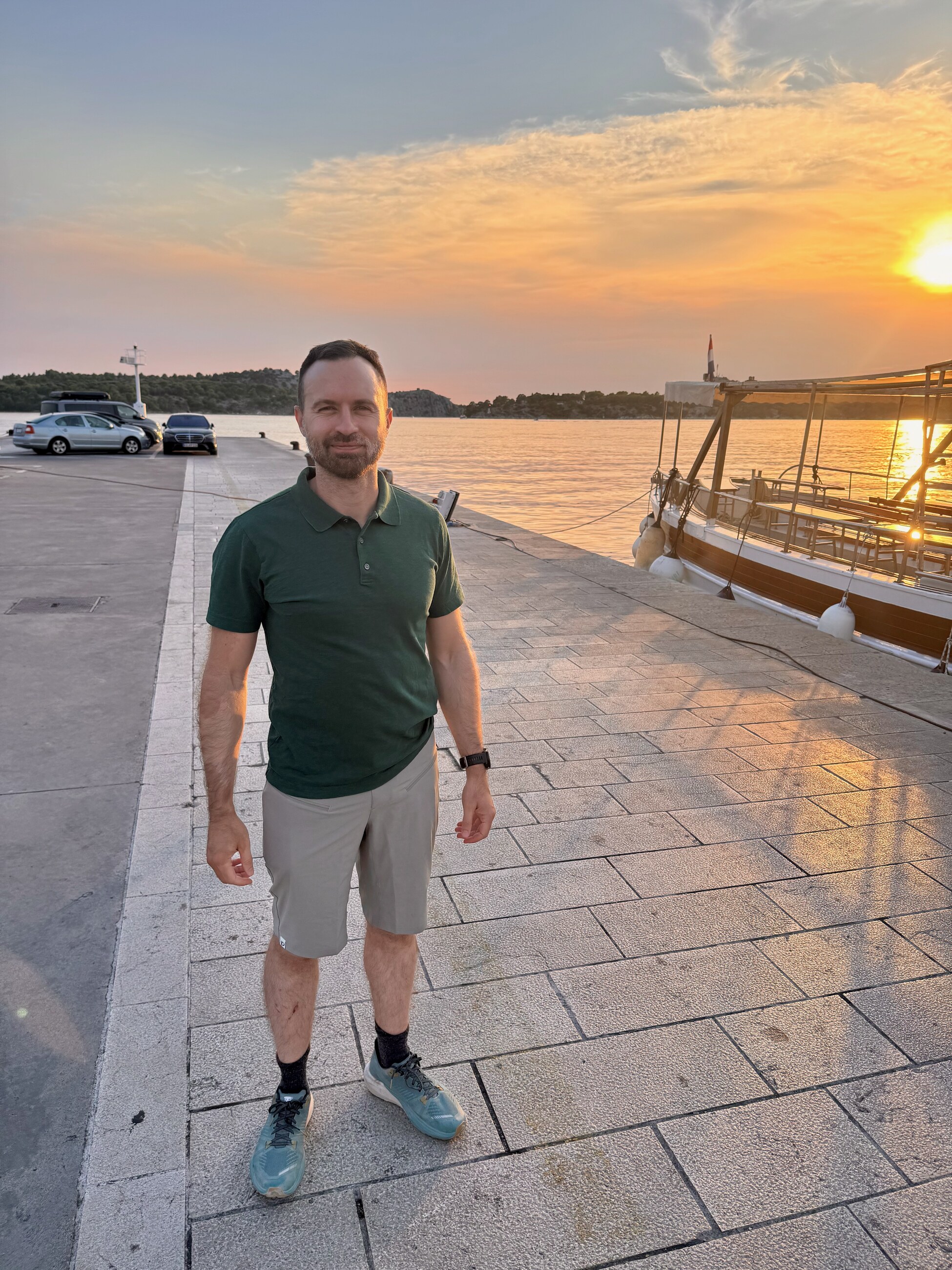
From Plitvice we continued to Šibenik, which exceeded expectations. The old city was beautiful, lively, and full of cafes, stone streets and views over the Adriatic.
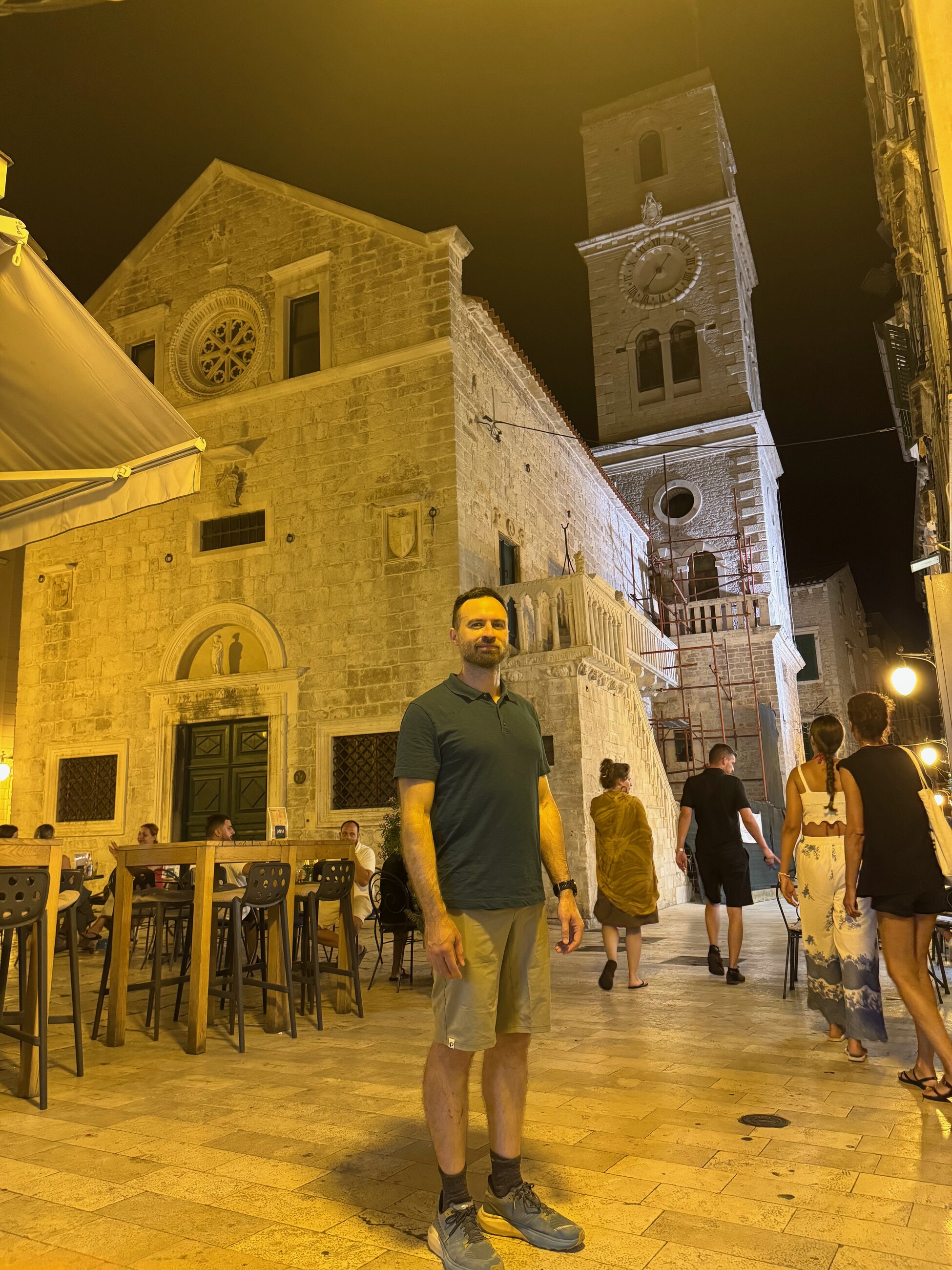
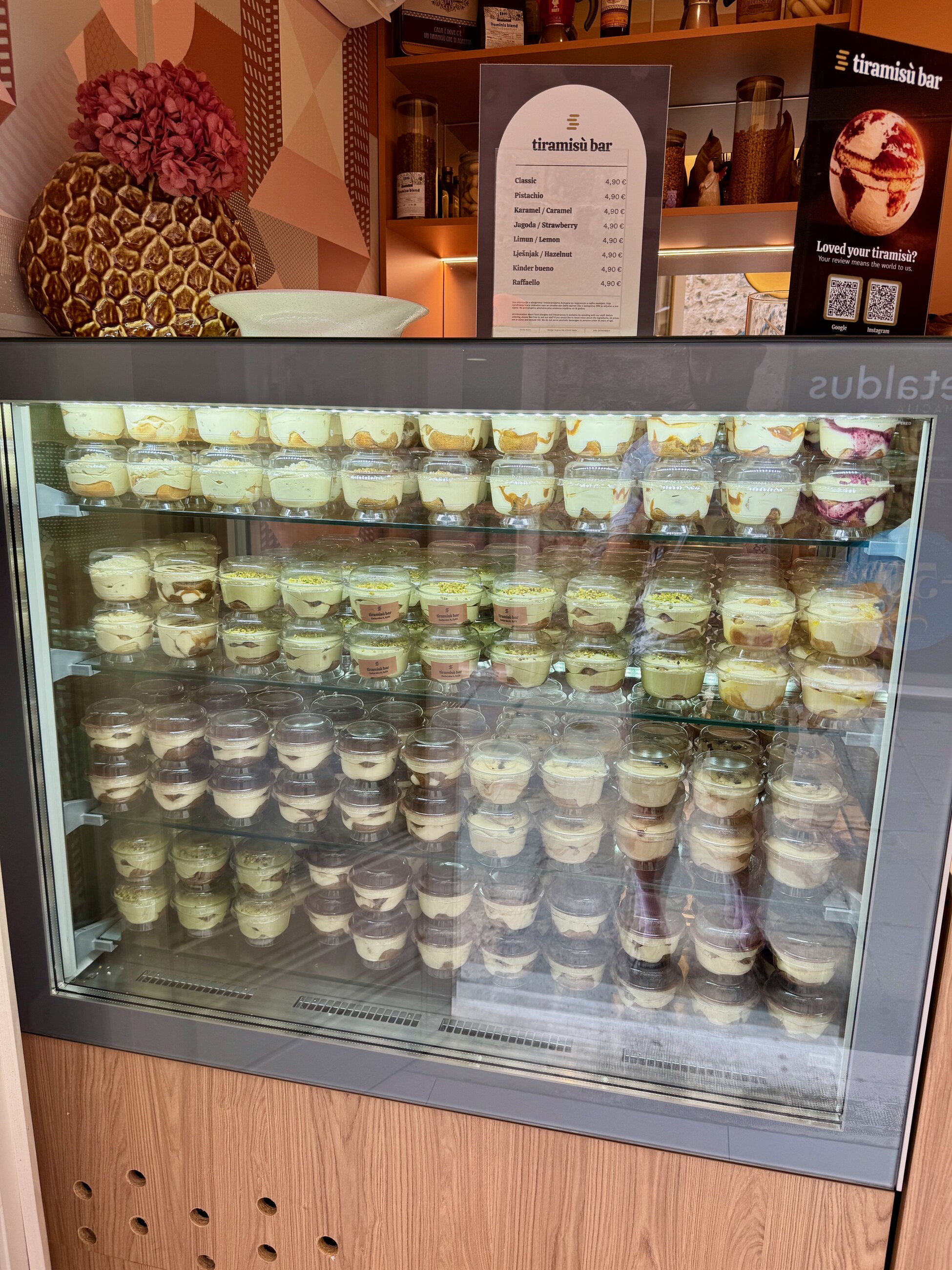
After dinner we found an excellent gelato shop run by a very enthusiastic attendant who confidently assured us we had chosen the best place in town. Ivan had blood orange sorbet, David had tiramisu gelato, apparently the preferred choice of Americans over 60, and we were given a bonus scoop of lavender-lemon sorbet.
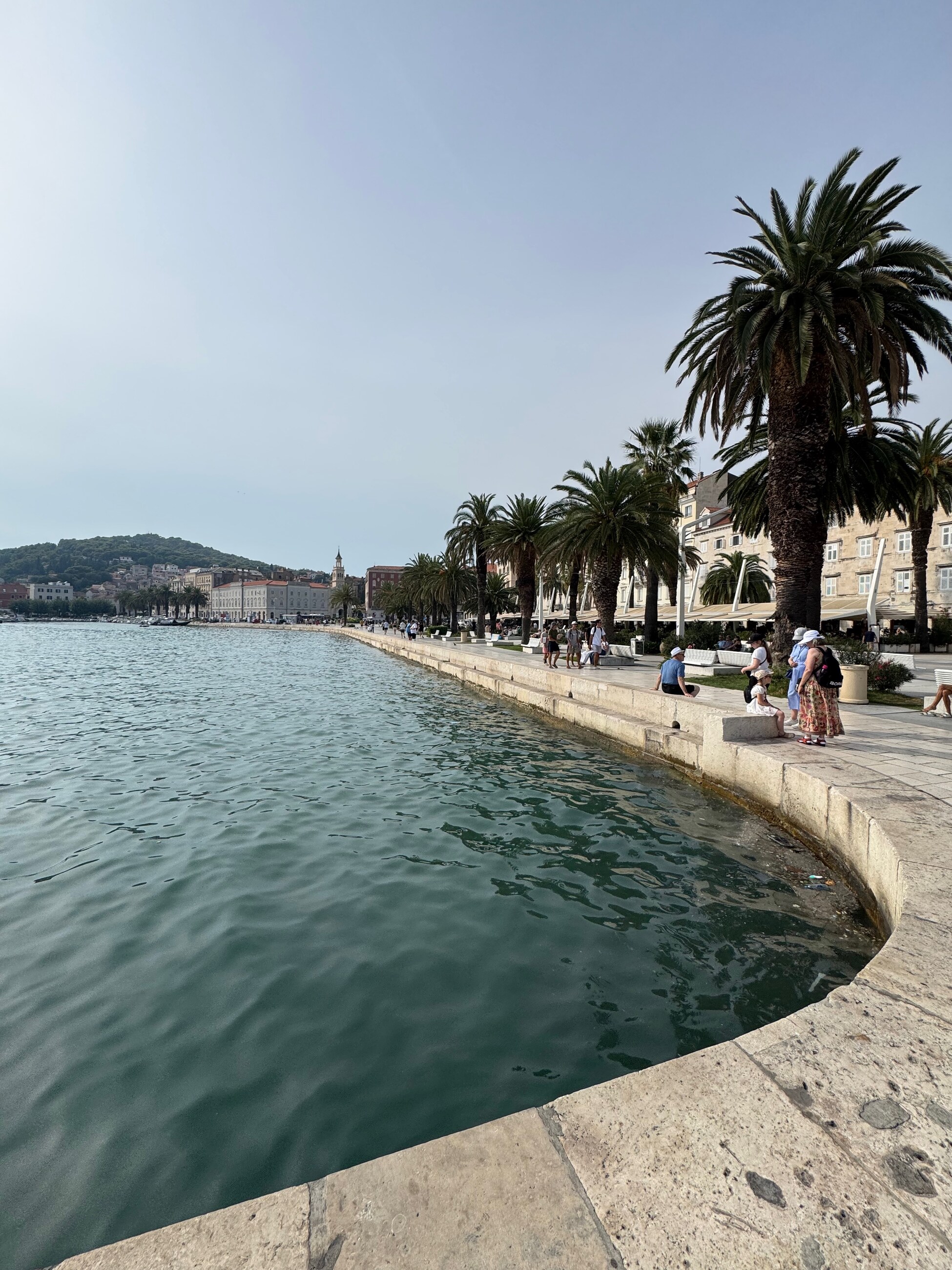
After walking along the waterfront, we enjoyed the hotel spa, including the sauna, steam room and a giant overhead bucket that dumped cold water on you when you pulled the handle.
Split
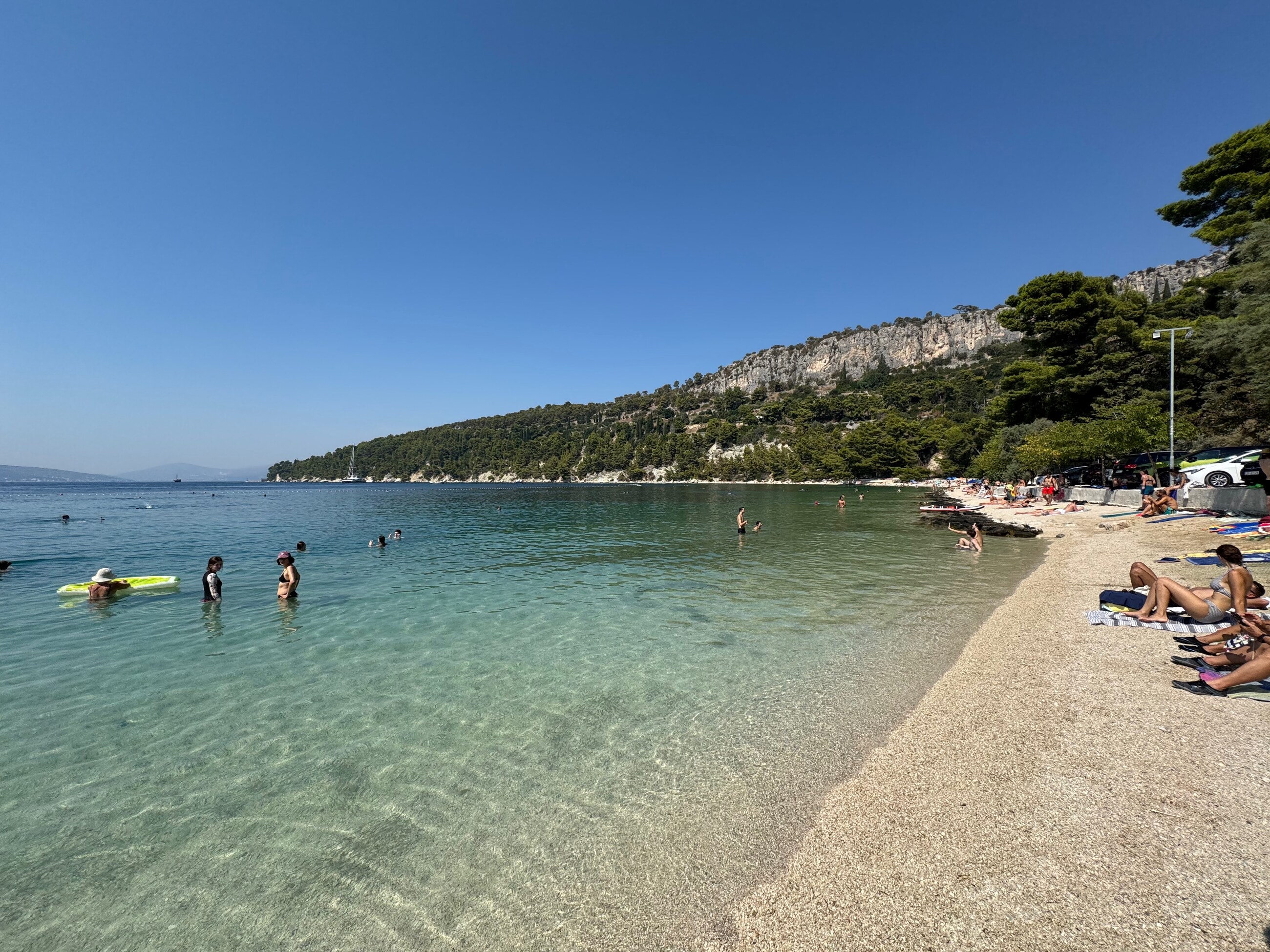
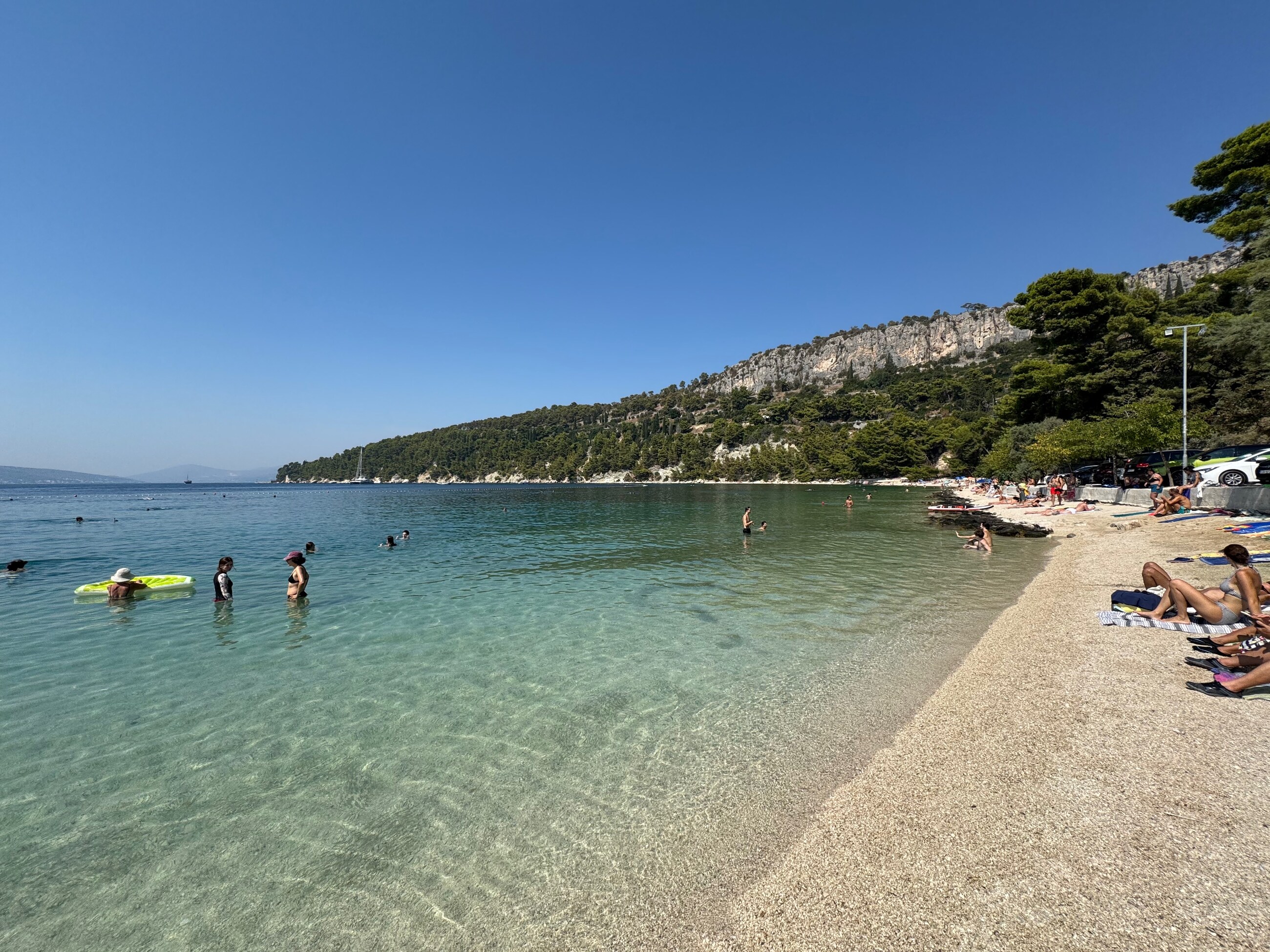
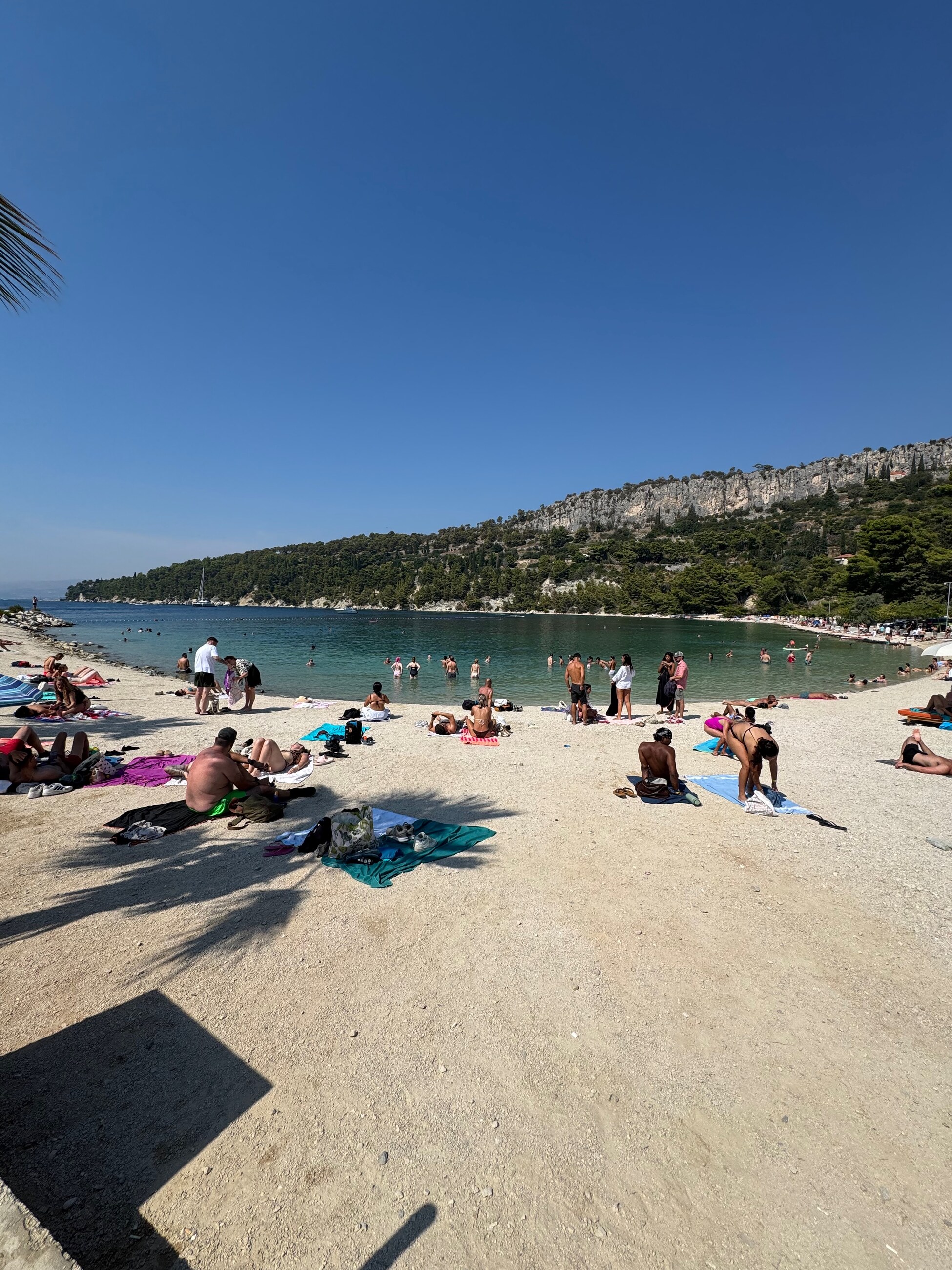
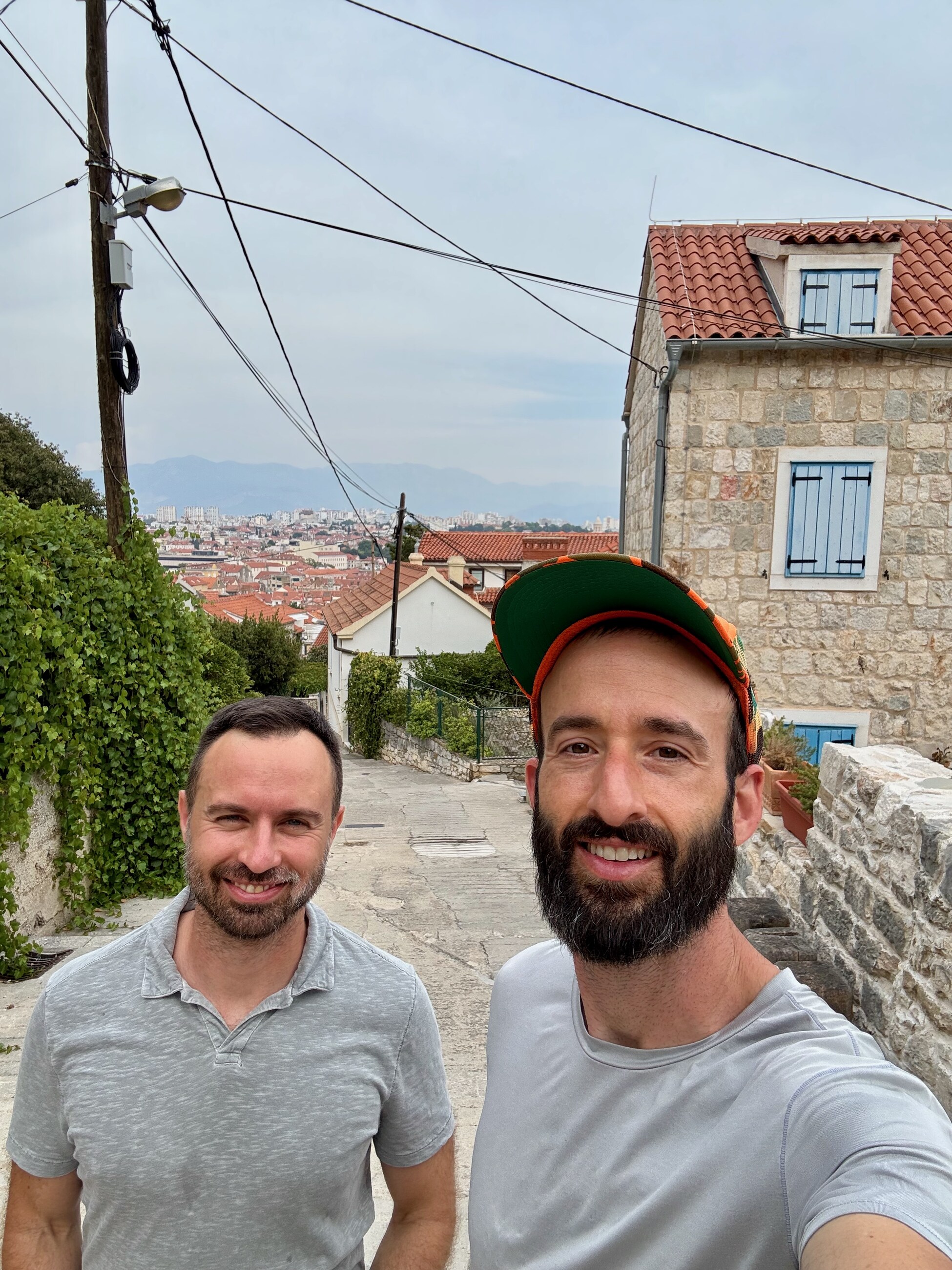
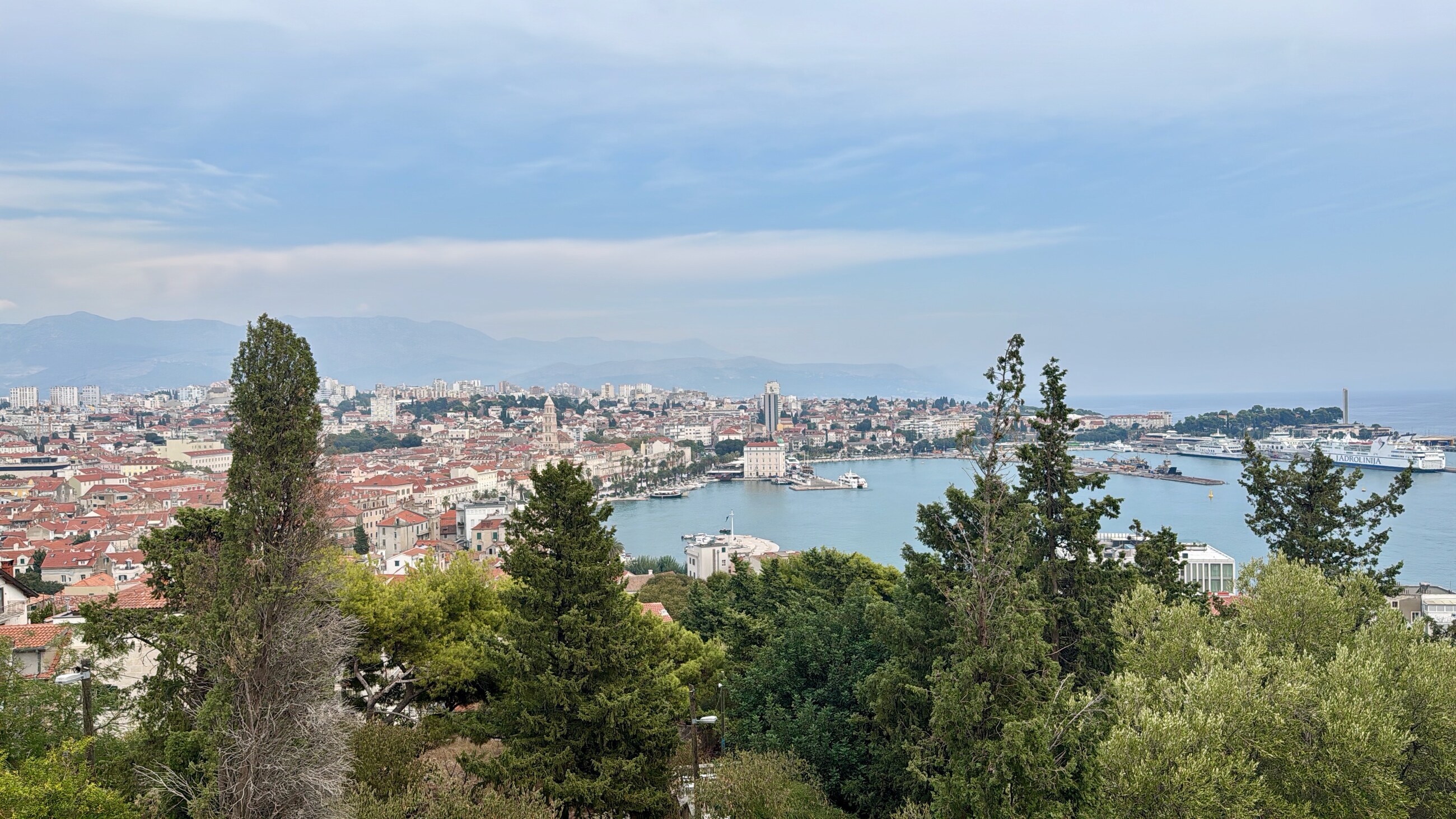
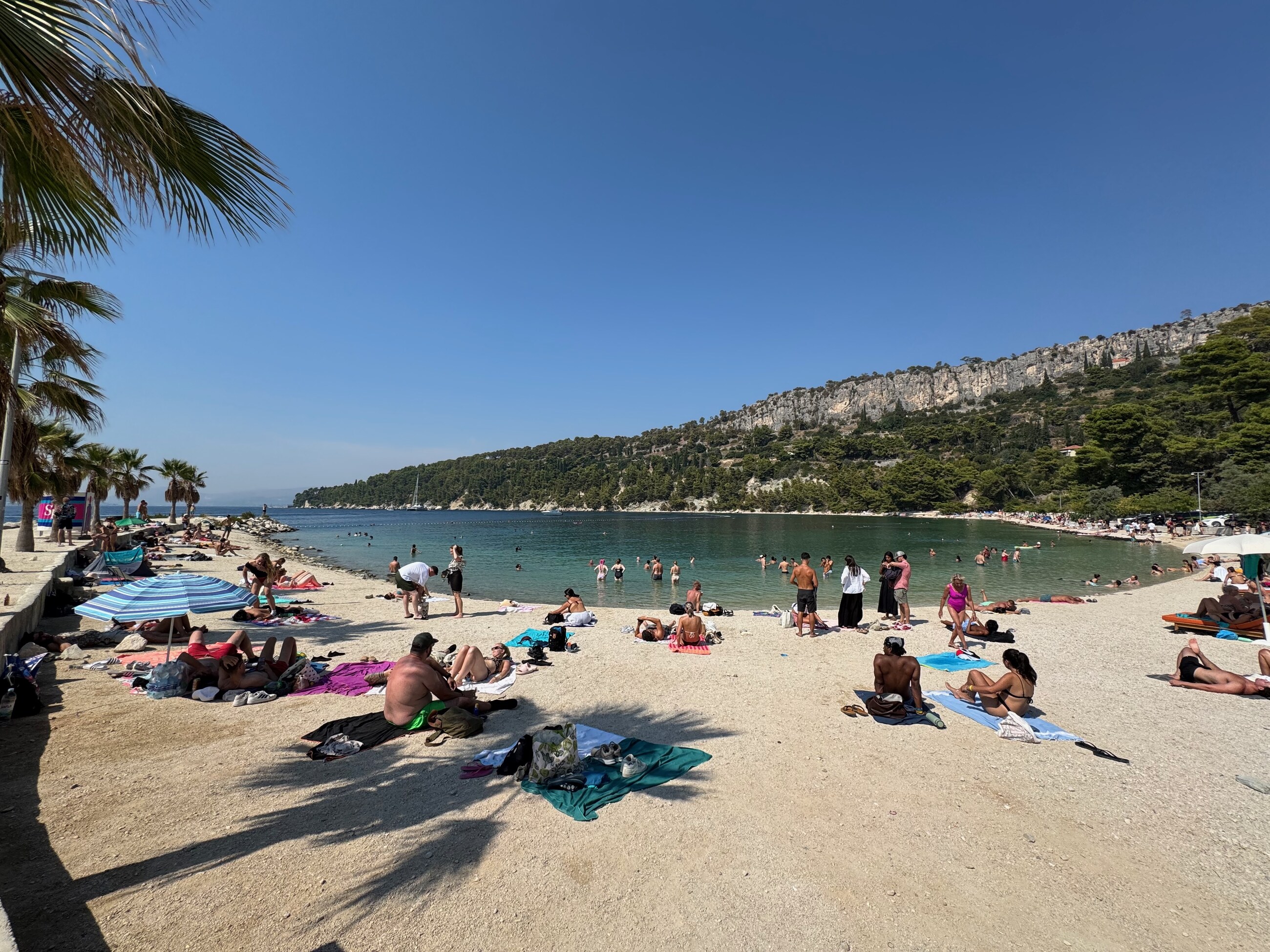
Our final stop was Split. Before checking in, we went to a small pebble beach called Kasjuni near Marjan Park. David found a cliff to jump off and Ivan eventually became impatient enough to move the trip along.
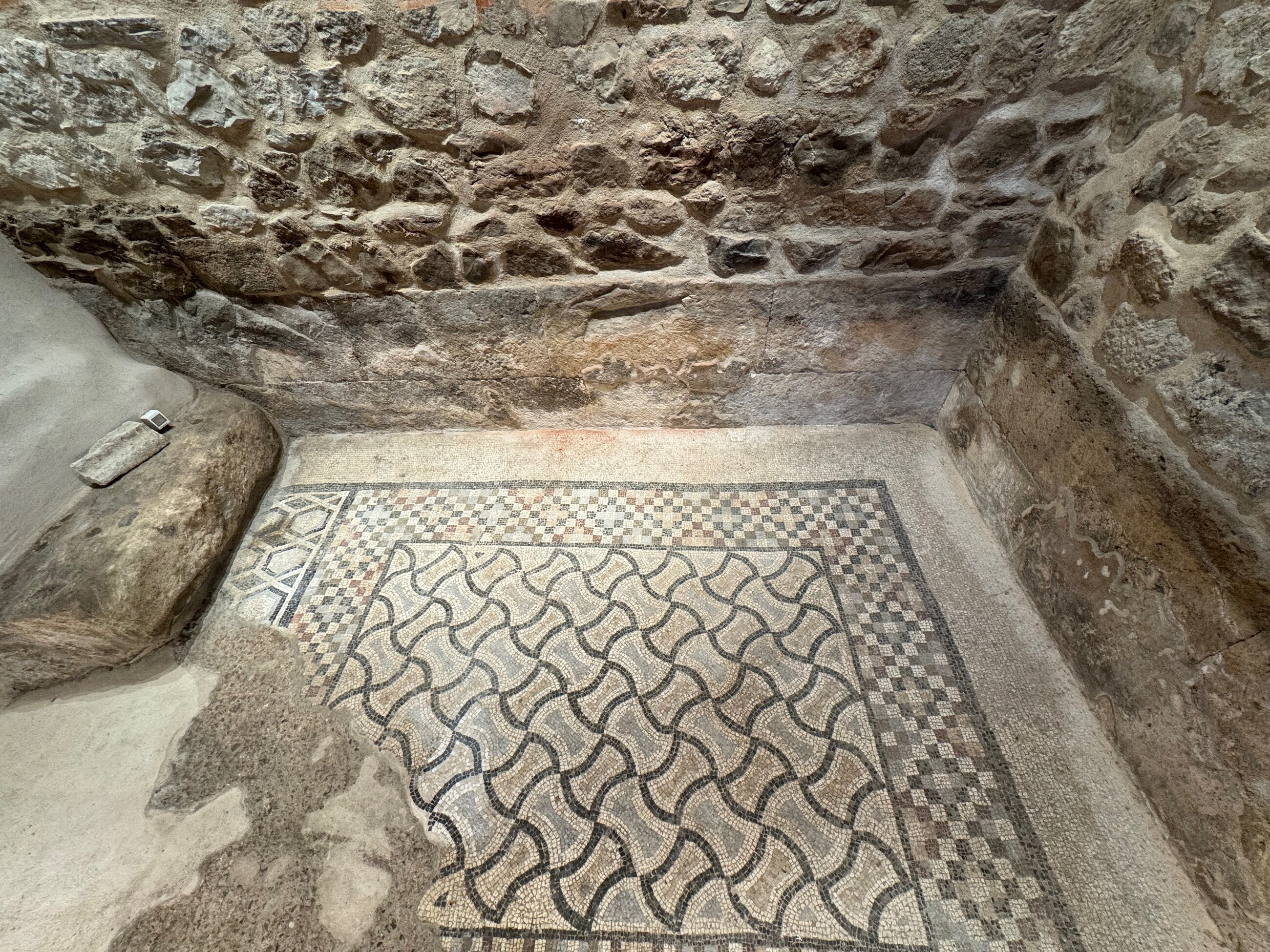
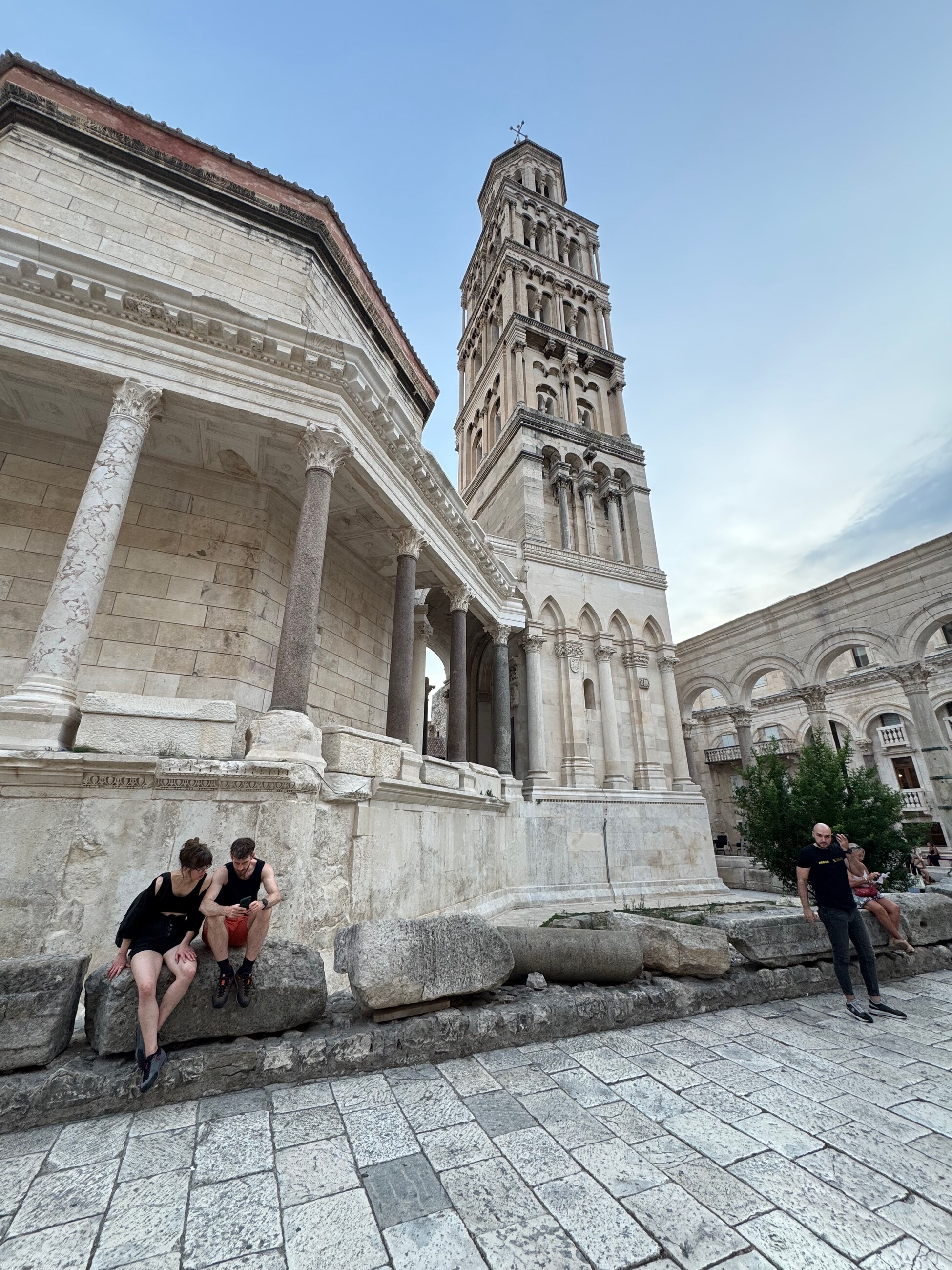
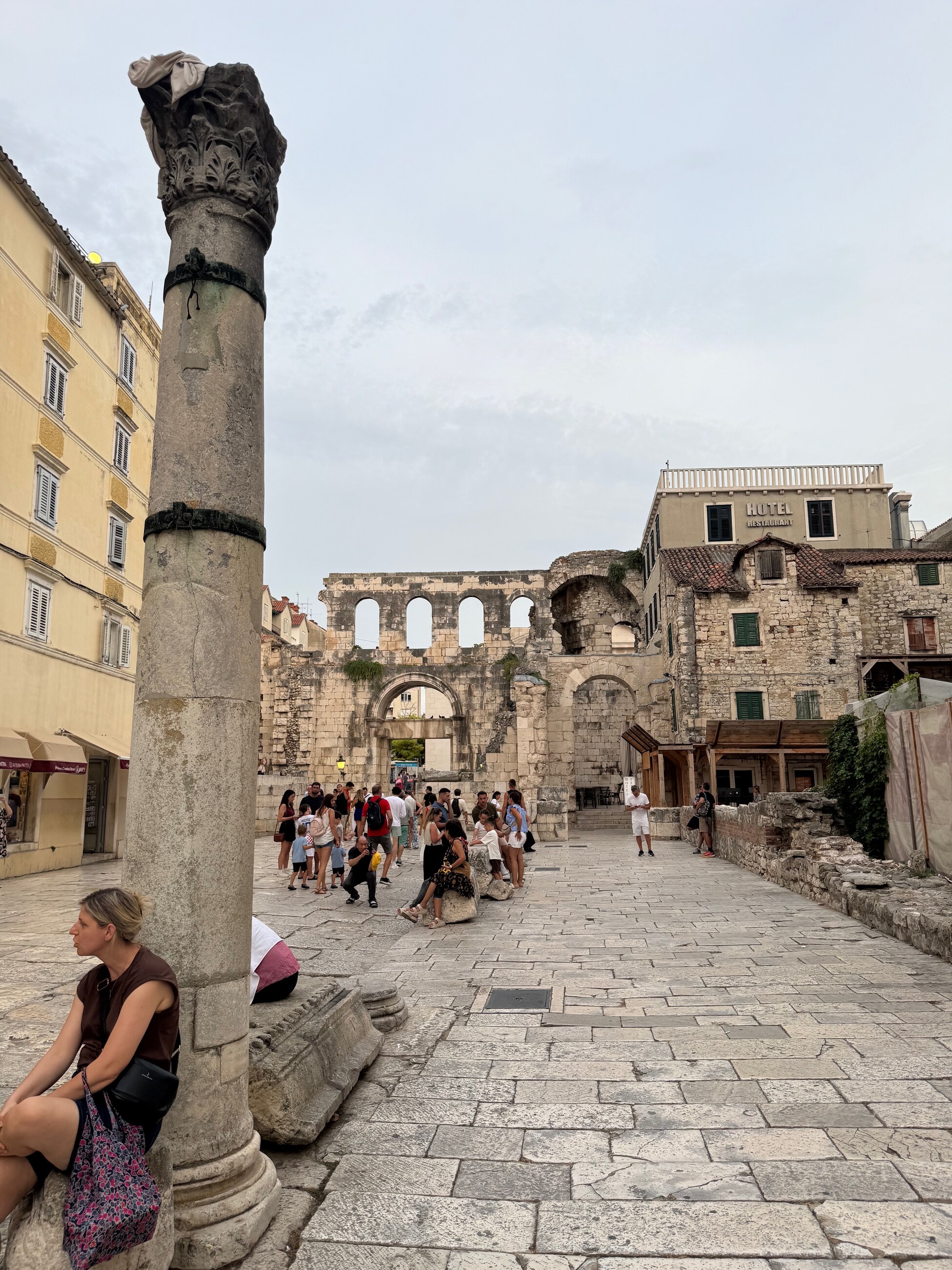
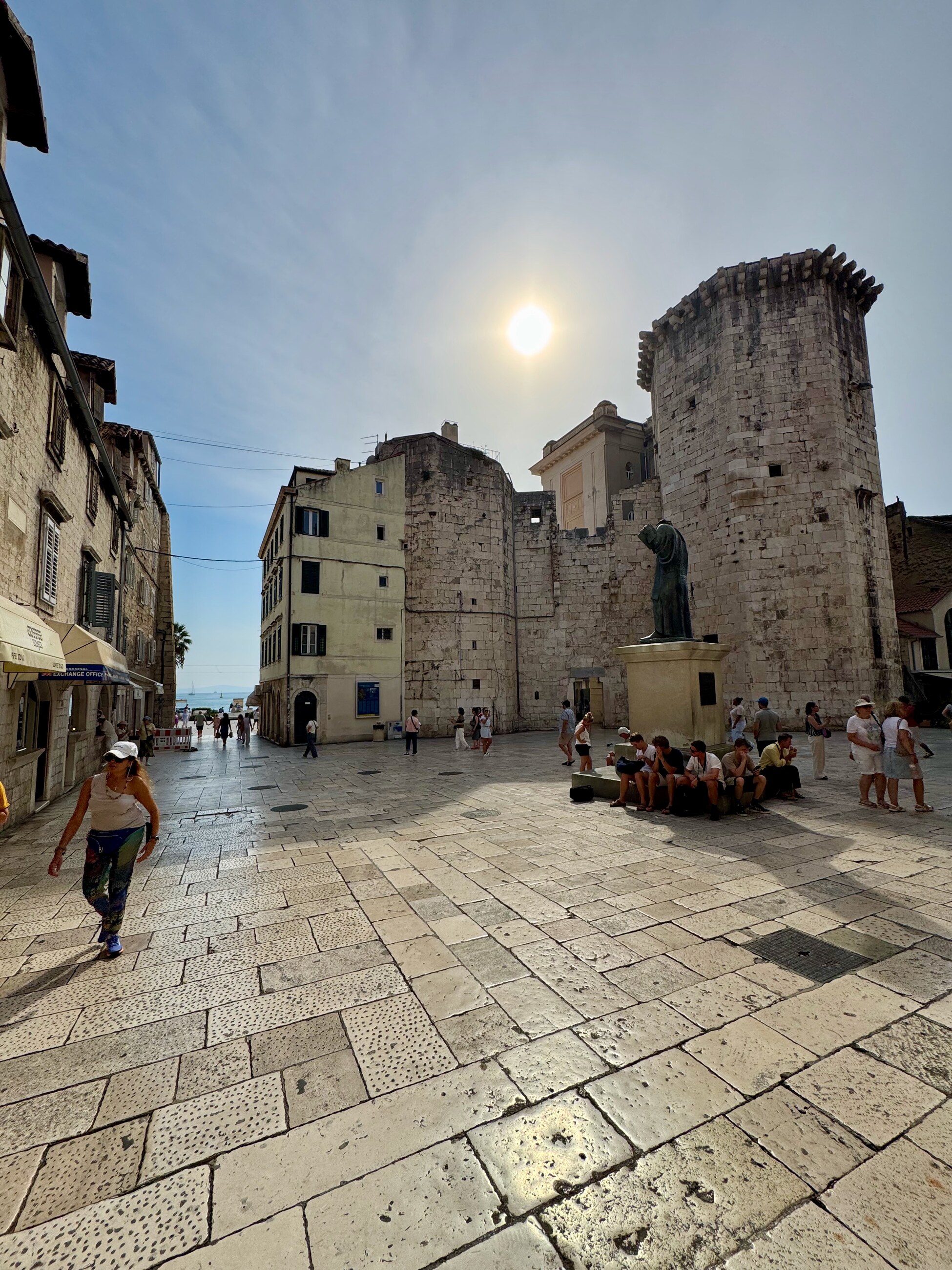
Split itself was fascinating. The city has essentially grown into and around the remains of Diocletian's Palace, with modern apartments, restaurants and shops literally intertwined with Roman structures roughly 1,700 years old.
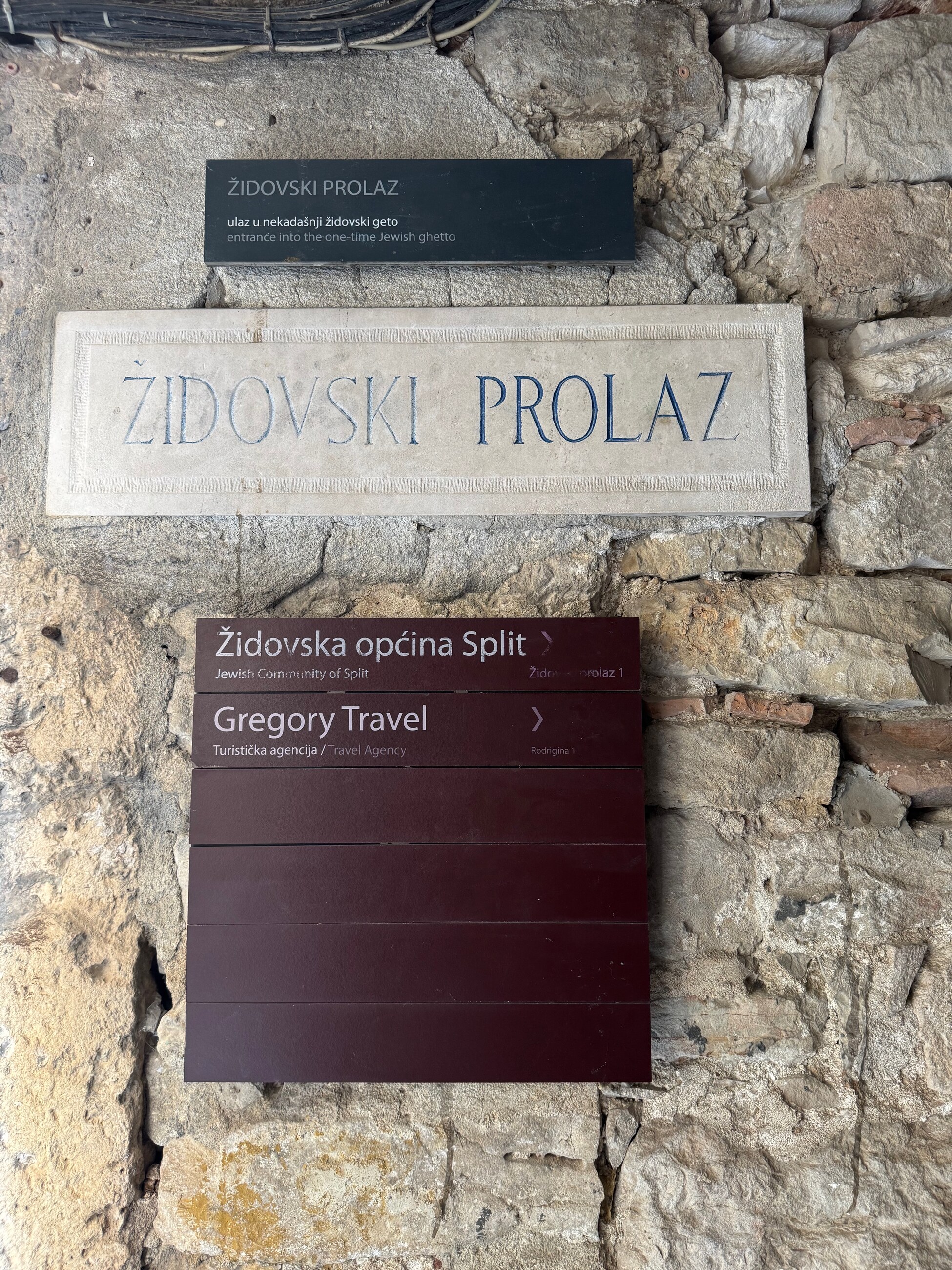
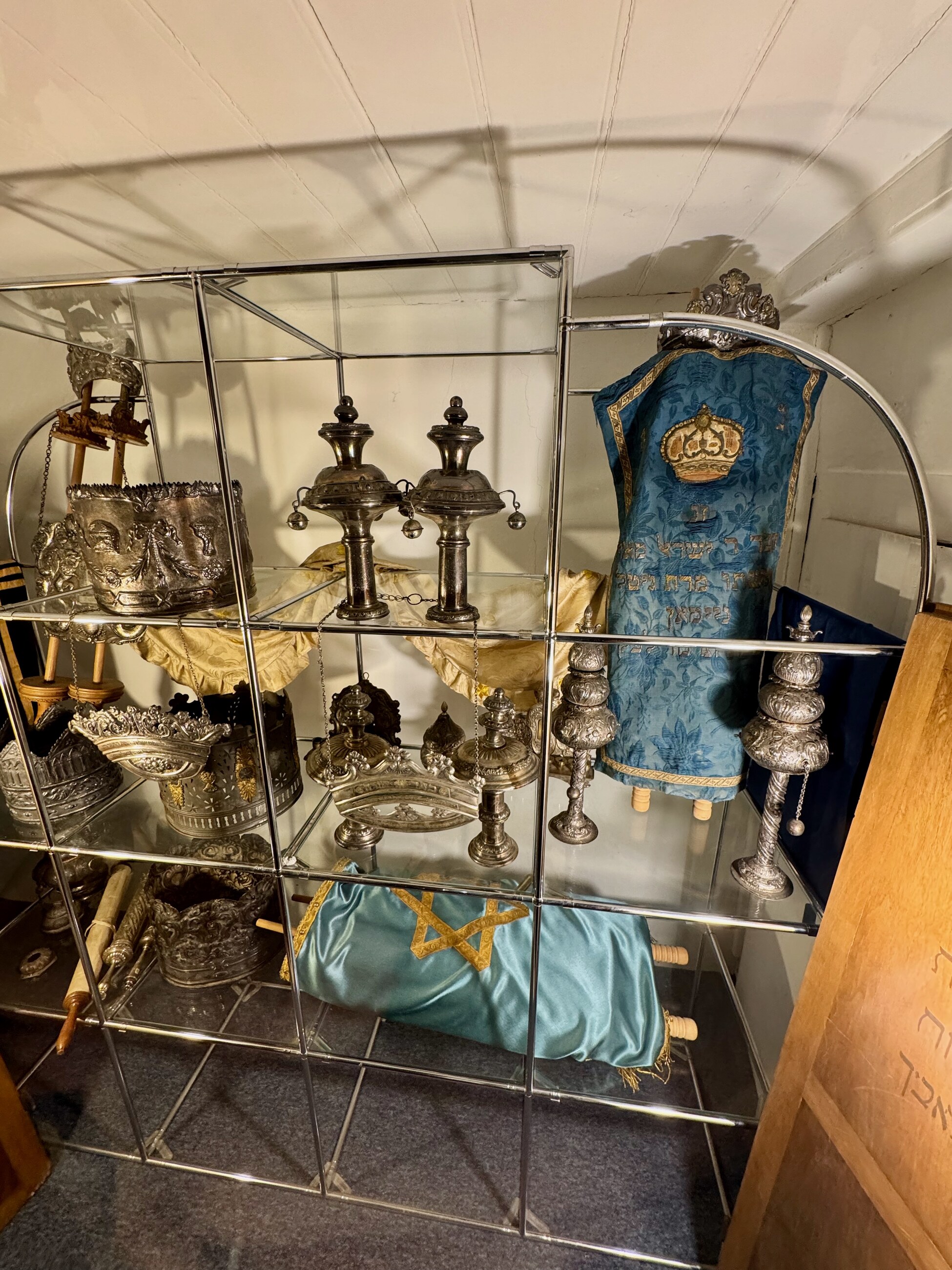
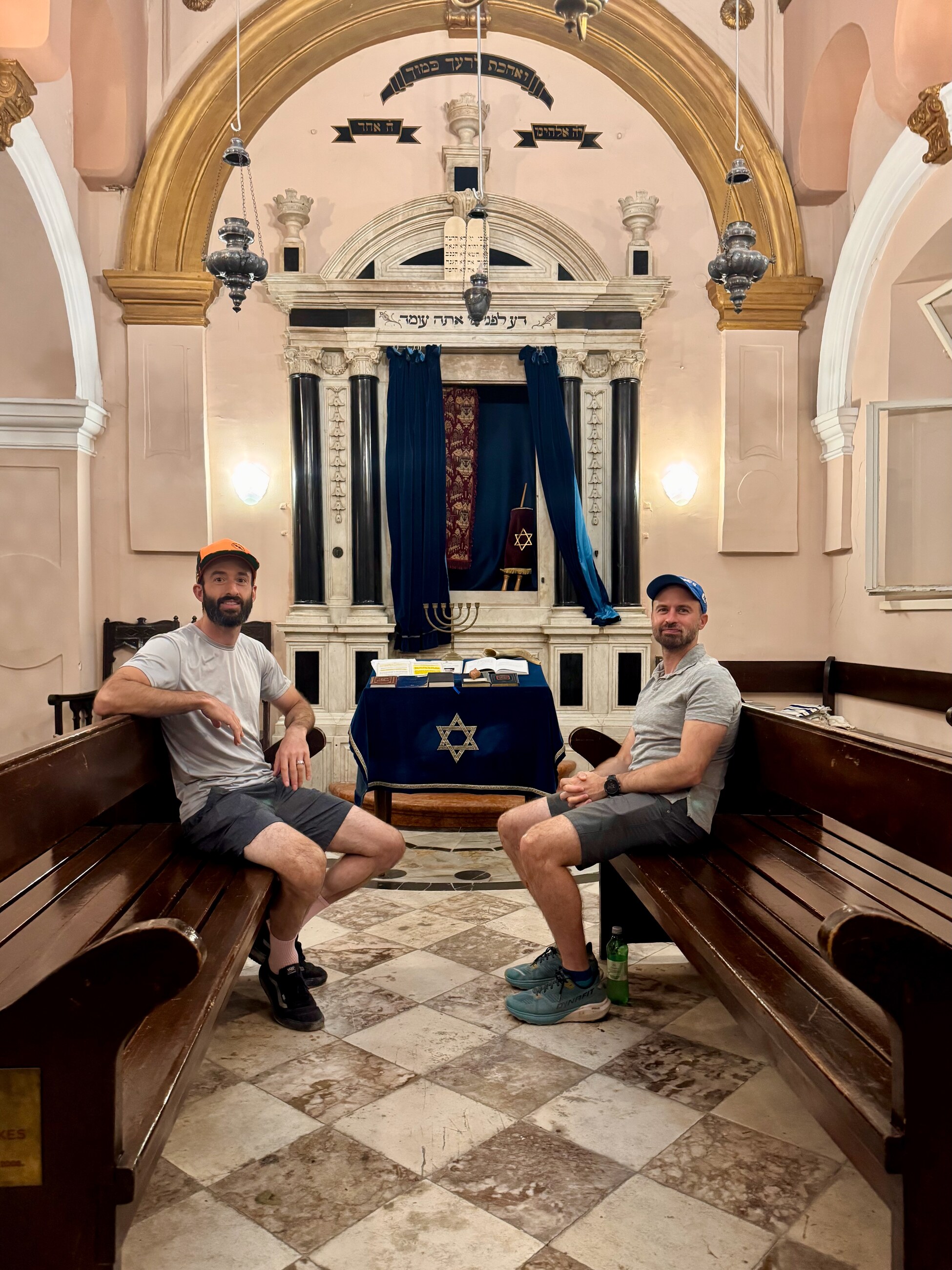
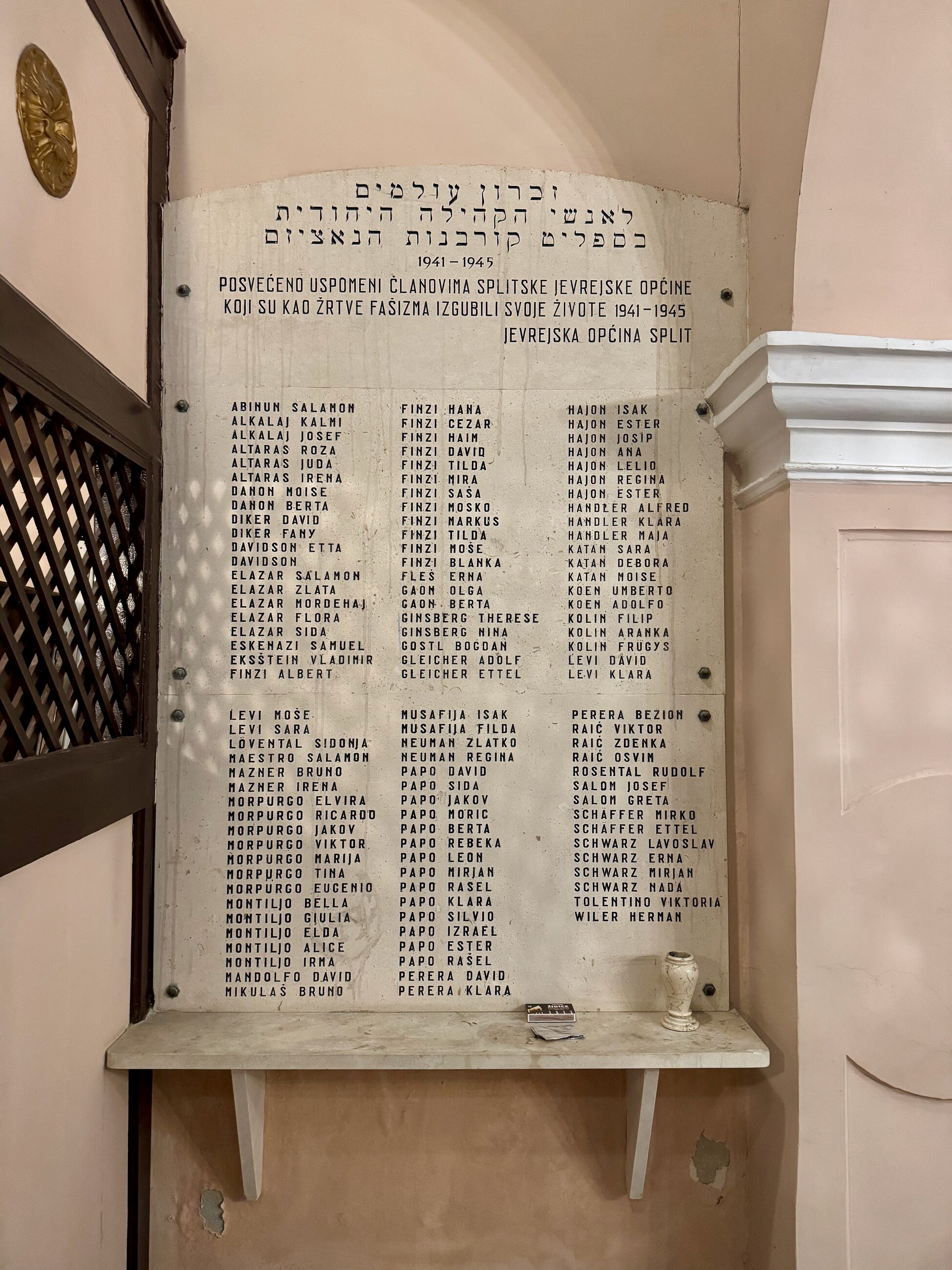
One of our memorable stops was the synagogue inside the old city. It is the third-oldest active synagogue in Europe. It was closed when we arrived, but we rang the doorbell and a woman who has worked there for 36 years let us in and gave us a quick tour. She showed us an approximately 400-year-old Torah scroll and the memorial wall listing members of Split's Jewish community killed during the Holocaust.
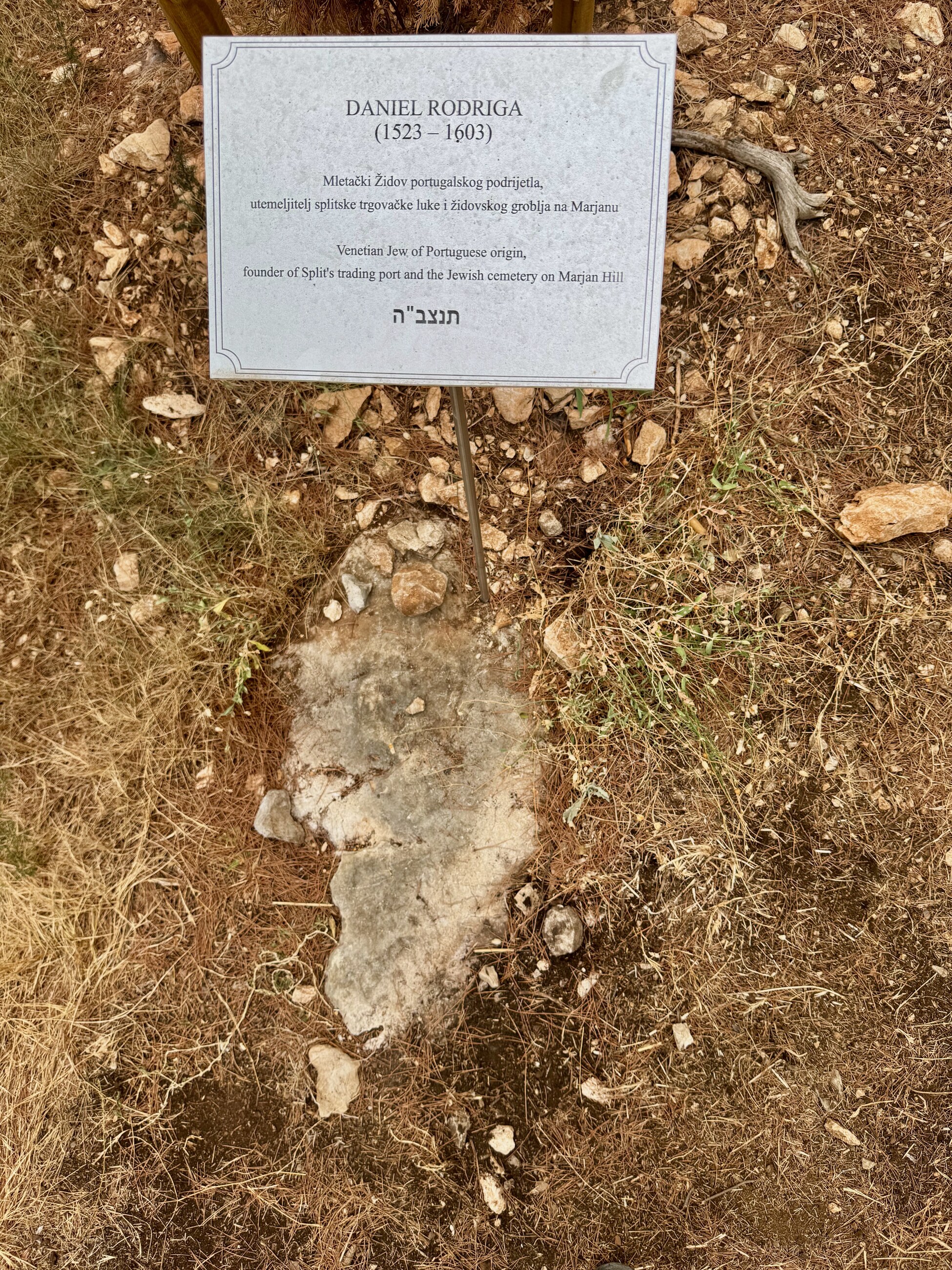
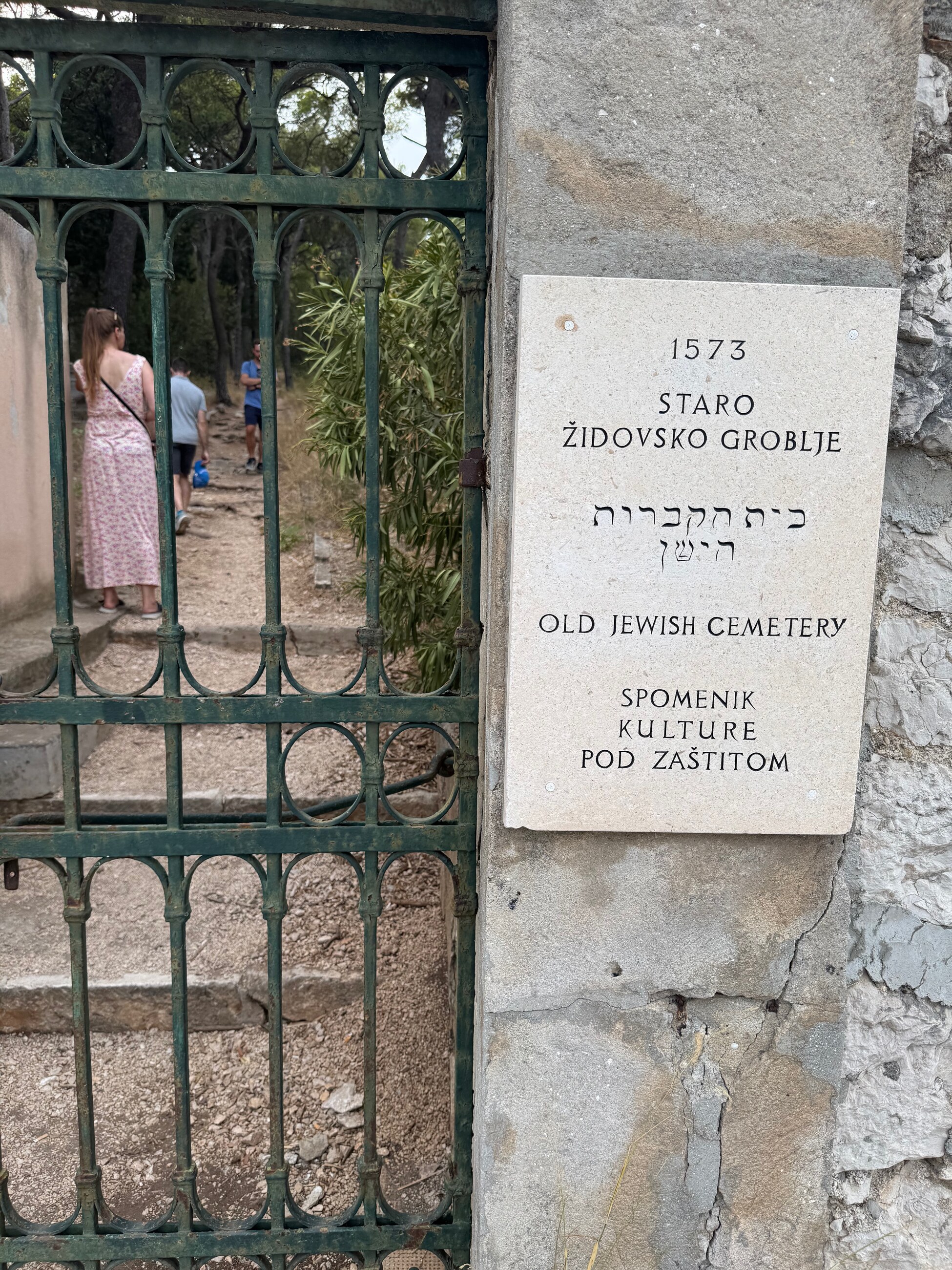
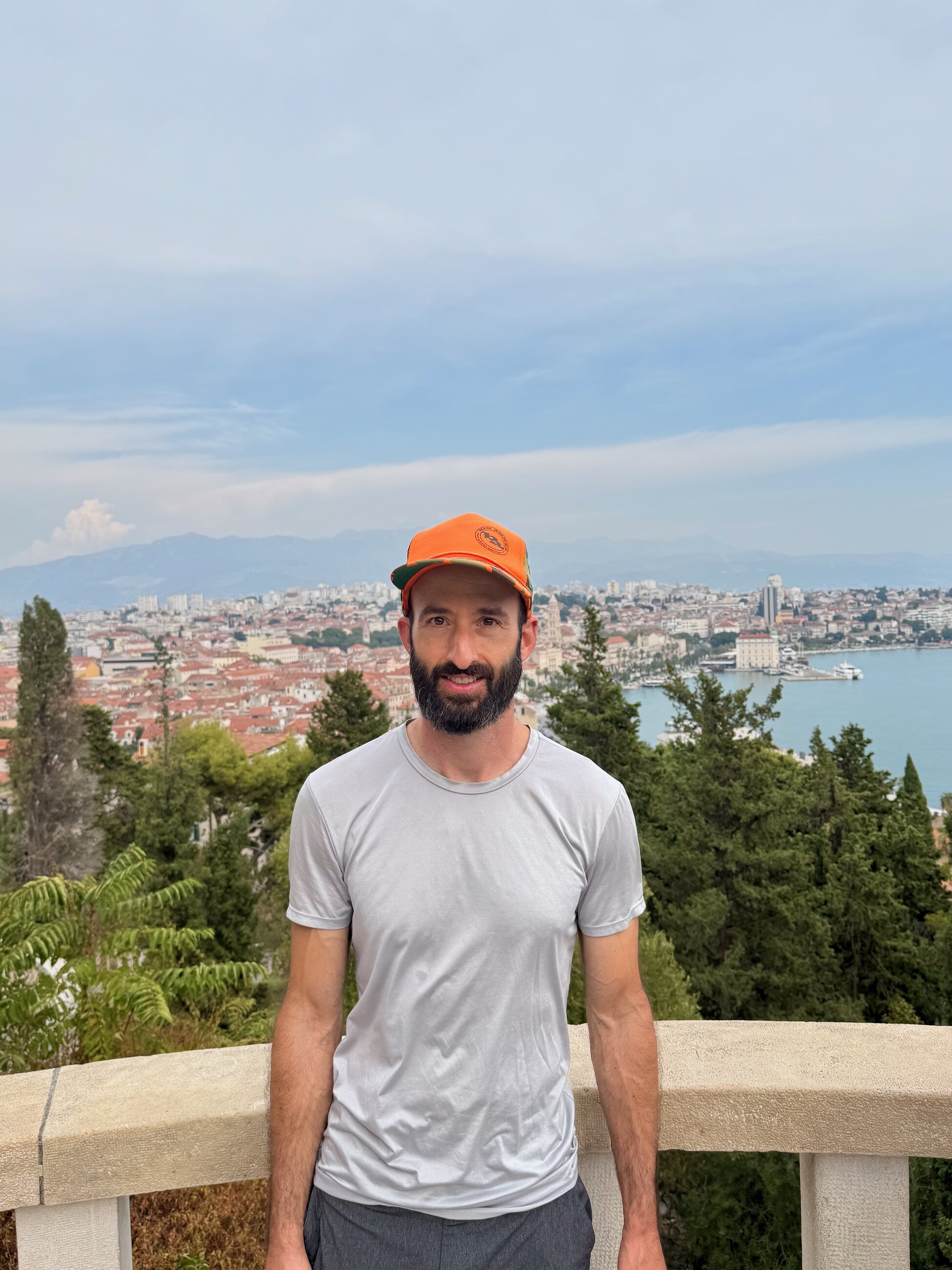
Later we climbed through Marjan Park to the old Jewish cemetery overlooking the city, established in 1573 and containing more than 700 graves, where Jews had settled after escaping the Spanish Inquisition.
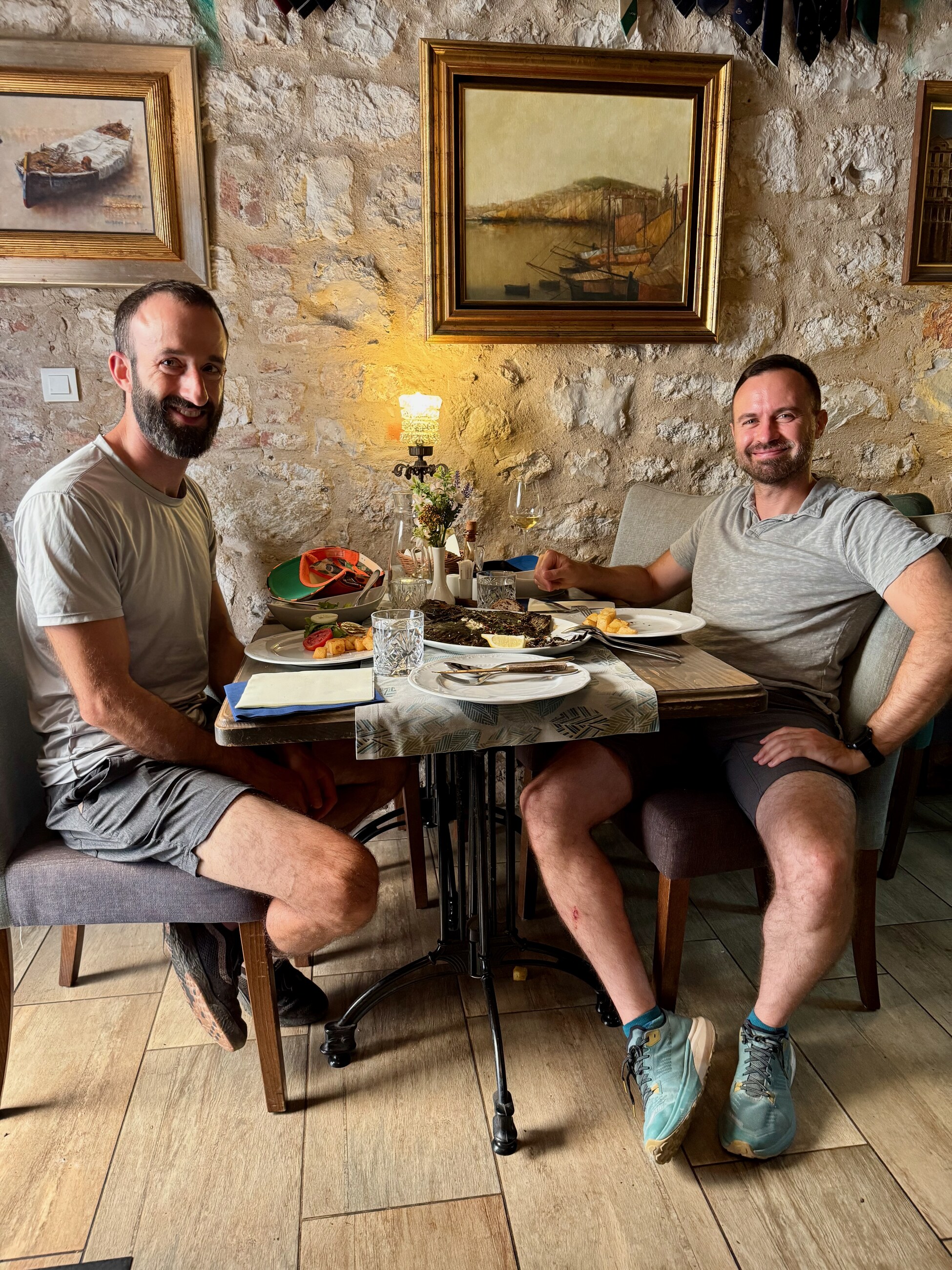
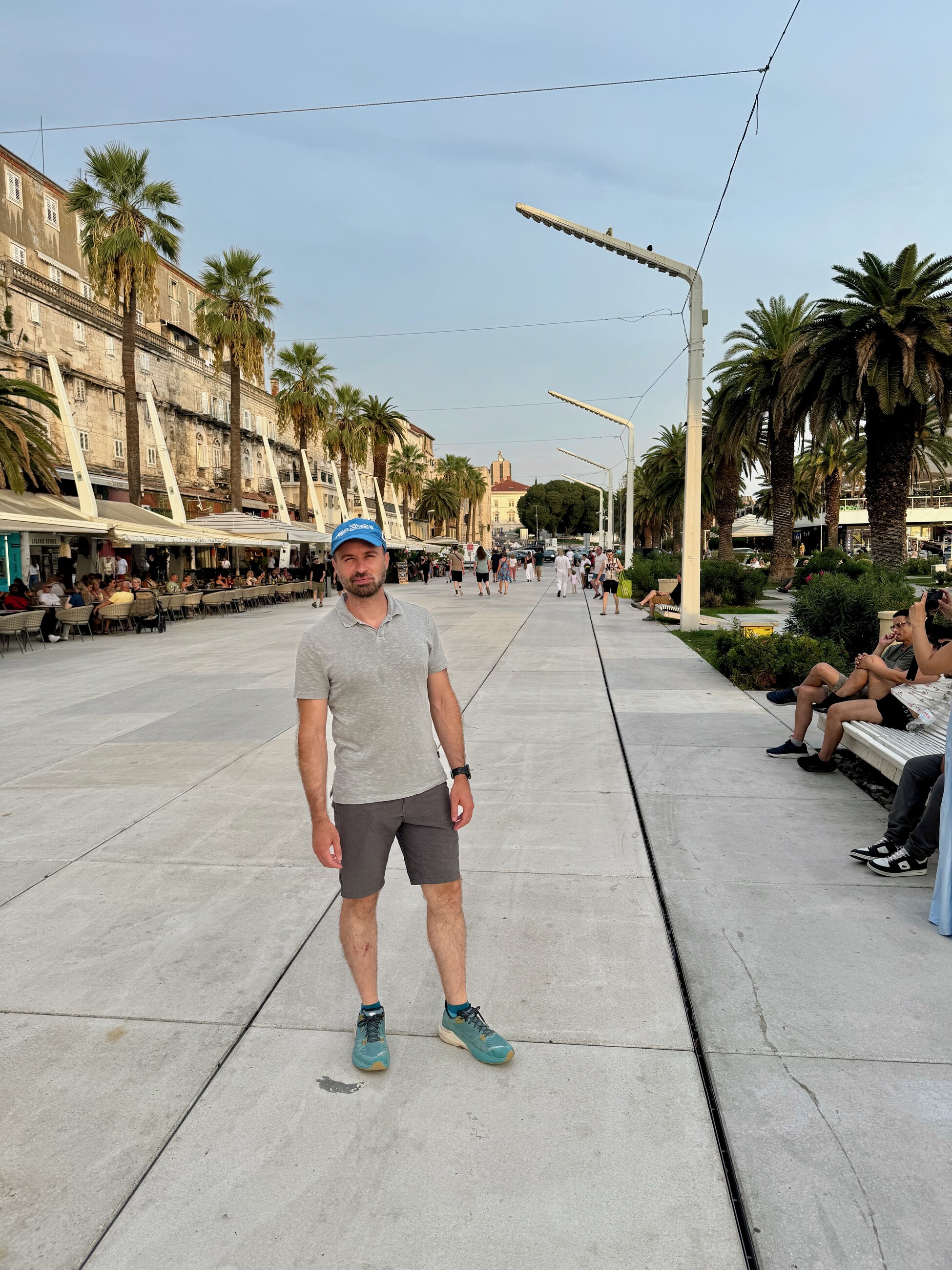
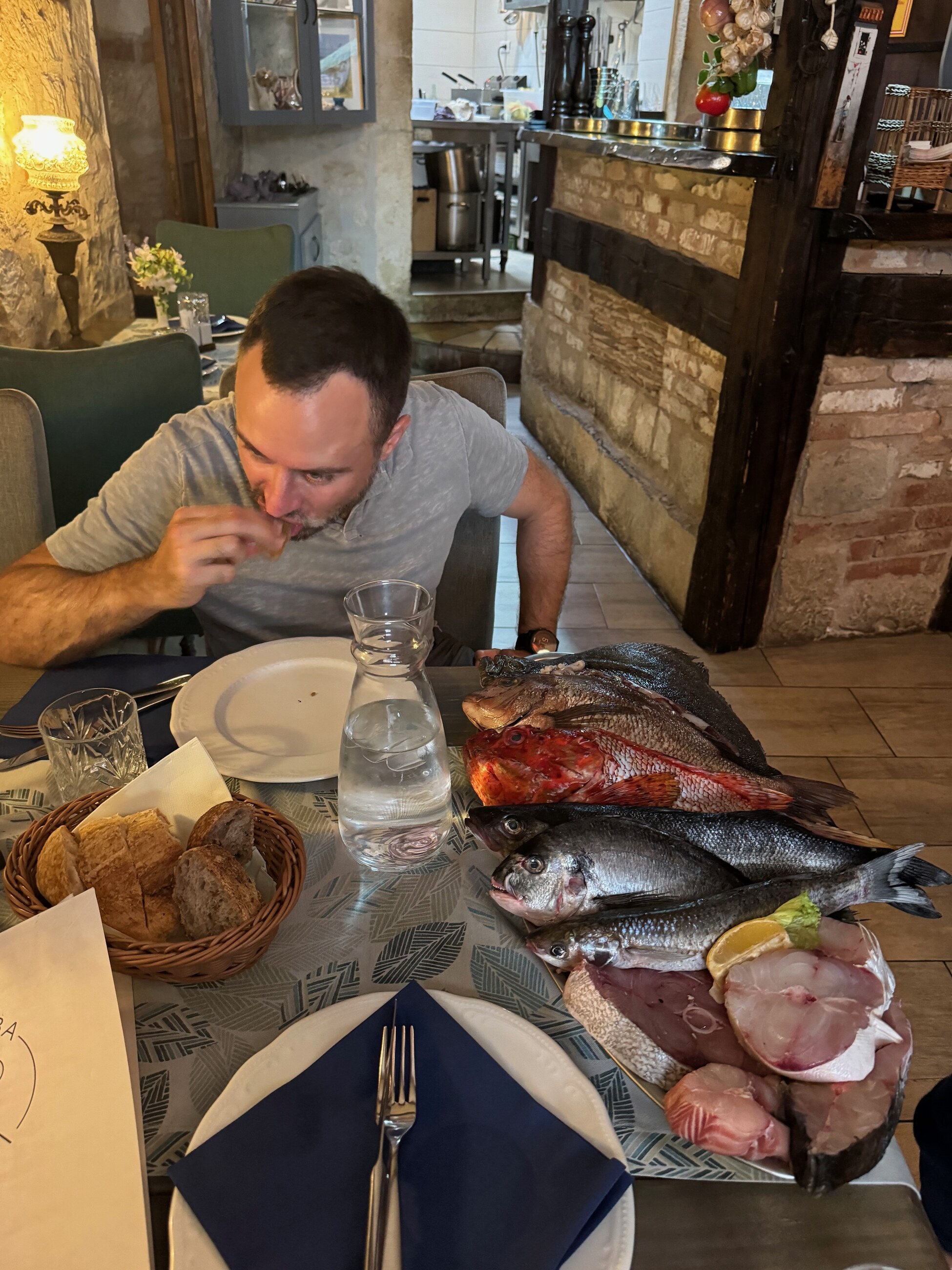
For our final dinner we picked a fish from a display of the day's catch and had it grilled simply with potatoes and salad. Then we spent another couple of hours wandering through Diocletian's Palace at night.
We did skip ice cream that night, which showed considerable restraint.
Overall
It was a pretty packed six days. We mountain biked in the Julian Alps and Soča Valley of Slovenia, hiked around Lake Bled and Plitvice, swam in Lake Bohinj and the Adriatic, drove through three countries, ate extremely well, and learned a lot of Slovenian and Croatian history.
The mountain biking with Tomaž and our time in Slovenia were probably the biggest highlights, while Šibenik and Split were both great surprises. We packed a lot into a short trip, had no significant injuries or disasters, and came home with a lot of good stories and photos.
Both Slovenia and Croatia are beautiful countries with kind, hardworking people and homogeneous Slavic populations. Croatia felt a little rougher around the edges, with more litter and graffiti than we expected along its otherwise spectacular Adriatic coast. Slovenia stood out as exceptionally orderly and pristine. Everywhere we went, it felt like people took real pride in maintaining the natural environment, public spaces, and infrastructure.